DOL Opinion Letter Clarifies Managerial Participation in Tip Pools Under the Fair Labor Standards Act

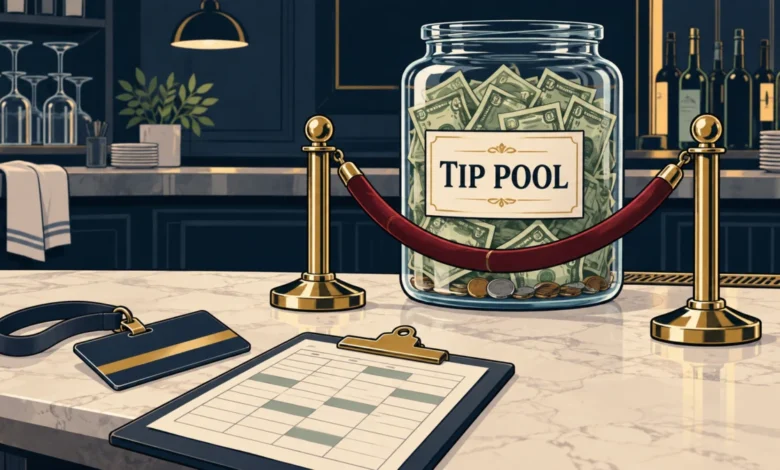
The Department of Labor (DOL) has issued a significant opinion letter, designated FLSA2026-13, which provides long-awaited guidance on the participation of managers and supervisors in employee tip pools. The central finding of the September 7, 2026, correspondence is that even when a supervisor performs "tipped" work—such as bartending, bussing tables, or serving customers—they remain ineligible to receive a share of a collective tip pool if their primary duties satisfy the Fair Labor Standards Act’s (FLSA) definition of a manager or supervisor. This ruling closes a persistent loophole that has caused confusion across the hospitality and food service industries, establishing a clear distinction between tips earned through individual service and those generated through shared labor.
The Genesis of the Inquiry
The opinion letter was prompted by a specific request concerning a restaurant supervisor who frequently transitioned between managerial tasks and front-of-house service roles. During a typical shift, this individual would oversee scheduling, manage the floor, and authorize end-of-shift reconciliations while simultaneously acting as a bartender. The employer’s policy required servers to contribute a percentage of their sales into a tip pool, which was then distributed among bartenders, hosts, and bussing staff. Because the supervisor was performing the labor of a bartender, the employer had been including them in the tip-out process.
The DOL’s analysis focused on whether the performance of tipped tasks "cures" the managerial status that would otherwise disqualify an employee from receiving pooled tips. The agency concluded that it does not. The ruling reinforces that the regulatory prohibition on managers participating in tip pools is based on the nature of their authority rather than the specific physical tasks they perform during a given hour of a shift.
Chronology of the Regulatory Landscape
To understand the weight of this opinion letter, it is necessary to look back at the evolution of tip regulations. Since the 2018 amendments to the FLSA, the legal environment regarding tip pooling has been in a state of flux. The 2018 Consolidated Appropriations Act clarified that employers could not keep any portion of employees’ tips, but it left gray areas regarding who qualifies as a "manager" in the context of eligibility.
Throughout 2024 and 2025, the restaurant industry saw an uptick in wage-and-hour litigation regarding "working managers." As staffing shortages persisted post-pandemic, many restaurants relied on managers to fill gaps in service. By late 2025, the DOL began receiving formal inquiries from labor unions and industry associations requesting clarity on whether a manager who is actively pouring drinks or running food is legally entitled to share in the gratuities of their subordinates. The September 2026 letter serves as the agency’s definitive response to these industry-wide queries.
Defining the Managerial Duties Test
One of the most critical aspects of the DOL’s guidance is the reaffirmation that job titles are largely irrelevant. An employee who is labeled a "shift lead" or "floor supervisor" may or may not be considered a manager under the FLSA, and conversely, an hourly employee without a formal management title might be classified as a supervisor if their actual responsibilities meet certain benchmarks.
Under the FLSA criteria, an individual is defined as a manager or supervisor for the purposes of tip-pool exclusion if they meet three primary conditions:
- Their primary duty involves the management of the business or a recognized department or subdivision thereof.
- They customarily and regularly direct the work of at least two or more other full-time employees (or their equivalent).
- They possess the authority to hire or fire other employees, or their suggestions and recommendations as to the hiring, firing, advancement, or promotion of other employees are given "particular weight."
Crucially, the DOL noted that these criteria are derived from the FLSA’s executive exemption tests, but they operate independently of salary requirements. An employee who is paid hourly and is nonexempt for overtime purposes can still be legally classified as a "manager" regarding tip-pool participation. This creates a trap for employers who might mistakenly assume that because an employee is nonexempt, they are "just another worker" entitled to share in the tip pool.

Direct vs. Pooled Tips: The Crucial Distinction
The DOL’s opinion letter clarifies that the prohibition is not on managers receiving tips entirely, but rather on their participation in the pooling of tips.
If a manager directly serves a customer—for instance, taking a table’s order, delivering the food, and managing the service from start to finish—they are entitled to keep the gratuity left by that specific customer. In this scenario, the tip is directly attributable to the manager’s sole effort.
The violation occurs when that tip is commingled. If a manager helps behind the bar, and the bar tips are consolidated into a communal pool, the manager cannot participate in that pool. The DOL reasoned that once tips are commingled, the individual contribution of the manager is lost, and the act of taking a share of the pool constitutes an unlawful appropriation of the other employees’ earnings. Similarly, when a manager assists a server or a busser, they are strictly prohibited from taking a portion of those tips, even if the manager provided direct labor during that service.
Broader Economic and Operational Implications
The economic impact of this letter is likely to be substantial for the hospitality sector. For many small-to-mid-sized restaurants, the ability to integrate managers into the service flow has been a vital operational strategy. Employers now face the challenge of restructuring their tip-out policies to ensure compliance.
Industry analysts suggest that this ruling could lead to a decrease in the "working manager" model. If managers are unable to participate in the tip pool, they may be less incentivized to assist in high-volume, high-tip roles during busy shifts. Conversely, it forces a shift toward more rigid operational structures where the responsibilities of managers are strictly separated from those of tipped staff.
Furthermore, the legal implications for non-compliance are severe. If an employer improperly includes a manager in a tip pool, they face two primary risks:
- Wage Claims: The employees who were forced to share their tips with an ineligible manager may file claims for the recovery of those lost earnings.
- Loss of Tip Credit: This is perhaps the most dangerous consequence for employers. Under the FLSA, if an employer claims a tip credit to satisfy minimum wage requirements, they must strictly follow all tip-pooling rules. An unlawful distribution of tips can result in the invalidation of the employer’s tip credit for the entire pay period. If the credit is disallowed, the employer may be liable for the difference between the tipped minimum wage and the full federal minimum wage for all affected employees, potentially resulting in massive back-pay liabilities.
Practical Steps for Employers
Given the precision of the DOL’s guidance, human resources departments and restaurant owners should undertake a thorough audit of their pay structures. The "Three Tip-Pool Checks" recommended by legal experts include:
- Audit Actual Authority: Do not rely on organizational charts. Review the actual decision-making power of every employee involved in a tip pool. If an employee has the power to influence hiring or regularly directs the work of others, they should be excluded from tip pools, regardless of their hourly pay status.
- Segmented Service: If a manager must assist in a tipped role, ensure their compensation is not tied to the collective performance of the team. Any tips they receive must be directly linked to a transaction they solely managed.
- Pre-emptive Policy Review: Establish clear policies regarding the separation of pooled money. Tip-pool distributions should be automated or calculated in a way that excludes ineligible individuals before the funds are disbursed.
Conclusion: A New Standard of Compliance
The September 2026 opinion letter from the Department of Labor serves as a definitive marker for the hospitality industry. By stripping away the ambiguity surrounding "tipped managers," the agency has prioritized the integrity of the tip pool as a benefit belonging solely to non-managerial staff. While this creates immediate operational hurdles, it also provides a clear roadmap for compliance. Employers who ignore the distinction between a manager’s "duties" and their "tasks" do so at their own financial peril, as the courts and the DOL move toward a more rigid interpretation of labor protections in the modern service economy. Moving forward, the "managerial exclusion" will likely become a centerpiece of wage-and-hour compliance audits, requiring restaurants to rethink how they staff their floors and distribute their gratuities.