The Complete Retrospective of Meta Platforms: Major Product Launches, Policy Shifts, and Strategic Pivots Throughout 2022 and Beyond

The final quarter of 2022 marked a period of intensive transformation and strategic realignment for Meta Platforms, Inc. As the tech giant navigated macroeconomic headwinds and a shifting digital advertising landscape, the company rolled out an array of foundational updates across Facebook, Instagram, and its expanding virtual reality ecosystem. These changes—ranging from native content scheduling on Instagram to sophisticated machine-learning ad suites and rigorous brand safety accreditations—demonstrate Meta’s concerted effort to streamline user experiences, automate advertiser workflows, and cement its position in the evolving social commerce sector.
This comprehensive retrospective examines the major platform developments, product introductions, and strategic shifts implemented by Meta, providing a chronological overview of how the tech conglomerate shaped digital marketing and online community management.
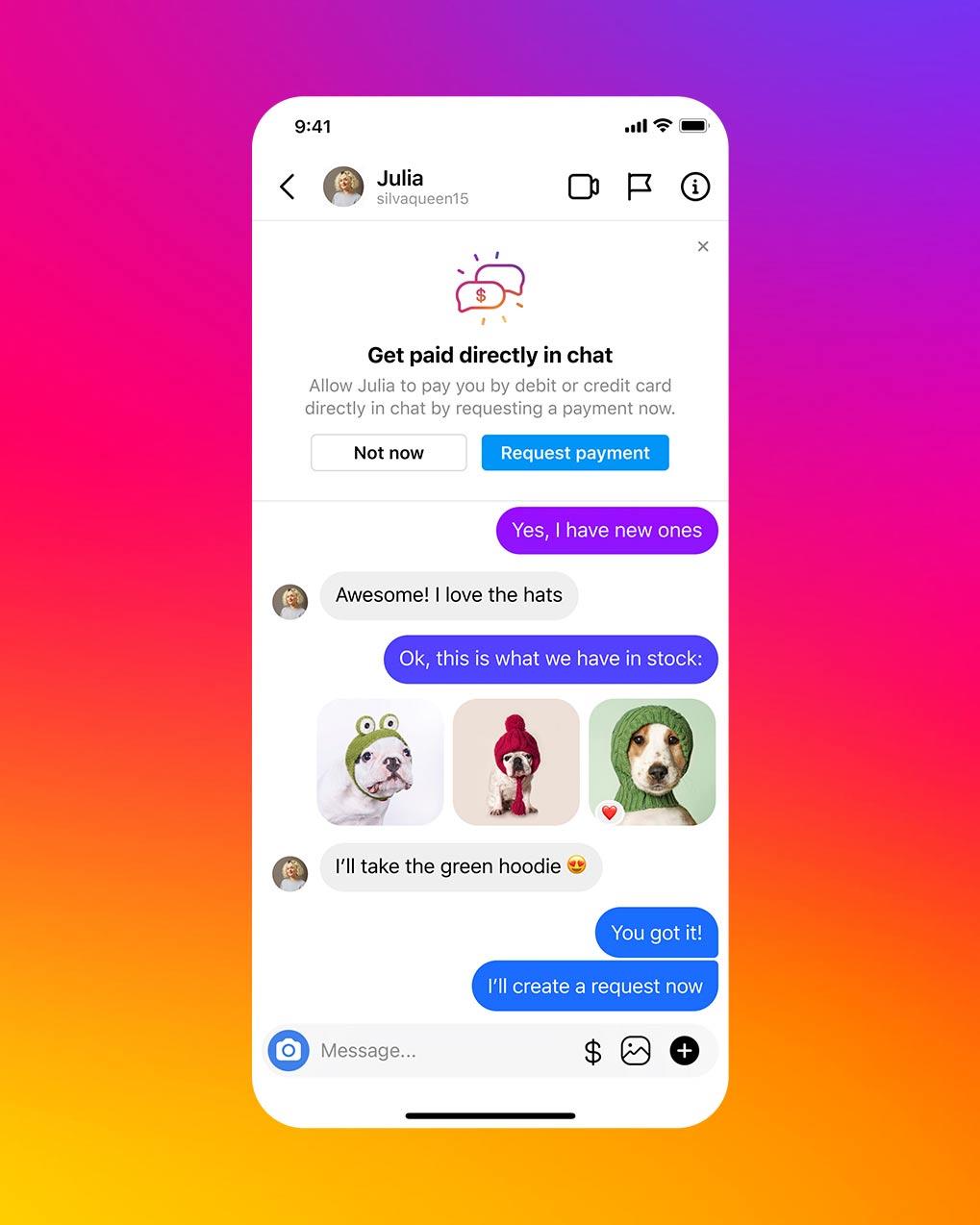
Strategic Evolution of Meta’s Advertising Infrastructure
Throughout 2022, Meta focused heavily on automation, machine learning, and performance optimization to counteract the reporting and targeting challenges introduced by stricter industry-wide privacy regulations, notably Apple’s AppTracking Transparency (ATT) framework. Central to this strategy was the consolidation and expansion of the Meta Advantage suite of automated ad products.
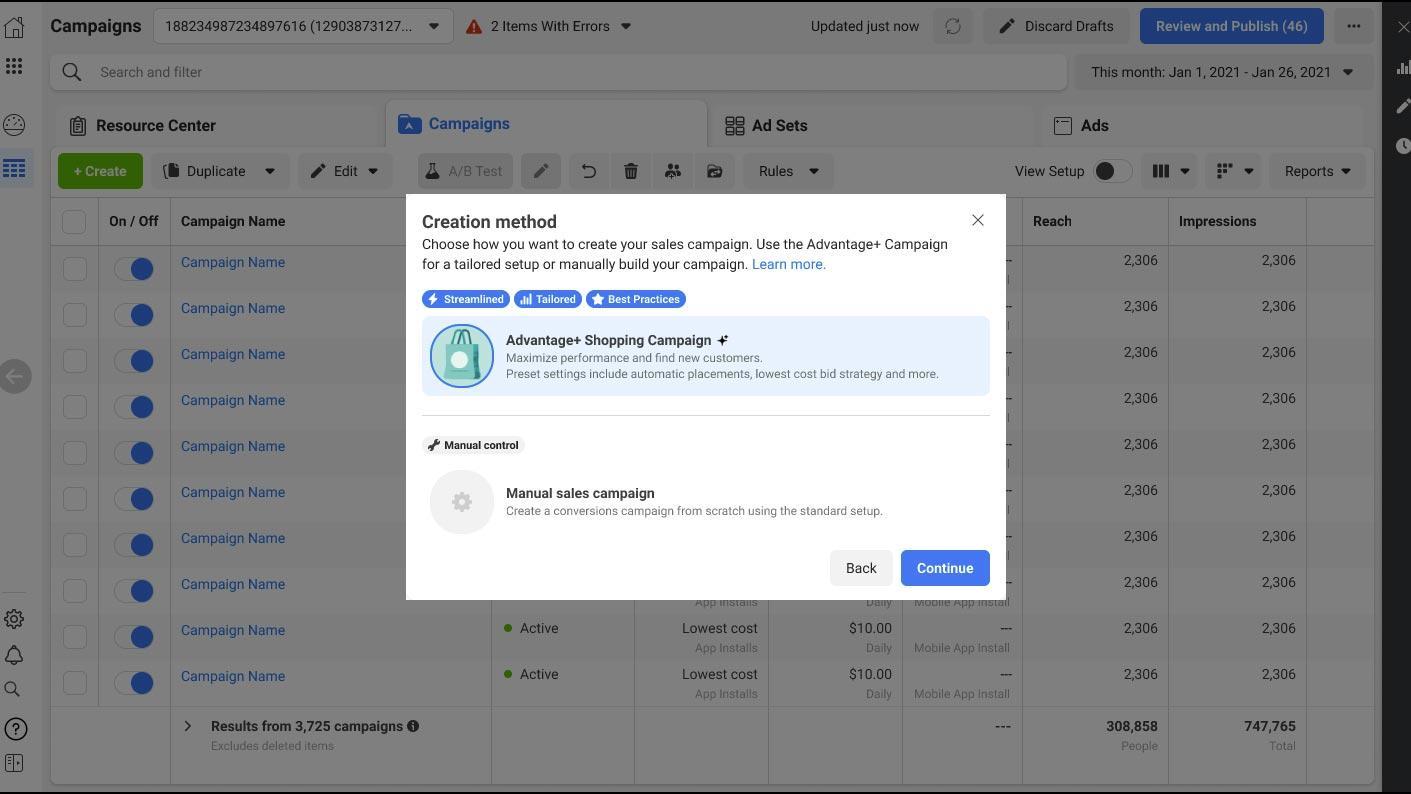
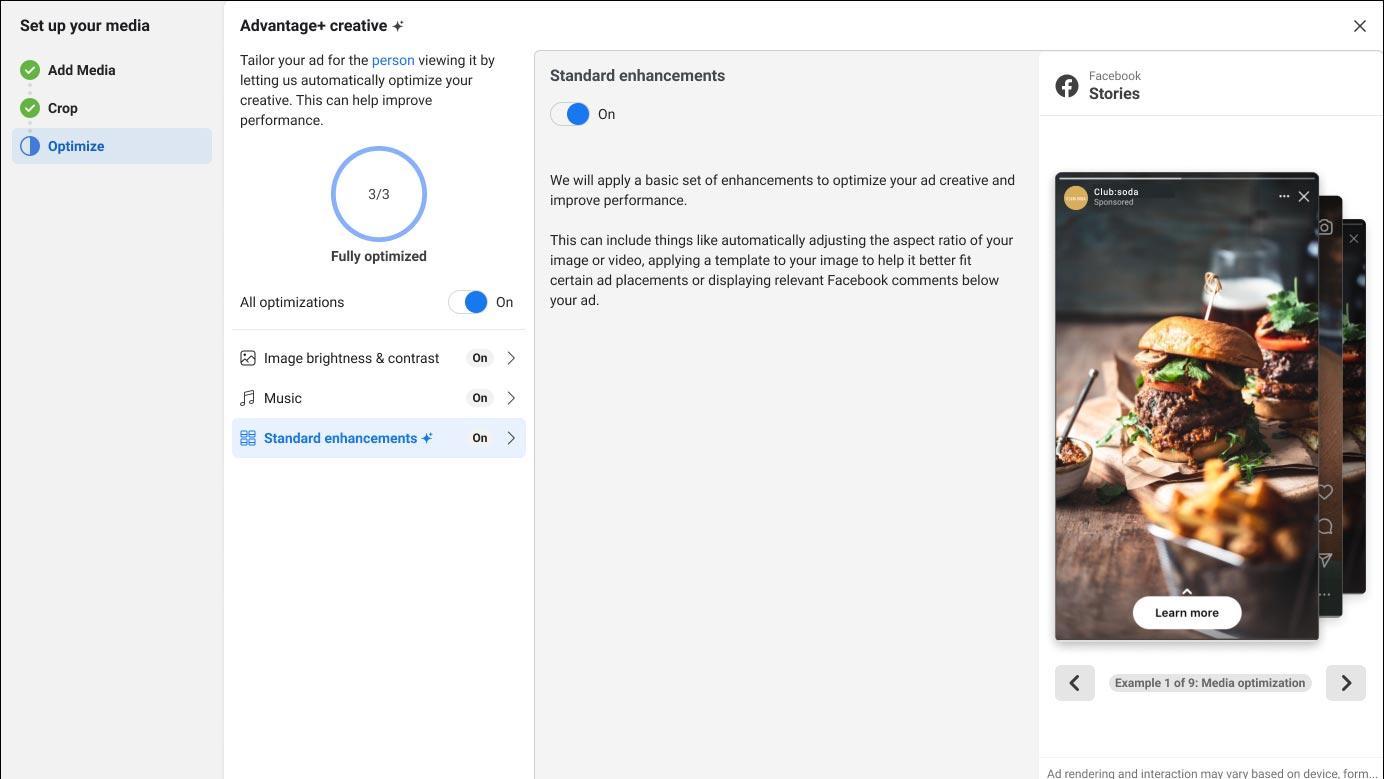
The Advantage suite was designed to streamline campaign creation and maximize return on ad spend (ROAS) by leveraging advanced machine learning algorithms. Within this framework, Advantage+ shopping campaigns emerged as a core offering for e-commerce brands. By automating the manual ad creation process and enabling the simultaneous testing of up to 150 creative variations, these campaigns demonstrated significant efficiency gains. Internal testing conducted by Meta revealed a notable reduction in cost-per-purchase conversion compared to traditional, manually targeted ad structures.
Concurrently, Meta revamped its targeting and measurement infrastructure. The company updated its pre-campaign audience reach estimates from specific figures to dynamic ranges, encouraging advertisers to view audience sizes as probabilistic estimates rather than fixed metrics. Furthermore, Meta revised its cross-platform account counting methodologies: Instagram and Facebook accounts that were not explicitly linked through the Accounts Center began to be counted as separate users for ad planning and measurement, impacting estimated reach calculations for unlinked cross-channel campaigns.
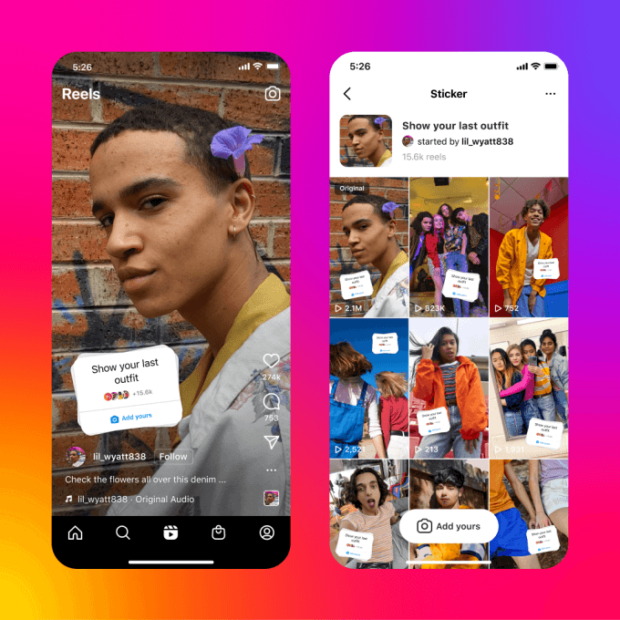
Instagram’s Creative and Commercial Expansion
Instagram served as a primary testing ground for user-facing features and e-commerce integrations, reflecting Meta’s strategy to bridge the gap between content consumption and transactional intent.
Native Scheduling and Feed Enhancements
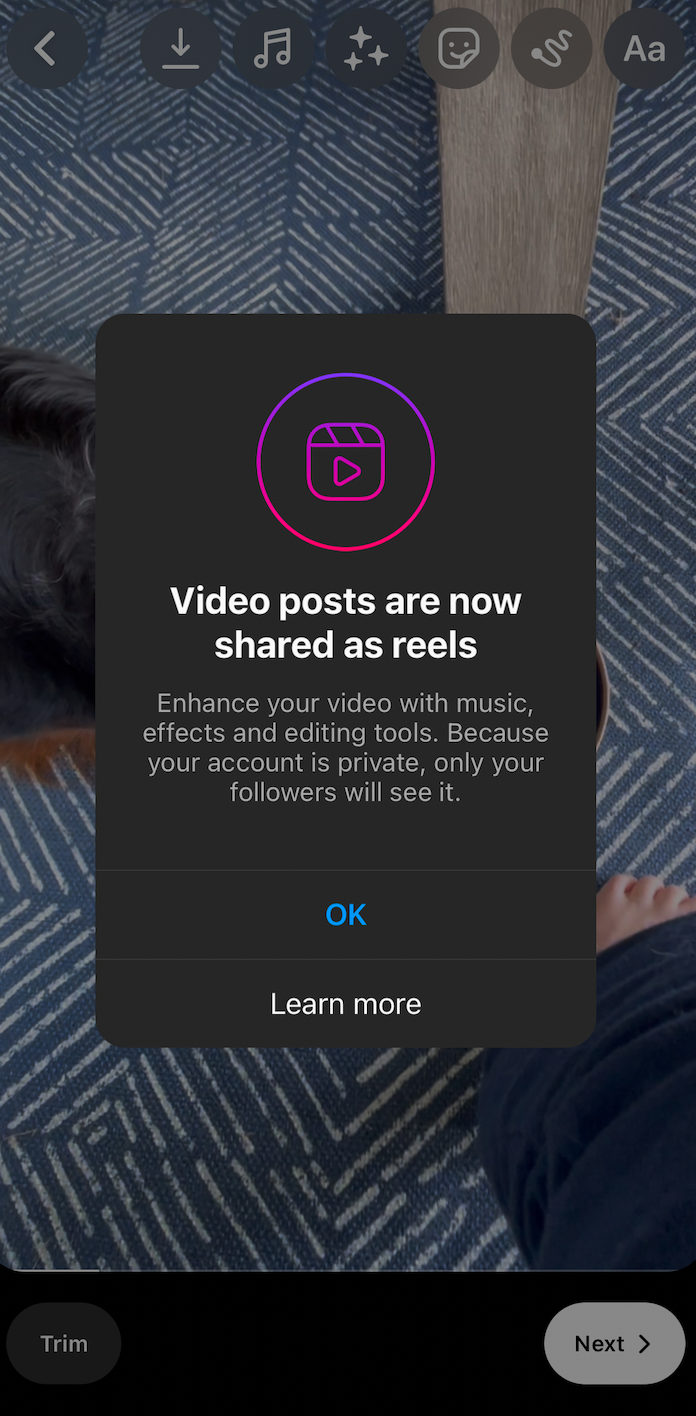
In late 2022, Instagram addressed a long-standing request from creators and small business owners by launching native content scheduling directly within the mobile application. Business and Creator accounts gained the ability to schedule Reels, photos, and carousel posts up to 75 days in advance without relying on third-party software or desktop dashboards.

Alongside scheduling tools, Instagram significantly expanded its audio and visual capabilities. Users were granted the ability to append up to 90 seconds of licensed music directly to in-feed photo posts, mirroring the audio-driven engagement mechanics previously restricted to Reels and Stories. Additionally, the platform increased maximum Reel lengths to 90 seconds and tested 9:16 vertical aspect ratios for standard feed photos and videos, aligning the primary feed experience with the immersive format pioneered by short-form video.
Monetization and the Creator Economy
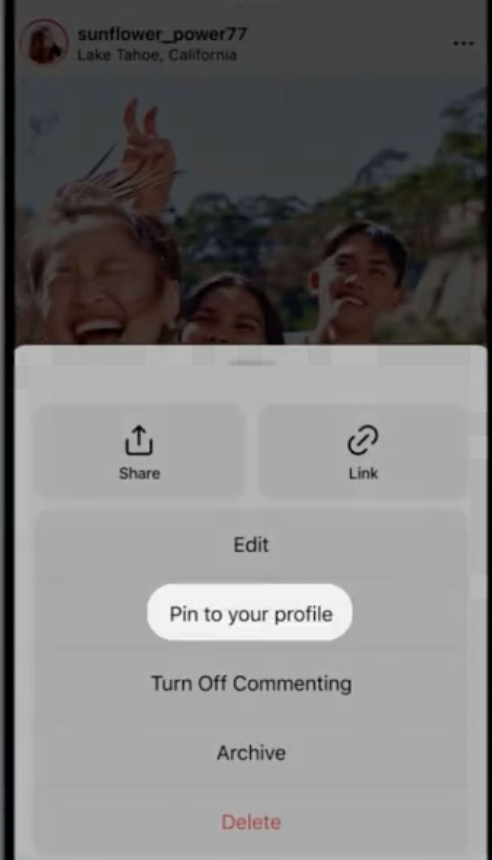
Meta continued to heavily subsidize and incentivize the creator ecosystem. Mark Zuckerberg announced that revenue-sharing protocols for creators utilizing features such as Badges, Subscriptions, and paid online events would remain deferred through 2024, allowing content producers to retain a larger share of their earnings.

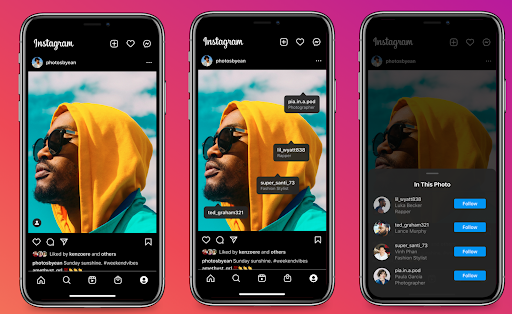
To facilitate brand-creator partnerships, Meta expanded the invite-only testing phase of the Instagram Creator Marketplace. The discovery tool enabled brands to filter creator profiles by demographic criteria, audience size, engagement metrics, and niche interests, while also offering integrated communication and campaign management dashboards. Furthermore, the introduction of affiliate monetization options allowed approved creators to earn commissions on products sold directly through in-app recommendations, bridging traditional influencer marketing with native social commerce.
Platform Governance, Brand Safety, and Compliance
As regulatory scrutiny regarding data privacy, content moderation, and algorithmic transparency intensified, Meta instituted several structural changes to improve platform integrity and advertiser confidence.
Media Rating Council Accreditation and Brand Suitability
A significant milestone in Meta’s compliance journey was achieved when the Media Rating Council (MRC) granted accreditation for content-level brand safety on Facebook. Independent auditors evaluated Meta’s Partner Monetization Policies, Content Monetization Policies, and associated brand safety controls across Instant Articles and In-Stream video formats on desktop, mobile web, and mobile applications. This recognition provided enterprise-level advertisers with independent verification of Meta’s content suitability controls.
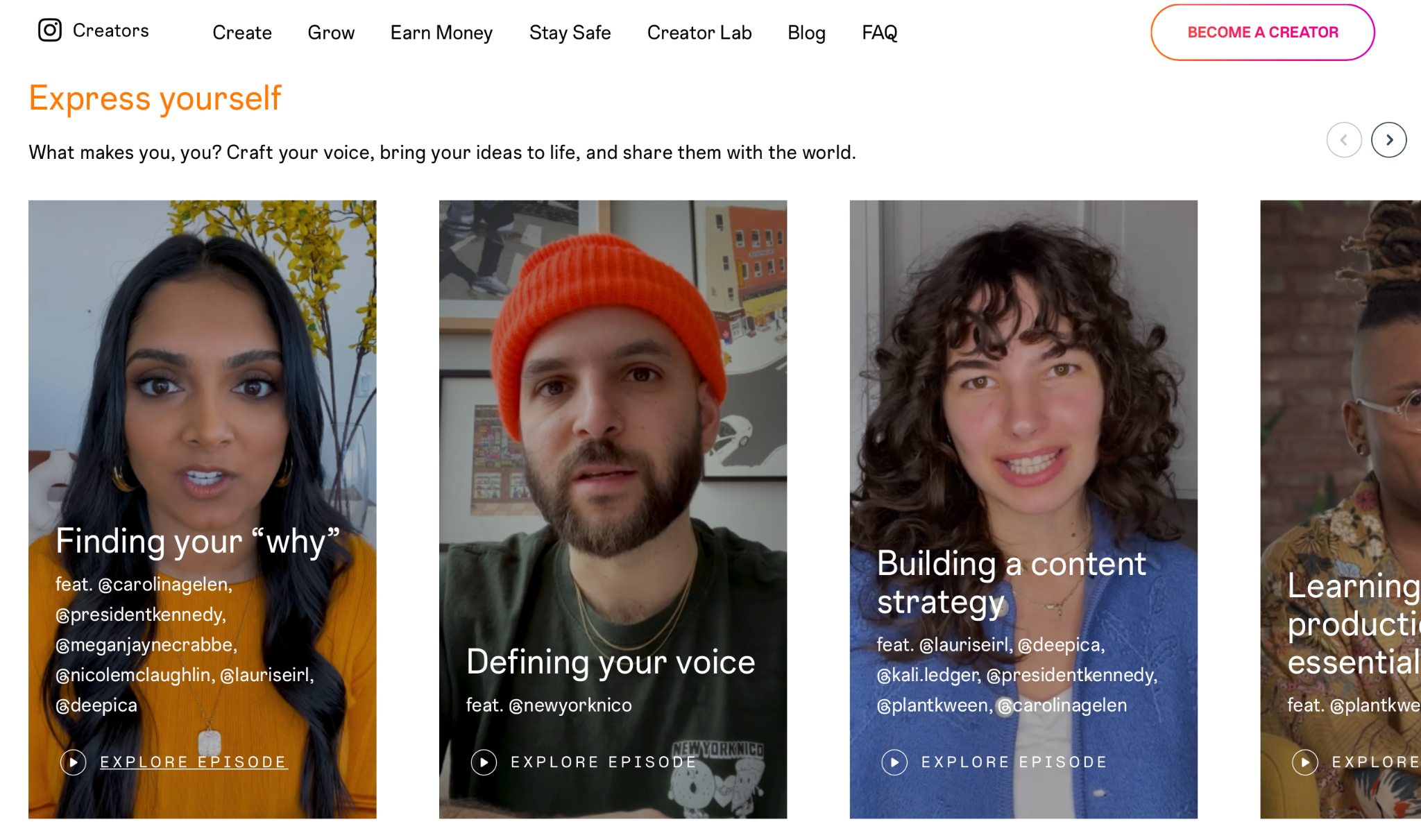
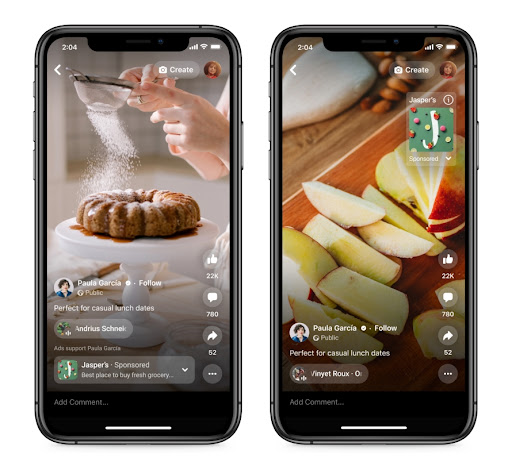
To complement this accreditation, Meta introduced content-based inventory filters for Facebook and Instagram feeds, granting advertisers granular control over the contextual adjacency of their promotional material. These tools allowed brands to align their digital ad placements with specific risk tolerances regarding sensitive content categories.
Intellectual Property and Policy Enforcement
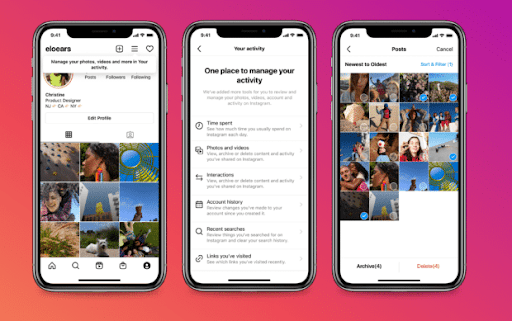
Protecting intellectual property rights became a critical priority as social commerce volumes expanded. Meta launched a new IP Reporting API integrated with the Facebook Graph API, enabling rights holders to efficiently report copyright and trademark infringements. This was supported by ongoing updates to the Brand Rights Protection tool, which utilized automated image recognition and machine learning to identify counterfeit products and unauthorized impersonations across Facebook and Instagram.
In tandem with IP protection, Meta modified its regulatory stance on specialized ad categories. Most notably, the company adjusted its policies concerning social issue ads, determining that promotional content whose primary purpose is the sale of a tangible product or service—rather than political advocacy—would not be subjected to the rigorous authorization and "Paid for by" disclaimer requirements previously mandated for social issue campaigns. Similar administrative streamlining was applied to cryptocurrency advertisers, with Meta expanding its list of accepted regulatory licenses from three to 27, thereby facilitating broader participation from stable, regulated financial technology firms.
Small Business Support and Community Building
Recognizing the economic pressures faced by small and medium-sized businesses (SMBs), Meta deployed targeted educational resources and operational tools throughout 2022.
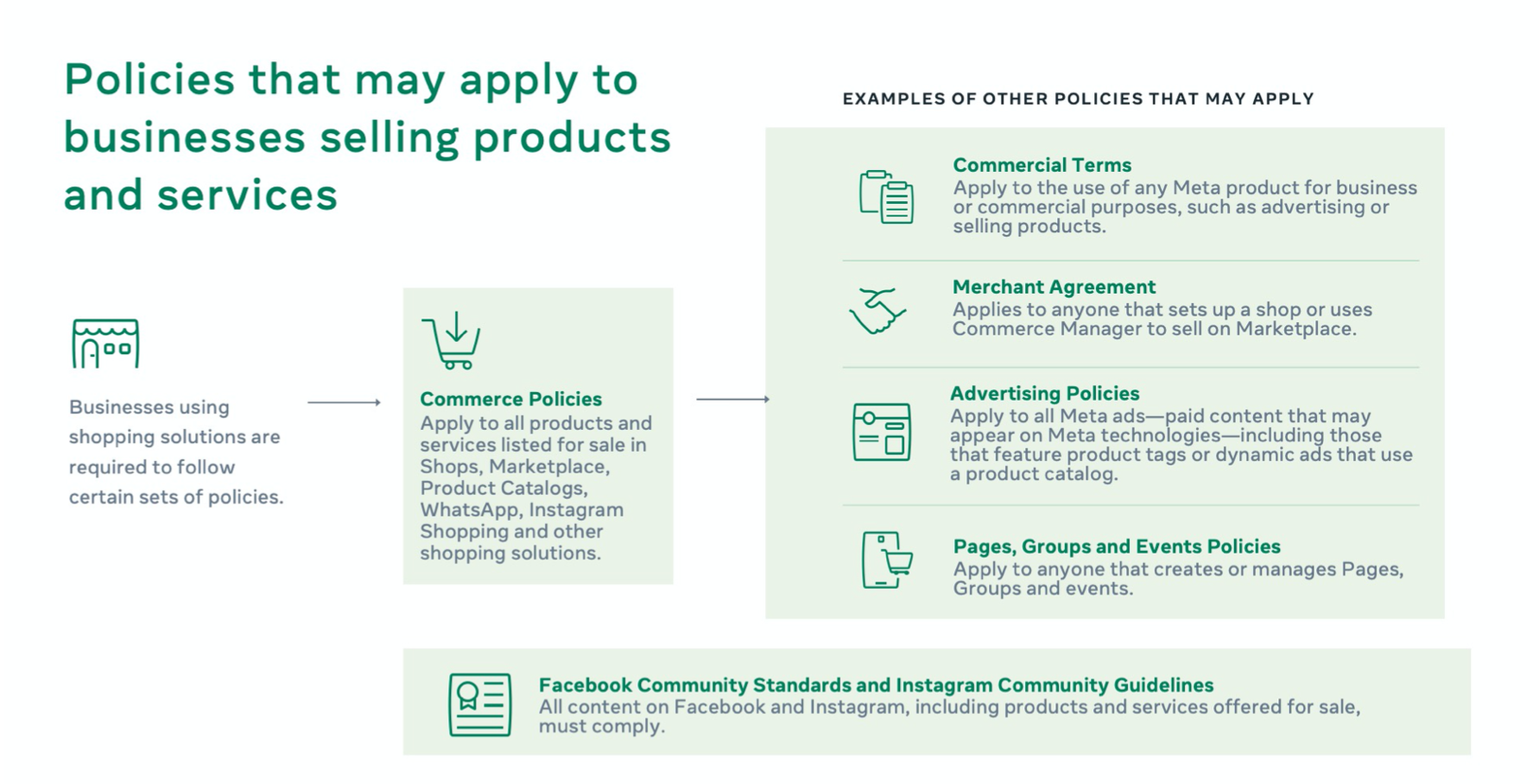
The launch of Small Business Studios provided a hybrid educational platform featuring on-demand video courses, live regional training tours across multiple U.S. cities, and strategic guidance for digital marketing growth. These resources were supplemented by technical integrations within the Meta Business Suite, such as the unification of cross-platform inboxes—incorporating Facebook Messenger, Instagram Direct, and WhatsApp—into a single operational dashboard.
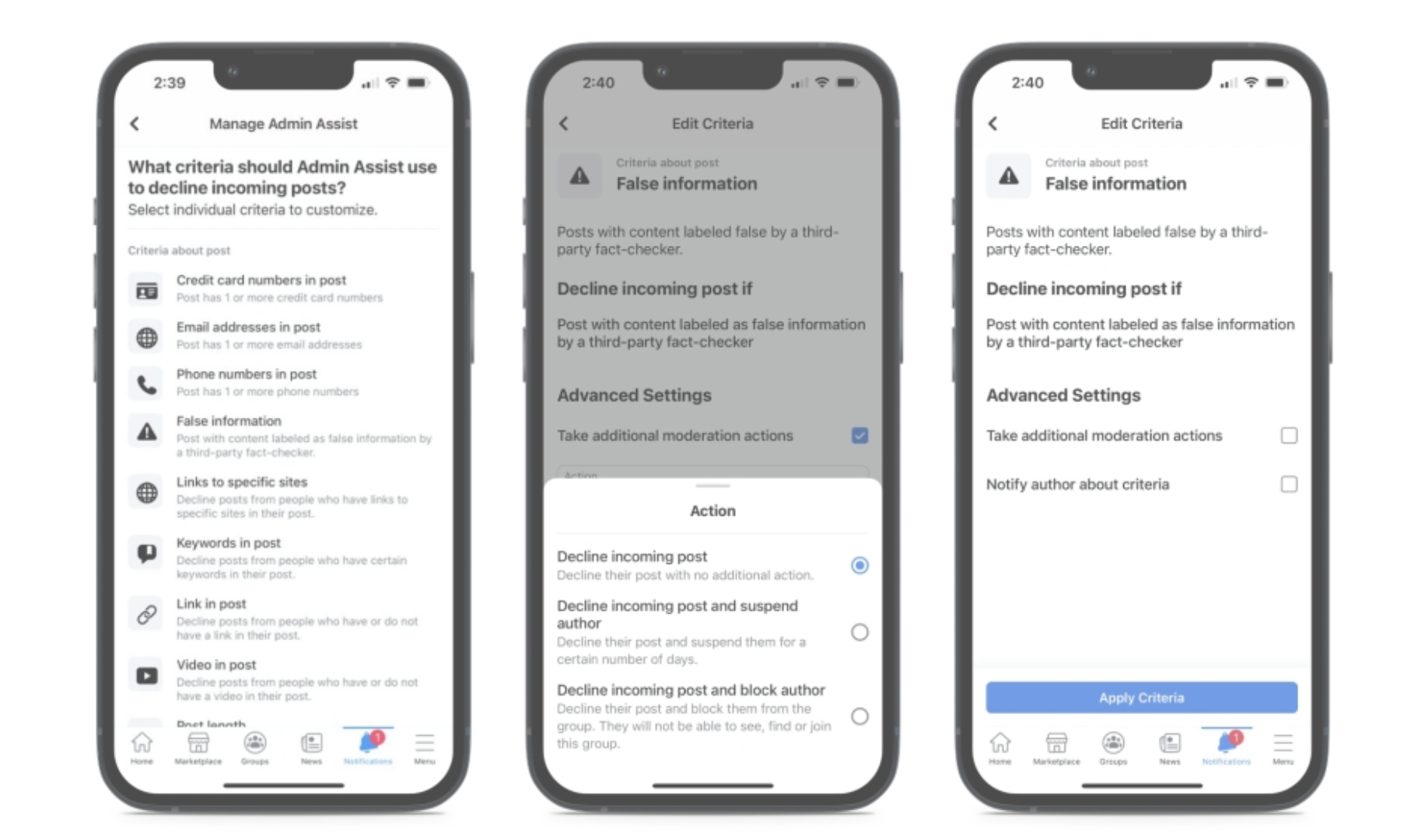
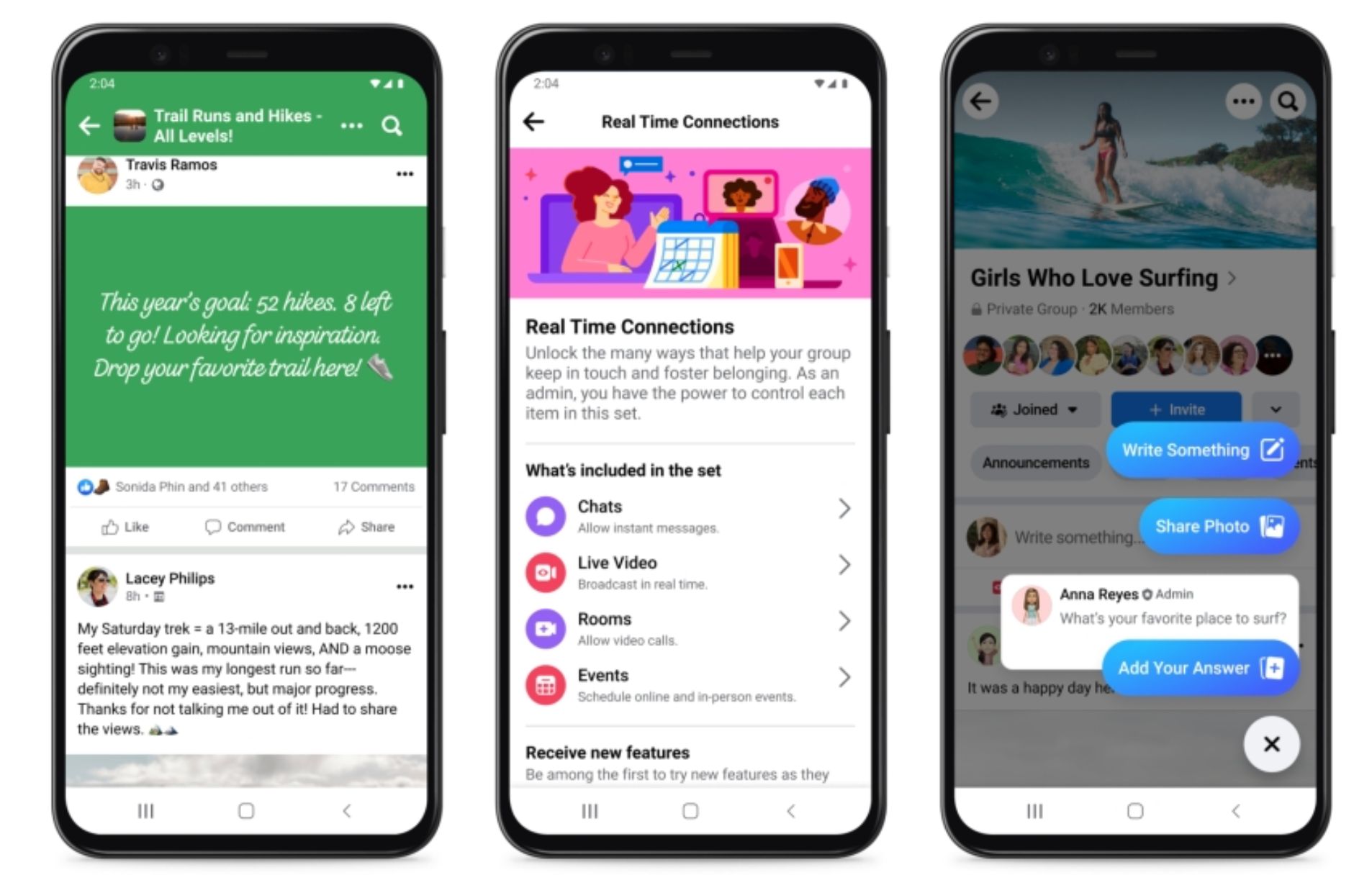
Concurrently, Facebook Groups received substantial administrative upgrades. Meta introduced advanced "Admin Assist" automation rules, enabling group moderators to automatically decline or approve incoming posts and member requests based on customized parameter criteria. Subscription-based groups were expanded, providing community administrators with a reliable mechanism to monetize highly engaged digital spaces through recurring membership models.
Future Outlook and Strategic Implications
As Meta closed out 2022 and prepared for the challenges of 2023, the strategic trajectory of the company was clear. The integration of artificial intelligence across ad targeting and creative optimization (Advantage+), the prioritization of short-form video distribution (Reels), and the sustained capital investment in immersive spatial computing (the Metaverse) represent the foundational pillars of Meta’s long-term corporate vision.
While macroeconomic uncertainties and privacy-centric operating systems continue to exert pressure on digital advertising margins, Meta’s systematic rollout of automated toolsets, native commerce integrations, and verified brand safety measures provides marketers with a resilient framework for navigating the future of social media engagement.