The Second Circuit Ruling on the Ending Forced Arbitration of Sexual Assault and Sexual Harassment Act and its Broad Impact on Employment Litigation

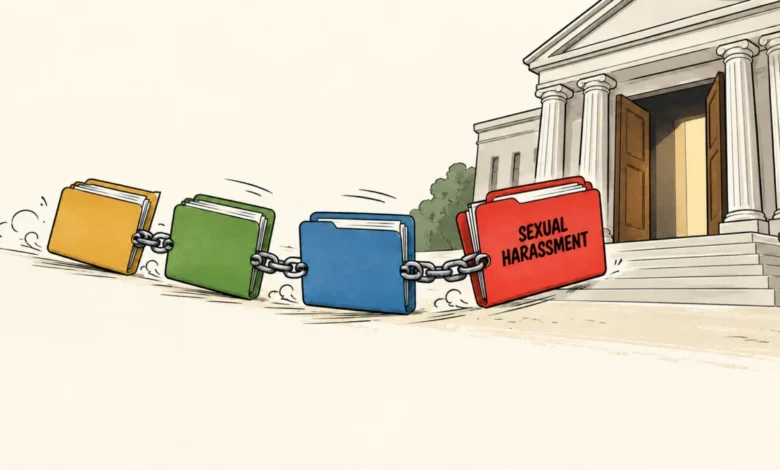
The landscape of employment litigation in the United States has undergone a significant transformation following a pivotal decision by the United States Court of Appeals for the Second Circuit. This ruling reinforces an emerging appellate consensus that when an employee invokes the Ending Forced Arbitration of Sexual Assault and Sexual Harassment Act (EFAA), the entirety of their lawsuit—including non-harassment claims such as contractual disputes—is permitted to proceed in a public court, effectively bypassing pre-existing mandatory arbitration agreements. This decision aligns the Second Circuit with the Sixth and Ninth Circuits, creating a formidable legal framework that employers must now navigate when addressing workplace disputes.
Chronology of the Dispute
The case centers on a former employee who transitioned from a traditional law firm role to a pivotal position within an affiliated legal technology startup. During her tenure, she was granted stock options constituting approximately 10% of the company’s equity. According to the court records, these options were subject to a vesting schedule that concluded in August 2023.
The conflict escalated when the employee expressed her intention to exercise these vested options. Shortly after submitting this request in writing, she was terminated by the employer. The company maintained that the termination was for "cause," a characterization that, if proven, would legally extinguish her right to the stock options, which were valued at over $1 million.
Simultaneously, the employee initiated litigation alleging sexual harassment, asserting that she had been subjected to professional misconduct, including directives to engage in inappropriate social interactions with prospective clients for the benefit of the firm. Following her termination, she filed a lawsuit that combined the sexual harassment claims with a claim for conversion regarding the disputed stock options. While the trial court dismissed several initial claims, the sexual harassment and conversion claims remained, leading the employers to move to compel arbitration based on a broad agreement signed at the inception of her employment.
The Legislative Framework: The EFAA
The EFAA, signed into law in 2022, serves as a critical exception to the Federal Arbitration Act (FAA). It provides that, at the election of the person alleging conduct constituting a sexual harassment dispute or sexual assault dispute, no predispute arbitration agreement shall be valid or enforceable with respect to a case which is filed under Federal, Tribal, or State law and relates to the sexual harassment or sexual assault dispute.
The central legal friction point in the Second Circuit case was the interpretation of the word "case." The employers argued that the stock-option claim was legally distinct and conceptually separate from the harassment allegations, and therefore should be severed and sent to arbitration. However, the appellate court determined that the statute does not require a granular, claim-by-claim analysis. By using the term "case," Congress intended for the entire legal action to remain in court once a qualifying sexual harassment claim is properly invoked.
Data and Trends in Employment Arbitration
The recent appellate rulings reflect a broader shift in how federal courts view the interplay between private contracts and statutory protections. Historically, the Supreme Court has favored the enforcement of arbitration agreements under the FAA, noting the efficiency and private nature of such proceedings. However, the EFAA represents a legislative carve-out designed to provide transparency and public accountability for sensitive workplace issues.
According to data from the American Arbitration Association and various legal research firms, employment arbitration has grown by over 400% in the last two decades. Many corporations favor these venues due to reduced litigation costs and the absence of jury trials. However, the current trend among appellate courts—now cemented in the Second, Sixth, and Ninth Circuits—suggests that the "efficiency" of arbitration is being systematically curtailed by the EFAA’s broad reach. For employers, this means that even if 90% of a lawsuit consists of garden-variety contract or wage disputes, the inclusion of a single, well-pled sexual harassment claim may strip the employer of their contractual right to keep those matters private.
Analysis of Legal Implications
The implications for human resources departments and legal counsel are profound. The current standard creates a "litigation spillover" effect. When an employee files a complaint that includes allegations of sexual harassment, the employer can no longer rely on the bifurcated strategy of moving the contract claims to arbitration while keeping the harassment claims in court.

This creates three primary areas of risk for employers:
1. Financial and Discovery Exposure:
When non-harassment claims—such as those involving equity, wrongful termination, or unpaid bonuses—are pulled into court alongside harassment allegations, the scope of discovery broadens significantly. The public nature of court filings means that sensitive financial information, company emails, and internal communications regarding executive decisions become part of the public record, which is rarely the case in private arbitration.
2. Threshold Determinations:
The courts have left open questions regarding the "factual sufficiency" required to trigger the EFAA. Employers must now conduct a rigorous early-stage assessment of the allegations. If a plaintiff’s harassment claim is found to be pretextual or lacking the necessary factual basis to qualify as a "sexual harassment dispute," the EFAA may not apply. However, challenging this requires an early investment in litigation and a potential motion to dismiss or strike, which can be costly.
3. Settlement Strategy:
The emerging appellate consensus effectively removes the "arbitration shield" that many companies used as leverage in settlement negotiations. Knowing that a case will be heard by a jury rather than an arbitrator fundamentally alters the risk calculus. Plaintiffs now have a stronger position to demand higher settlements, as the threat of a public trial—and the associated reputational risk—is now a standard feature of any case involving sexual harassment allegations.
Industry Reactions and Future Outlook
Legal experts suggest that this series of appellate decisions will likely lead to a re-evaluation of how arbitration agreements are drafted. Some firms are exploring "severability clauses" that are more robust, though the recent court decisions suggest that statutory language may override contractual attempts to split a case.
From a defense perspective, the inability to compel arbitration in these hybrid cases may lead to a more defensive posture regarding employee complaints. Counsel for employers are increasingly advising that internal investigations into harassment allegations must be conducted with the assumption that the findings will eventually be scrutinized in a public court.
Furthermore, there is ongoing speculation regarding whether the Supreme Court of the United States will eventually grant certiorari to resolve potential circuit splits or clarify the limits of the EFAA. For now, however, the consensus among the major circuits is clear: the EFAA is a powerful tool for plaintiffs, and the "case" as a whole is the operative unit of analysis.
Conclusion
As the law stands, the Second Circuit’s decision acts as a final warning for employers: an arbitration agreement is not an absolute barrier to public litigation. In the jurisdictions covered by the Second, Sixth, and Ninth Circuits, the presence of a legitimate sexual harassment claim acts as a "gateway" that brings the entire breadth of an employee’s lawsuit into the courtroom.
Employers must adapt by prioritizing internal compliance, documentation, and a sophisticated approach to pre-litigation resolution. The reliance on broad, one-size-fits-all arbitration clauses is no longer a sufficient risk management strategy in the face of evolving federal legislation and the judicial commitment to ensuring that sexual harassment claims remain within the public judicial system. The era of the "arbitration shield" has shifted, and the legal burden has moved firmly back toward proactive, transparent, and defensible employment practices.