Global Finance Professionals Turn to CFI’s FMVA Certification to Master Modern Modeling and Valuation Standards

In the fast-evolving landscape of modern corporate finance, investment banking, and financial planning and analysis (FP&A), the demand for practical, desk-ready skills has never been higher. As financial markets grow increasingly complex and data-driven, traditional academic credentials are often perceived as overly theoretical by hiring managers. To bridge this critical skills gap, the Financial Modeling & Valuation Analyst (FMVA) certification program, offered by the Corporate Finance Institute (CFI), has emerged as a premier global credential. Trusted by over three million finance professionals across more than 200 countries, the program continues to set the benchmark for applied financial training, bridging the divide between university theory and day-one execution in the corporate world.
Background and Evolution of Practical Finance Training
For decades, entering elite financial sectors such as investment banking, private equity, and corporate development required navigating a rigorous and often opaque hiring landscape. While traditional degrees like a Bachelor of Commerce or an MBA provide a broad theoretical foundation in economics and finance, new hires frequently discover a significant gap between classroom concepts and the mechanical realities of building an auditable, error-free financial model from scratch. Recognizing this operational bottleneck, industry practitioners founded the Corporate Finance Institute to design a curriculum reflecting the actual tasks analysts, managers, and directors perform on a daily basis.
Over the years, the FMVA designation has evolved from a niche online resource into a globally recognized standard. It is now actively utilized for internal training and analyst development by major financial institutions and multinational corporations, including BlackRock, CIBC, Deloitte, Verizon, Boeing, and Target. By focusing heavily on rigorous Excel modeling, comprehensive accounting, and defensible valuation frameworks, the program provides a standardized metric of competence that hiring managers across major global financial hubs instantly recognize and respect.

Comprehensive Curriculum Architecture
The structure of the FMVA program is meticulously organized to accommodate learners from diverse backgrounds, ranging from undergraduate students and career switchers to mid-level professionals seeking formal validation of their skills. The curriculum is divided into several distinct educational phases, ensuring a smooth transition from basic concepts to advanced, specialized applications.
Optional Fundamentals and Preparatory Courses
Before diving into core financial modeling, candidates can choose from a suite of nine optional preparatory courses. These modules cover essential baseline competencies, including Excel Fundamentals (formulas, quick-start guides, and advanced functions), Accounting Fundamentals, Reading Financial Statements, Corporate Finance Fundamentals, Math for Finance Professionals, Workflow Best Practices, The Role of the FP&A Professional, and AI for Finance Workflows & Governance. This flexibility ensures that candidates without a traditional financial background can level up their foundational knowledge before tackling more complex subject matter.
Core Curriculum: The Bedrock of Financial Analysis
The backbone of the FMVA designation consists of 15 required core courses. These modules systematically walk learners through financial analysis fundamentals, financial modeling guidelines, introduction to and full execution of 3-statement modeling, model auditing and balancing, and operational modeling.
Furthermore, the core curriculum places heavy emphasis on business valuation methodologies. Students learn the foundational concepts of business valuation, discounted cash flow (DCF) modeling fundamentals, applied DCF modeling, and comparable valuation fundamentals. To ensure analysts can present their findings effectively to executive leadership, the core courses also cover advanced forecasting techniques, scenario and sensitivity analysis in Excel, Excel data visualization and dashboards, PowerPoint pitchbooks, and professional ethics.

Specialized Electives and Real-World Case Studies
To tailor the certification to specific career trajectories, candidates must complete a minimum of three electives chosen from a pool of 12 advanced topics. These specialized modules include Monthly Cash Flow Modeling, Advanced Excel Formulas & Functions, Comparable Valuation Analysis, Mining Financial Model & Valuation, Startup and e-Commerce Financial Modeling, Corporate & Business Strategy, Bank Valuation, Income Statement Normalization, Real Estate Financial Modeling, Communication and Presentation Skills, Strategic Problem Solving, and Sell-Side Equity Research.
In addition to traditional coursework, the program integrates real-world case study challenges. Learners apply their knowledge to practical scenarios such as Renewable Energy (Solar) Financial Modeling, utilizing IBISWorld for business analysis and benchmarking, AI-assisted peer group selection, and analyzing Tesla earnings through a sell-side research case study.

Integration of Artificial Intelligence in Finance
Reflecting the rapid technological transformation sweeping the financial sector, CFI has integrated artificial intelligence modules directly into the analyst workflow. Candidates learn how to leverage AI to draft, format, and audit 3-statement models efficiently, as well as how to construct structured AI prompts tailored specifically for finance. This ensures that graduates are not only proficient in traditional modeling techniques but are also equipped to harness emerging technologies to enhance productivity and sharpen analytical output.
Career Impact and Professional Testimonials
The true measure of any professional credential lies in its practical utility in the job market and the workplace. Graduates of the FMVA program frequently report immediate, tangible benefits in their career progression, interview processes, and day-to-day productivity.

Alonso Saponara Rivva, an Investment Banking Analyst at Goldman Sachs and an FMVA graduate, highlighted the pivotal role the designation played during his recruitment process. "The FMVA was incredibly valuable during the Goldman Sachs interview process," Rivva noted. "I had it open on my second screen while working through the case study, which required building a model and presenting strategic alternatives. When I interviewed at Goldman Sachs, two of the three interviewers were familiar with the FMVA and spoke highly of it. I felt the program was very comprehensive; I aced all my interviews thanks to the knowledge and skills I gained."
Similarly, Chris Caldwell, a Treasury Director and CFA Charterholder who dedicated approximately 900 hours to earning his CFA designation, found comparable practical value in the FMVA program despite its shorter completion time of 60 to 70 hours. "What I like about the approach is that it’s very practical for the workplace as opposed to just pure theory," Caldwell stated, praising the program’s workplace applicability and international accessibility.

George Slabbert, another FMVA graduate, emphasized the operational efficiency gained through the curriculum, noting that the program "accelerated my ability to produce robust, auditable valuation work and shortened the time from idea to implementation."
Institutional Recognition, Accreditation, and Global Standards
To maintain its reputation for academic and professional rigor, CFI holds several key accreditations and recognitions from leading educational and regulatory bodies. The institute is accredited by the Better Business Bureau (BBB) and recognized by major professional organizations for continuing education, including the National Association of State Boards of Accountancy (NASBA) in the United States and CPA institutions in Canada. These accreditations ensure that completed coursework counts toward professional Continuing Professional Education (CPE) and Continuing Professional Development (CPD) requirements.

Additionally, CFI’s institutional partnerships extend to prominent global bodies such as The London Institute of Banking & Finance—a professional body accredited by the United Kingdom’s Financial Conduct Authority—and alignment with academic standards set by the Higher Learning Commission (HLC) in the United States.
Program Formats, Pricing, and Accessibility
The FMVA certification is delivered through flexible annual subscription models designed to accommodate independent, self-paced learners. The Self-Study plan, priced at approximately $323.05 USD per year (discounted from $497), is tailored for independent learners who prefer studying at their own pace with full access to the course library. For professionals seeking an enhanced learning experience, the Full Immersion plan, priced at around $465.85 USD per year (discounted from $847), includes an AI Tutor, personalized guidance, one-on-one instructor feedback, and exclusive career advancement resources.

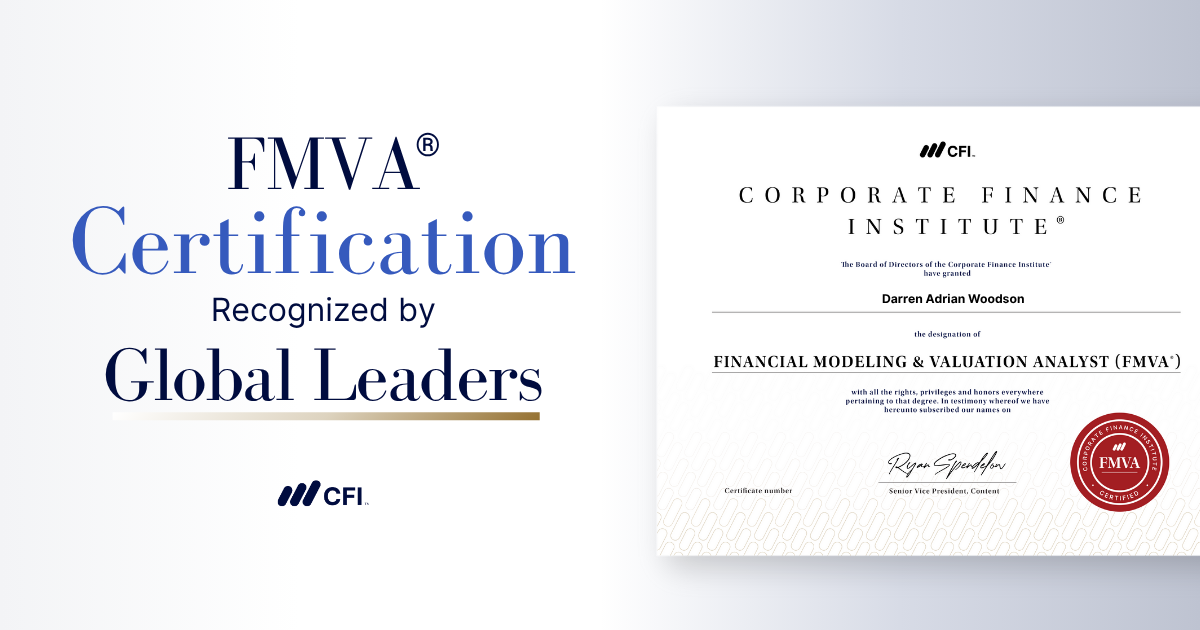
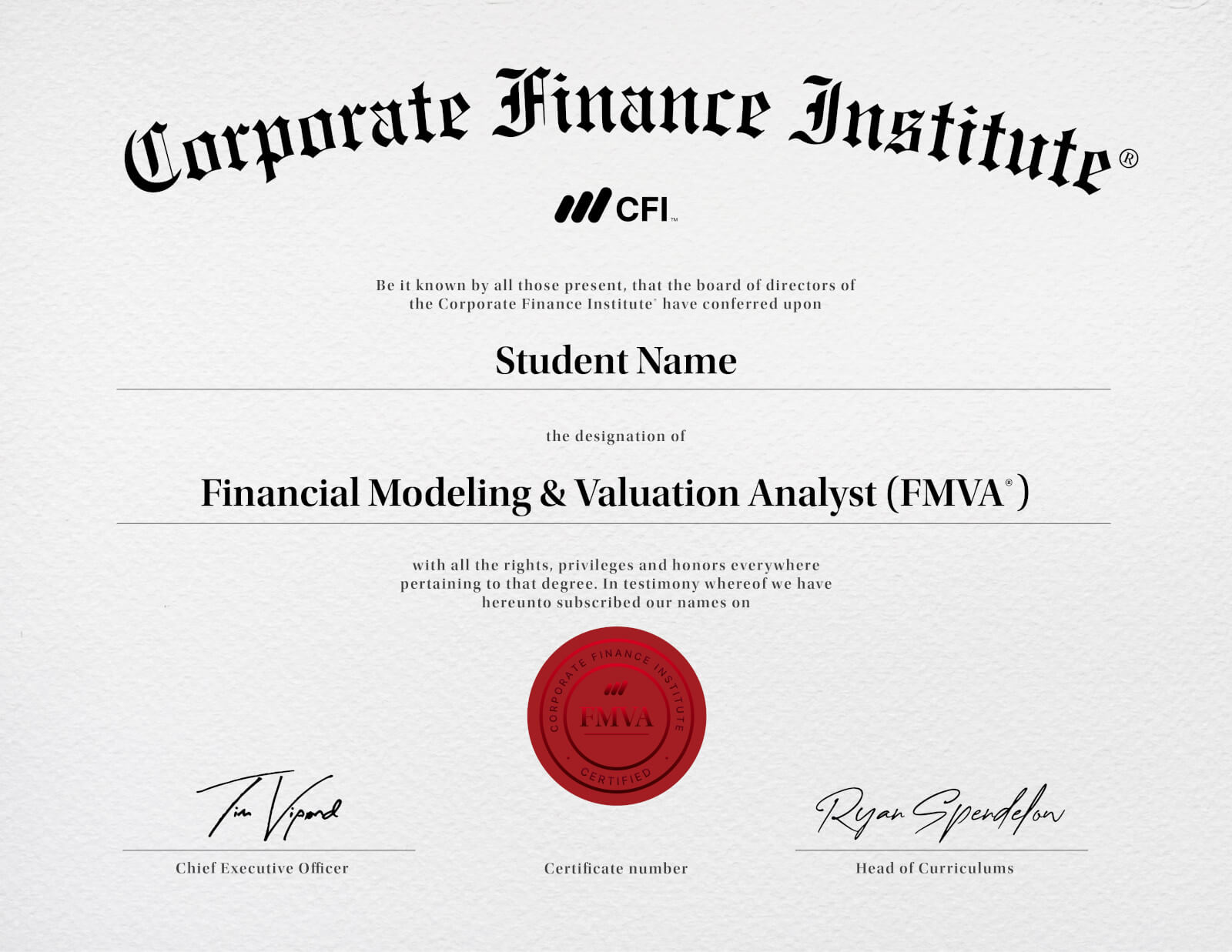
Each subscription unlocks unlimited access to the entire CFI course catalog, downloadable templates, interactive exercises, and the final certification exams. Upon completing all required coursework and passing the final exam with a minimum grade of 70%, graduates receive a verified digital certificate and professional badge that can be integrated directly into LinkedIn profiles and professional resumes.
Broader Implications and Future Outlook
As the financial services industry continues to navigate economic volatility, technological disruption, and shifting regulatory demands, the need for agile, highly skilled analysts remains paramount. Programs like the FMVA represent a broader shift within professional education toward modular, competency-based credentials that offer immediate return on investment for working professionals.

By combining rigorous accounting and valuation principles with advanced Excel modeling, modern data visualization, and artificial intelligence workflows, the Corporate Finance Institute has established a robust pipeline of job-ready talent. For employers seeking analysts who can contribute from day one, and for professionals striving to stand out in a competitive global marketplace, the FMVA certification offers a proven, practical pathway to long-term career success in corporate finance.