Media Industry Pulse: Strategic Hires, Legal Battles, and Digital Transformations Reshaping the News Landscape

The landscape of American media is currently undergoing a period of intense structural and cultural recalibration, defined by high-profile talent acquisitions, protracted legal disputes over press access, and a fundamental shift toward platform-agnostic digital design. As legacy networks contend with evolving audience habits and the rise of independent creator ecosystems, the industry is witnessing a series of moves that highlight the growing importance of investigative rigor, digital accessibility, and organizational stability.
The Shift in Washington Bureau Leadership
The most significant personnel development of the week is the appointment of Paula Reid as the chief White House reporter for MS NOW. Reid, who joins the network after a distinguished tenure at CNN as chief legal affairs correspondent, steps into the role immediately. Her transition is viewed by industry analysts as a strategic effort by MS NOW to bolster its investigative credentials.
In an internal memorandum circulated to staff, MS NOW Washington bureau chief Sudeep Reddy emphasized the necessity of Reid’s expertise. “Paula will bring her deep experience to covering the administration, serve as a key reporting voice across MS NOW’s Washington Bureau, and help drive our newsroom’s investigative and enterprise journalism,” Reddy wrote.
This move comes at a time when the relationship between the White House press corps and the administration has reached a critical juncture. Reid’s background in legal reporting is expected to provide a unique lens through which to interpret the regulatory and executive actions of the current administration, potentially distinguishing MS NOW’s coverage in a crowded media market.
Escalating Tensions Over Press Access
The legal friction between major news organizations and the White House has intensified, with CNN, MS NOW, and Politico filing an amended lawsuit. The plaintiffs have petitioned U.S. District Judge Timothy Kelly to codify existing access orders into a permanent injunction.
The core of the dispute centers on the functional requirements of the press pool. The media organizations argue that the White House has periodically obstructed their ability to perform rotating press pool duties, including access to the Oval Office and travel aboard Air Force One. Historically, these functions have been viewed as foundational to the "Fourth Estate’s" ability to maintain oversight of the executive branch.
The implications of this litigation are profound. Should the court rule in favor of the news outlets, it would establish a formal precedent for press access that transcends the political whims of any single administration. Conversely, a loss could provide future administrations with broader discretionary power to limit media proximity, a prospect that has drawn concern from civil liberties advocates and constitutional scholars alike.
The Rise of Creator-Centric Platforms
Beyond traditional broadcasting, the digital infrastructure of media is being challenged by new ventures. Former CNN executive Andrew Morse has officially launched Phareo, a platform designed to bridge the gap between niche content creators and their target audiences. Co-founded with Brian Whitman, Phareo is positioned as a direct competitor to established giants like YouTube.
Morse, whose career includes a stint as CEO of the Atlanta Journal-Constitution, brings a wealth of experience in institutional media management to this startup venture. The platform’s value proposition lies in its algorithmic approach to community building—helping fans discover creators based on qualitative engagement rather than just vanity metrics. This shift reflects a broader industry trend where the "middle class" of content creators is increasingly seeking independence from the monopolistic tendencies of massive video-sharing platforms.

CBS News and the Philosophy of Trust
At the "WTF Summit" hosted by The Information, CBS News editor-in-chief Bari Weiss provided a rare public glimpse into her editorial philosophy. Addressing the current climate of media skepticism, Weiss challenged the prevailing narrative of a "crisis in trust," suggesting instead that the industry is suffering from a "crisis in trustworthiness."
Weiss’s remarks signal a potential shift in how CBS News might approach its programming. She specifically noted the continued success of the legacy franchise 60 Minutes, emphasizing that her management strategy is not tethered to the volatility of weekly ratings. For a network like CBS, which relies heavily on the credibility of its long-form journalism, prioritizing long-term institutional integrity over short-term audience capture could be a defining strategic pivot.
Technical and Aesthetic Modernization: ABC News Live
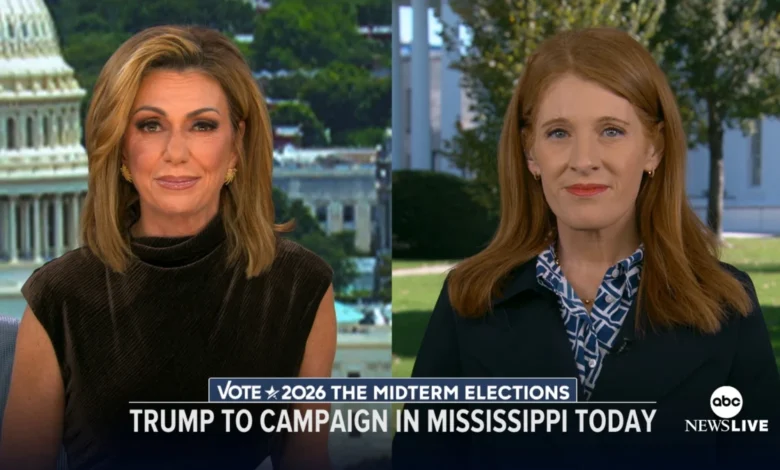
In a move that underscores the importance of multi-platform compatibility, ABC News Live has debuted a comprehensive refresh of its on-air graphics package. The design is characterized by cleaner typography, sharper rendering, and a center-justified lower-third layout that eliminates backplates.
While aesthetic changes may seem superficial to the average viewer, the technical underpinnings of this refresh are significant. By optimizing the graphics for both 16:9 (widescreen) and 9:16 (vertical) aspect ratios, ABC News Live is effectively future-proofing its content for mobile-first consumption. As streaming networks fight for relevance on platforms like TikTok and Instagram, the ability to repurpose broadcast-quality video without costly reformatting is a massive operational efficiency.
Historical Docudrama and Corporate Synergy
The intersection of entertainment and education remains a focus for networks, evidenced by Fox Nation’s upcoming three-part docudrama, Billy Bob Thornton Presents: The Mayflower. Set to premiere on November 23, the series represents a continued investment by streaming services in high-production-value historical content. Featuring a recognizable star like Thornton, the project is designed to drive subscriptions for Fox Nation, demonstrating the continued viability of the "prestige docudrama" model in the streaming era.
Marriages, Promotions, and Industry Honors
The internal culture of major news networks continues to evolve through both personal milestones and leadership changes. The marriage of Fox News primetime host Sean Hannity and Fox & Friends co-host Ainsley Earhardt on October 24 in Palm Beach, Florida, marks a notable intersection of personal and professional spheres for the network.
Meanwhile, the "revolving door" of industry talent continues to spin:
- CBS Sunday Morning: Jon Carras has been promoted to senior producer. A 20-year veteran of the program, Carras has produced over 400 segments, signaling a commitment to internal stability and institutional memory.
- NBC News: Kevin Delaney has been named head of digital content and subscription. His task is to drive revenue growth through new digital opportunities, leveraging his past experience at The New York Times, The Wall Street Journal, and The Information.
- Newspress: Former 60 Minutes executive producer Bill Owens has joined the video journalism startup to oversee the launch of its new programming slate.
- Professional Recognition: Dr. Sanjay Gupta, CNN’s chief medical correspondent, was recently inducted into the Atlanta Press Club Hall of Fame. The honor commemorates his 25-year career at CNN, acknowledging his role in popularizing medical journalism during public health crises.
Analytical Outlook
The current state of the media industry is defined by a tension between consolidation and decentralization. While major networks like MS NOW and CBS are doubling down on core editorial strengths—investigative reporting and institutional trustworthiness—the emergence of platforms like Phareo and the aggressive digital adaptation by ABC News show that the medium is rapidly diversifying.
The litigation surrounding press access suggests that even as news delivery methods change, the fundamental role of the media as a watchdog of government remains under legal and political pressure. As we head into the final quarter of the year, the industry’s success will likely depend on its ability to balance the technical demands of the mobile era with the high-stakes, traditional responsibilities of journalistic accountability. The integration of veteran talent like Paula Reid and Bill Owens into new roles across legacy and startup media firms suggests that the industry is betting on experience to navigate this complex transition.