Navigating the Rapidly Evolving Landscape of State-Level Workplace AI Legislation and Employer Liability

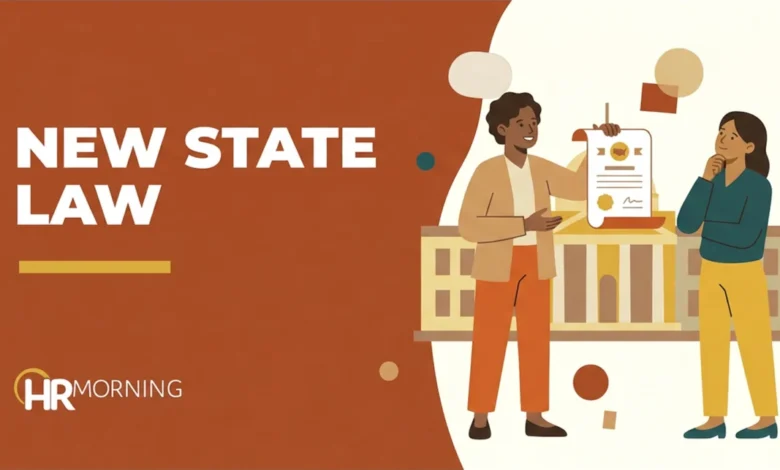
Connecticut has officially signaled a rigorous shift in how the state intends to regulate the integration of artificial intelligence within corporate human resources departments. Effective October 1, 2026, Senate Bill 5 (SB 5) establishes a firm precedent: employers can no longer deflect legal liability for discriminatory hiring, promotion, or termination practices by citing the use of third-party AI algorithms. This legislative move places Connecticut at the forefront of a growing movement to force transparency and accountability upon organizations that rely on automated decision-making systems.
The statute serves as a clarifying agent in a complex regulatory environment, ensuring that the delegation of personnel decisions to machine-learning models does not grant a "black box" immunity to employers. By mandating that the burden of proof regarding non-discrimination remains squarely with the employer, the law effectively treats AI-driven HR platforms as standard business tools for which the company is fully responsible, regardless of the vendor’s claims regarding objectivity.
A Phased Legislative Approach in Connecticut
Connecticut’s regulatory roadmap is designed to allow businesses time to adapt while simultaneously tightening the screws on corporate compliance. The initial phase, which triggers in October 2026, focuses on the foundational principle of accountability. However, the legislation’s second phase, arriving on October 1, 2027, introduces significantly more granular requirements.
Under the 2027 mandates, Connecticut employers will be legally obligated to provide detailed disclosures regarding the use of AI tools to both applicants and existing employees. Perhaps most significantly, the law requires HR technology vendors—regardless of their primary geographic location—to provide employers with the specific technical information required to verify compliance. This provision effectively forces vendors into a transparent partnership with their clients, as employers cannot satisfy their legal obligations without access to the inner workings and data-training parameters of the software they procure. While contracts may shift the administrative burden of providing these notices to the vendor, the legal responsibility for the output of these systems remains an employer’s primary liability.
The Fragmented State of National Workplace AI Rules
For organizations operating across state lines, the Connecticut mandate is merely one piece of a complex, fragmented puzzle. The lack of a comprehensive federal framework for workplace AI has left a vacuum that state legislatures are rushing to fill, resulting in a patchwork of compliance requirements that can vary significantly from one border to the next.
California has emerged as perhaps the most aggressive regulator in this space. Governor Gavin Newsom’s recent legislative package, which began taking effect in late 2026, places severe limitations on the use of AI for employee monitoring and performance evaluation. Starting January 1, 2027, these regulations prohibit the implementation of automated systems that would allow for the unilateral firing or discipline of a staff member. By July 1, 2027, any employer relying on an AI-generated recommendation for a negative employment action must substantiate that decision with "human-in-the-loop" evidence, such as supervisor testimonials, personnel files, or witness accounts. This effectively mandates that AI can serve as a decision-support tool, but never as the sole decision-maker.
Meanwhile, Colorado has adopted a more cautious, albeit evolving, approach. Following the repeal of its initial AI law, the state’s SB 26-189 established a framework where both employers and AI developers share liability for discriminatory outcomes. However, enforcement has been complicated by ongoing federal litigation. The AI firm xAI has successfully obtained a temporary hold on the enforcement of certain provisions, highlighting the tension between rapid technological deployment and the state’s attempt to assert regulatory oversight.
In the Midwest, Illinois has leveraged its existing Human Rights Act to curb AI bias. Since the beginning of 2026, the state has classified certain AI-driven discriminatory practices as civil rights violations. Illinois also maintains the Artificial Intelligence Video Interview Act, a pioneering piece of legislation that requires explicit applicant consent and provides strict protocols for the deletion and protection of video data analyzed by AI.
New York City continues to enforce its Local Law 144, which focuses on the auditability of automated employment decision tools (AEDTs). Employers operating within the city limits must conduct annual bias audits and provide public summaries of the results to ensure that their software does not disproportionately filter out candidates based on protected characteristics.
Landmark Litigation: The Courts Take Notice
The legislative activity in these states is being mirrored by a surge in high-stakes litigation. Current court cases are effectively stress-testing the legal definitions of agency and responsibility in the age of algorithmic hiring.
The case of Mobley v. Workday has become the definitive bellwether for the industry. The plaintiff alleges that automated screening tools were used to systematically exclude him from employment based on race, age, and disability. The federal court’s decision to allow the case to proceed—and the potential for class certification—signals that the judiciary is increasingly willing to look past the "vendor-neutrality" defense. If courts decide that AI platforms act as agents of the hiring firm, the liability landscape for any company using third-party software will expand exponentially.
Similarly, Kistler v. Eightfold AI is challenging the status of AI-generated scores under the Fair Credit Reporting Act (FCRA). The plaintiffs argue that these scores constitute consumer reports and, therefore, should be subject to the rigorous notice and dispute resolution requirements of federal law. A ruling in favor of the plaintiffs would force a massive shift in how AI developers and employers interact, likely requiring a complete restructuring of the applicant-feedback loop.
Conversely, Harper v. Sirius XM offers a cautionary tale for plaintiffs. The dismissal of this case without prejudice indicates that courts are still demanding a high evidentiary bar. To successfully challenge AI bias, plaintiffs must provide concrete statistical data or comparative analysis rather than mere suspicion of algorithmic unfairness.
Seven Strategic Steps for AI Compliance
As legal, regulatory, and social pressures mount, human resources departments must formalize their approach to AI integration. Experts suggest the following seven-step framework to mitigate risk and ensure compliance:
- Comprehensive Vendor Audits: Require all AI vendors to provide independent, third-party audit reports that verify their tools are free from systemic bias. Do not rely solely on internal vendor statements.
- Human-in-the-Loop Protocols: Establish a mandatory review process where a human manager must approve all significant employment decisions, including hiring, firing, and promotions, ensuring the AI’s output is only one of many data points considered.
- Transparency and Disclosure: Proactively inform all candidates and employees if AI tools are being used to evaluate them. Clearly define the criteria the AI is measuring and the weight it carries in the decision-making process.
- Regular Impact Assessments: Conduct internal, ongoing audits of AI outcomes to identify any potential disparate impact on protected groups. Document these assessments thoroughly to demonstrate a "good faith" effort to comply with state and federal anti-discrimination laws.
- Robust Data Governance: Ensure that the data feeding into your AI systems is representative, accurate, and free from historical biases. Poor data hygiene is the primary driver of algorithmic discrimination.
- Legal and Compliance Review: Engage with legal counsel to review every contract with HR technology providers. Ensure that the contract includes indemnity clauses and clear responsibilities regarding who is responsible for providing mandatory notices to candidates.
- Employee Training: Train recruiters and HR staff on the limitations of AI. Ensure they understand how to interpret AI suggestions without blindly relying on the machine, and how to identify potential red flags that may indicate a model has drifted into biased behavior.
The era of unchecked reliance on artificial intelligence in the workplace is coming to a close. As state laws and court precedents continue to converge, the burden on employers is clear: they must treat their AI tools with the same level of scrutiny and accountability as they would any human employee. The transition will require significant investment in time and technical literacy, but for those who fail to adapt, the consequences—both legal and reputational—are likely to be severe.