FedEx Chief Financial Officer John Dietrich to Step Down as Logistics Giant Progresses Toward Major Corporate Restructuring and Freight Spin-Off

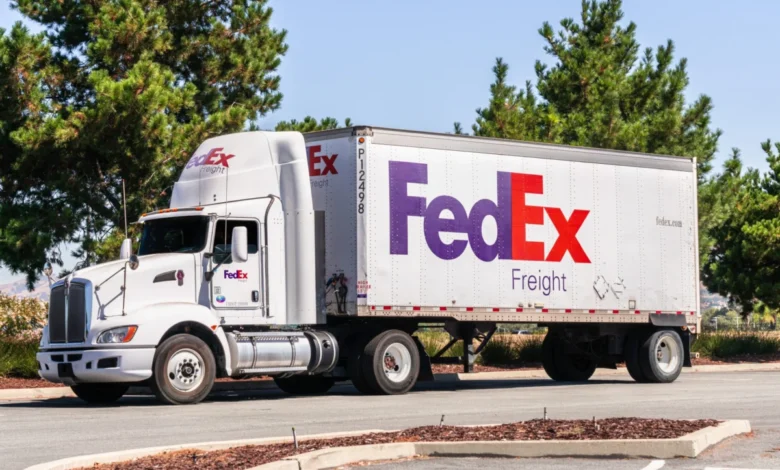
FedEx Corp. has officially announced that John Dietrich, the company’s executive vice president and chief financial officer, will step down from his role as part of a planned transition that aligns with one of the most significant structural overhauls in the company’s 50-year history. The leadership change is strategically timed to coincide with the anticipated completion of the spin-off of FedEx Freight into an independent, publicly traded entity, a milestone currently scheduled for June 1, 2026. While Dietrich will formally relinquish the CFO mantle on that date, the company confirmed in its April 13 announcement that he will remain in an advisory capacity until July 31, 2026, to ensure a seamless transition of responsibilities and provide continuity during the final stages of the divestiture.
This executive departure marks a pivotal moment for the Memphis-based logistics behemoth as it navigates the complexities of the "One FedEx" consolidation and the aggressive "DRIVE" efficiency program. To bridge the leadership gap, FedEx has appointed Claude Russ, the current enterprise vice president of finance, to serve as interim CFO effective June 1, 2026. The company has initiated a comprehensive search process, evaluating both internal and external candidates, to identify a permanent successor who can steer the organization through its post-spin-off era.
A Strategic Leadership Transition
John Dietrich joined FedEx during a period of intense volatility in the global logistics sector, bringing with him decades of experience in aviation and finance, including his previous tenure as the CEO of Atlas Air Worldwide. During his time at FedEx, Dietrich was instrumental in managing the company’s balance sheet as it embarked on a multi-year transformation aimed at boosting profitability and integrating its disparate operating segments.
FedEx CEO Raj Subramaniam expressed his gratitude for Dietrich’s contributions, noting that the CFO played a vital role in navigating the company through a period of "significant transformation." This transformation refers to the massive undertaking of merging FedEx Express, FedEx Ground, and FedEx Services into a single unified organization. Historically, these units operated independently, often leading to redundancies such as two different FedEx trucks delivering to the same address. The consolidation is intended to eliminate these inefficiencies, and Dietrich’s financial oversight was central to maintaining investor confidence during this friction-heavy process.
The appointment of Claude Russ as interim CFO signals a preference for stability and deep institutional knowledge. Russ is a 24-year veteran of FedEx, having climbed the corporate ranks through various high-stakes leadership positions. Currently, he leads the FedEx Global Financial Planning and Analysis team, a role that puts him at the heart of the company’s long-term budgeting and strategic forecasting. Perhaps more importantly, Russ has been a key architect of the "DRIVE" initiative, the company’s multi-year strategic program designed to slash billions in structural costs. His intimate familiarity with the company’s cost-saving targets makes him a logical choice to maintain the current momentum.
The FedEx Freight Spin-Off and the DRIVE Initiative
The timing of Dietrich’s departure is inextricably linked to the June 2026 spin-off of FedEx Freight. FedEx Freight is the leading provider of less-than-truckload (LTL) shipping services in North America, and for years, it has been one of the most profitable segments of the FedEx portfolio. However, activist investors and market analysts have long argued that the market was undervalueing the Freight segment by keeping it tucked under the broader FedEx umbrella.
By spinning off FedEx Freight into a separate publicly traded company, FedEx aims to "unlock value" for its shareholders. This move allows the remaining FedEx entity to focus exclusively on its parcel delivery and logistics technology business, while the new Freight company can pursue its own capital allocation strategies tailored to the industrial trucking market. The June 1, 2026, deadline represents the culmination of years of financial modeling and legal preparation, much of which was overseen by the outgoing CFO and the incoming interim CFO.
Simultaneously, FedEx is continuing its DRIVE program, which aims to achieve $4 billion in permanent cost savings by the end of fiscal 2025, with further efficiencies planned through 2026. This involves optimizing the global air network, consolidating sorting facilities, and leveraging artificial intelligence to improve route density. Russ’s leadership in the DRIVE program suggests that the company’s primary focus remains on margin expansion and operational leaness, even as it manages a change at the top of its finance department.
Market Context and E-commerce Dominance
The significance of FedEx’s internal changes cannot be overstated given its massive footprint in the North American retail economy. According to data from Digital Commerce 360, nearly half of the Top 2000 retailers in North America—the continent’s largest online sellers by annual e-commerce revenue—rely on FedEx as a primary shipping carrier.
The scale of this influence is reflected in the financial figures. Retailers utilizing FedEx for their shipping needs are projected to combine for a staggering $789.51 billion in e-commerce sales in 2025. As the backbone of the digital economy, any shift in FedEx’s leadership or operational strategy has a ripple effect across the entire supply chain. Despite the upcoming leadership transition, FedEx has reaffirmed its financial outlook for fiscal 2026, signaling to Wall Street that the company remains on track to meet its earnings targets and capital expenditure goals.
The logistics industry is currently in a state of hyper-competition, with Amazon Logistics expanding its third-party delivery services and UPS aggressively pursuing healthcare and small-business volumes. By streamlining its corporate structure and focusing on high-margin e-commerce delivery, FedEx is positioning itself to defend its market share against these encroaching rivals.
Innovation and Customer-Centric Initiatives
Beyond the boardroom and the balance sheet, FedEx has been rolling out a series of aggressive service innovations designed to capture a larger share of the "last-mile" delivery market. In March 2026, the company introduced "SameDay Local," an initiative that offers two-hour delivery windows for local merchants and consumers. This move was seen as a direct challenge to rapid-delivery services like DoorDash and Uber Direct, as well as Amazon’s Prime Now.
Furthermore, FedEx has strengthened its relationship with Amazon, a move that surprised some industry observers given the historically competitive nature of the two giants. In late March 2026, the companies announced an expansion of their partnership regarding free returns. This allows Amazon customers to drop off returns at thousands of FedEx Office locations, providing a level of convenience that is critical for maintaining consumer loyalty in the competitive e-commerce landscape.
Sustainability has also moved to the forefront of the company’s operational strategy. FedEx recently introduced reusable shipping boxes specifically designed for business-to-business (B2B) shipments. This initiative is part of a broader goal to achieve carbon-neutral operations by 2040. By focusing on circular packaging solutions, FedEx is addressing the growing demand from corporate clients for environmentally responsible logistics partners.
Analysis of Broader Implications
The departure of a CFO during a major spin-off is often viewed with caution by the market, but the long lead time provided by FedEx suggests a controlled and deliberate transition. By announcing the change more than a year in advance, FedEx is avoiding the "executive flight" narrative that often plagues large corporations during periods of upheaval.
The choice of Claude Russ as the interim successor provides a bridge between the old "siloed" FedEx and the new "unified" FedEx. His background in financial planning is particularly relevant as the company seeks to prove to investors that it can maintain its dividend and share repurchase programs while funding the expensive process of physical network integration.
For the broader economy, the health of FedEx is a bellwether for consumer spending. The $789.51 billion in e-commerce sales handled by FedEx-affiliated retailers underscores the company’s role as a vital utility for modern commerce. If the transition to the "One FedEx" model and the Freight spin-off are successful, it could set a new standard for how legacy logistics companies adapt to the digital-first era. However, the search for a permanent CFO remains a critical task. The board will likely look for a candidate with a strong background in technology and capital markets, someone who can articulate a vision for FedEx that goes beyond mere package delivery and into the realm of data-driven global trade.
As the company moves toward the June 2026 deadline, stakeholders will be watching closely to see if the interim leadership can maintain the pace of the DRIVE initiative’s cost-cutting measures without sacrificing service quality. With the logistics landscape shifting beneath their feet, the leadership team at FedEx is tasked with nothing less than reinventing an American icon for the mid-21st century.
Timeline of Key Events
- March 2026: FedEx launches SameDay Local (two-hour delivery) and expands the Amazon returns partnership. Reusable B2B shipping boxes are introduced.
- April 13, 2026: FedEx announces that CFO John Dietrich will step down effective June 1, 2026, and remain an advisor until July 31. Claude Russ is named interim CFO.
- June 1, 2026: The official date for the spin-off of FedEx Freight into a separate publicly traded company. Claude Russ officially assumes the interim CFO role.
- July 31, 2026: John Dietrich officially concludes his tenure with FedEx Corp.
- Late 2026 (Projected): Expected announcement of a permanent CFO following a global search.
The coming months will be a period of intense activity for the FedEx finance team as they finalize the tax and regulatory filings for the Freight spin-off while continuing to report quarterly earnings that must reflect the progress of the DRIVE program. For now, the company appears to be moving forward with a clear plan, aiming to emerge from this transition as a leaner, more focused competitor in the global logistics arena.