GME Supply expands its Midwestern footprint through the strategic acquisition of Commercial Supply Co.

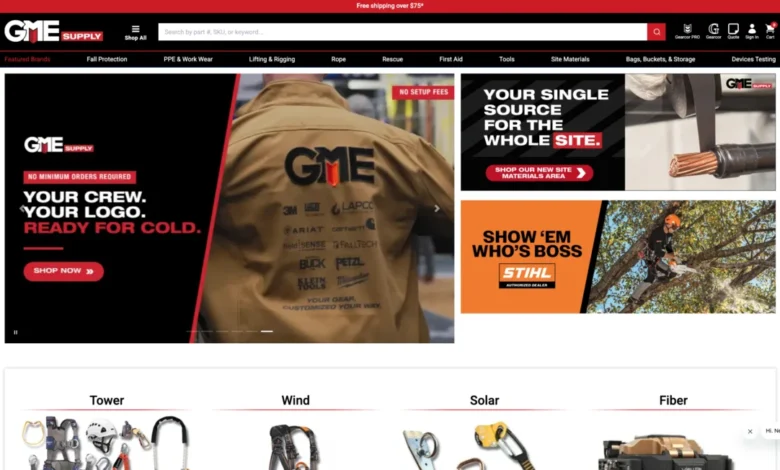
The landscape of industrial safety distribution is undergoing a significant consolidation as GME Supply, a prominent Columbia, Missouri-based provider of workplace safety gear and equipment, has officially announced the acquisition of Des Moines, Iowa-based Commercial Supply Co. (CSC). This strategic transaction represents a major expansion of GME Supply’s regional presence and integrates a specialized portfolio of industrial textiles and cable-wrapping equipment into its existing inventory. While the financial terms of the agreement remain confidential, the deal confirms the ongoing trend of private-equity-backed firms utilizing "add-on" acquisitions to scale operations and optimize digital distribution channels.
A Chronology of Strategic Growth
GME Supply has spent the better part of the last decade positioning itself as a digital-first leader in the industrial supply sector. The acquisition of Commercial Supply Co. follows a period of rapid institutional growth for the Missouri distributor. In 2023, GME Supply was acquired by Incline Equity Partners, a Pittsburgh-based private equity firm with a history of scaling middle-market businesses. This injection of capital provided the resources necessary for GME to aggressively pursue growth through both internal technological development and external acquisition.
The integration of CSC is the latest milestone in this trajectory. Commercial Supply Co., led by co-owners Brad Lilienthal and Jason Curry, has established a firm reputation among construction and industrial contractors in the Midwest. By bringing Lilienthal and Curry into the GME fold, the parent company retains the institutional knowledge and local relationships that have made CSC a reliable partner for contractors in the wind and solar sectors—two industries with high demand for the specific PPE and safety products that CSC specializes in.
The Rationale Behind the Consolidation
From a macroeconomic perspective, the acquisition of a regional player by a larger, tech-enabled distributor follows a classic M&A playbook. Alex Stepansky, founder of Corridome, a data firm specializing in private equity and M&A activity, notes that the "add-on" strategy is designed to create immediate value. Regional distributors like CSC possess deeply embedded customer accounts and supplier lines that would take years of organic effort to replicate.
"A regional distributor comes with branches, contractor accounts, and supplier lines that would take years to build," Stepansky observed. "Small distributors also tend to sell for a lower multiple of earnings than a larger platform does, so each add-on raises the total valuation of the parent company for a future exit."
For GME Supply, the acquisition is not merely about physical territory; it is about migrating a high-quality customer base onto a sophisticated digital platform. GME has heavily invested in its ecommerce infrastructure, including its primary site GME.com and its specialized platform FWLSP.com. Furthermore, the company owns Gearcor, a proprietary software solution that allows corporate managers to create private online marketplaces for their crews. By moving CSC customers onto these systems, GME can provide more streamlined inventory access and procurement tracking, theoretically increasing the lifetime value of every contractor account acquired in the deal.
Official Perspectives on the Merger
The leadership teams of both organizations have framed the acquisition as a synergistic opportunity to enhance service delivery. Ryan Keogh, CEO of GME Supply, emphasized that the decision was driven by the quality of CSC’s operations and their alignment with GME’s "digital-first" philosophy.
"Commercial Supply has earned a strong reputation by understanding what contractors need and delivering solutions that keep projects moving," Keogh stated. "Their expertise, customer relationships, and entrepreneurial approach are a natural fit with GME Supply. Together, we can offer customers broader capabilities, greater access to inventory, and the resources to support projects across more markets."
Brad Lilienthal, co-owner of Commercial Supply Co., echoed these sentiments, highlighting the benefits of the national distribution network that GME provides. "Joining GME Supply creates exciting opportunities for our customers and employees," Lilienthal said. "With access to a broader range of products, additional resources, and a national distribution network, we can build on what we’ve established and serve more customers across more markets."
Digital Transformation and Market Risks
The success of this merger will likely hinge on the migration of customers to GME’s digital platforms. Mike Danford, an omni-marketplace operator at Adverio, notes that the digital integration is the most significant opportunity—and the most significant risk—in the deal.
In the current B2B climate, digital procurement is becoming the standard. According to industry data, business buyers currently represent 8% to 9% of sales across broad industrial catalogs, with that figure climbing to nearly 20% in specific, high-tech categories. As contractors grow accustomed to the convenience of "Amazon-style" ordering, traditional distributors that fail to modernize their checkout and fulfillment processes risk losing market share.
Danford warns that the transition period is critical. "The risk is the migration," he noted. "Make the contractor relearn how to order and the marketplace siphons the new business." He argues that the deal will be considered a success only if the customer experience remains consistent throughout the transition. "It fails when the first thing the customer notices is a new login, higher prices, and a product that didn’t survive the catalog cut. Contractors rarely switch distributors over a merger. They switch over the week an order didn’t show up."
Broader Implications for the Industrial Sector
The acquisition underscores a wider trend within the industrial safety market, where the demand for specialized, high-performance PPE is growing alongside the complexity of supply chains. Solar and wind energy projects, for example, require specialized fall protection and industrial textiles that are not always available through general-purpose hardware suppliers. By consolidating these niche distributors, GME Supply is building a moat around its business, ensuring that it remains the primary point of contact for complex, high-stakes industrial projects.
Furthermore, the involvement of private equity firms in this space suggests that the sector is likely to see further consolidation. As these firms seek to optimize supply chains and digital throughput, smaller, family-owned or regional distributors will likely continue to face a choice: scale independently through heavy investment in technology or join a larger platform to leverage existing digital infrastructure.
For the immediate future, the focus for the GME and CSC teams will be the seamless integration of their logistics and inventory systems. If successful, this move will solidify GME Supply’s position as a dominant force in the Midwest and a formidable competitor in the national marketplace. For the contractors served by these companies, the hope is that the merger will result in fewer stock-outs, faster delivery times, and a more intuitive ordering process that allows them to focus on the essential work of building infrastructure.
Summary of Future Outlook
As the dust settles on this transaction, the industry will be watching closely to see how effectively the Des Moines-based team is integrated into the Columbia-based corporate structure. If the transition proves as seamless as leadership has promised, GME Supply will have successfully transformed a regional competitor into a high-functioning arm of a sophisticated, national digital distribution network.
The ultimate test, however, will be the retention of the contractor accounts that defined CSC’s success. In a market where customer loyalty is built on the reliability of the supply chain, any disruption to the procurement process could provide an opening for competitors to capture disenchanted clients. For now, the move appears to be a calculated and well-reasoned step in the evolution of the modern industrial safety distributor, setting a benchmark for how traditional, relationship-based businesses can adapt to the digital demands of the 21st-century economy.
Related posts: