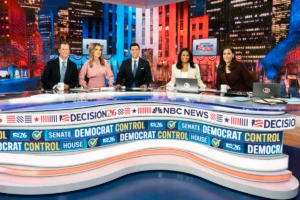
James Talarico Makes History as First Texas Democrat to Win U.S. Senate Seat in Nearly Four Decades

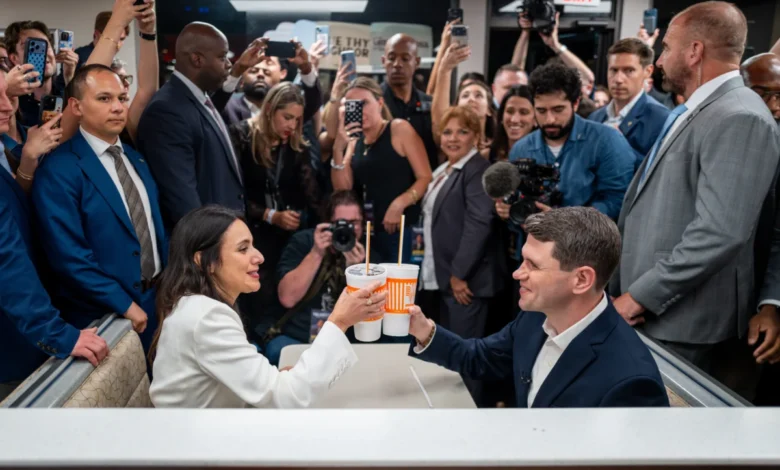
James Talarico, the former state representative from Pflugerville, has achieved a historic political milestone by securing a victory in the Texas U.S. Senate race, ending a Republican winning streak that has defined the state’s political landscape since 1988. Talarico’s defeat of incumbent-aligned candidate Ken Paxton represents a seismic shift in American electoral politics, marking the first time in 37 years that a Democrat has ascended to this office in the Lone Star State. This transition of power was fueled by a sophisticated, multi-channel media strategy that combined viral digital engagement with substantial traditional broadcast investment, signaling a new playbook for Democratic campaigns in historically conservative strongholds.
The mechanics of this victory have been analyzed by political strategists nationwide, as Talarico’s campaign successfully bridged the gap between traditional broadcast dominance and the rapid, decentralized nature of modern social media consumption. According to internal campaign data, the Talarico operation generated more than 3 billion organic views on TikTok since the campaign’s official launch in September 2025. This digital footprint, which began with high-engagement clips from his time in the Texas state legislature, proved to be a decisive factor in mobilizing younger demographics and building a brand that resonated far beyond the traditional political base.
A Chronology of the 2025-2026 Campaign Cycle
The path to Talarico’s victory began long before the final votes were cast on Tuesday. The following timeline outlines the key phases of the campaign that led to this outcome:
- September 2025: The Talarico campaign officially launches, prioritizing a digital-first approach. Almost immediately, short-form content featuring Talarico’s legislative committee room debates gains traction on TikTok, setting a record for viral political engagement.
- October 2025 – January 2026: The campaign begins its heavy investment in traditional media, allocating $56.5 million to broadcast television, $8.3 million to Connected TV (CTV), and $8 million to YouTube advertising. Radio remains a peripheral focus, receiving only $210,000 in ad spend.
- February 2026: Public polling begins to show a narrowing gap between Talarico and Paxton. Analysts attribute this shift to the sustained organic traffic from social media platforms, which allowed the campaign to reach undecided voters without the high cost of traditional advertising for those specific demographics.
- March 2026: The campaign’s digital strategy expands to include interactive forums and real-time responses to state legislative events, further cementing Talarico’s image as a disruptor of the status quo.
- April 2026: Election Day concludes with a historic turnout, confirming Talarico as the winner and ending the nearly four-decade Republican lock on the U.S. Senate seat.
Financial Strategy and Media Allocation
While the viral nature of Talarico’s TikTok presence garnered significant headlines, the financial backbone of the campaign was rooted in a traditional, high-budget broadcast strategy. By concentrating the majority of its $73 million primary media budget into broadcast television, the campaign ensured that it maintained a baseline of visibility among older, consistent voters—a demographic that has historically been the bedrock of Texas elections.
The campaign’s spending breakdown reveals a clear prioritization of visual media:
- Broadcast TV: $56.5 million
- Connected TV (CTV): $8.3 million
- YouTube Advertising: $8 million
- Radio: $210,000
This allocation suggests a sophisticated understanding of media consumption habits. By keeping radio spending low, the campaign signaled that it did not view traditional audio platforms as a high-conversion vehicle for its specific messaging. Instead, the focus on CTV and YouTube allowed the campaign to leverage the data-driven targeting capabilities of digital advertising while maintaining the high-production-value reach of television.
The Role of Viral Digital Engagement
The unprecedented 3 billion organic views on TikTok are particularly noteworthy for political historians. Unlike paid advertising, these views were earned through algorithmic performance, meaning the campaign’s message was being shared by users rather than simply served to them. This phenomenon—often referred to as "social proof"—allowed Talarico to cultivate an authentic, grassroots image.
By utilizing clips from his time as a state representative, Talarico was able to showcase his legislative experience in a way that felt accessible. This contrast—between the polished, traditional broadcast advertisements and the raw, confrontational nature of his committee-room clips—created a dual-track narrative that successfully engaged both the political establishment and the younger, digital-native voter base.
Official Responses and Political Reactions
While the Paxton campaign has not yet issued a detailed post-mortem on the loss, analysts close to the Republican party have noted that the defeat represents a failure to adapt to the changing media landscape. "The Talarico campaign treated social media as a primary engine of their platform, not just an auxiliary tool," noted one political strategist based in Austin. "By the time the traditional media cycle caught up, the narrative had already been set by the digital discourse."
Democratic party officials have hailed the win as a potential blueprint for future cycles. "This victory shows that the ‘Texas model’ of Republican dominance is not a law of nature," said a spokesperson for the Democratic Senatorial Campaign Committee. "When you combine a compelling candidate, a robust broadcast budget, and a digital strategy that meets voters where they are, you can move the needle in even the most challenging environments."
Broader Impact and Policy Implications
The victory of James Talarico will have immediate and long-term implications for the United States Senate and for the state of Texas. With this shift, the balance of power in the Senate will be altered, potentially providing the Democratic caucus with the extra seat needed to pass key legislation or influence judicial appointments.
In Texas, the impact will likely be felt in the state’s legislative priorities. As a former state representative, Talarico brings a specific set of local grievances to the federal level. His focus on education reform, utility infrastructure, and housing affordability—topics he championed during his time in the Texas House—will now become part of the federal discourse.
Furthermore, the "Talarico Model" is likely to influence how future candidates across the country approach their own campaigns. The success of his digital-first, broadcast-backed hybrid strategy will likely lead to an influx of spending on CTV and short-form video content in future election cycles. As political parties realize that organic virality can serve as a multiplier for paid media, the competition for attention in the digital space will undoubtedly intensify.
Analytical Outlook: Why This Shift Matters
The significance of this election cannot be overstated. Since 1988, Texas has been viewed as a bastion of conservative politics, often serving as the strategic anchor for the Republican party’s national platform. A Democrat winning a U.S. Senate seat here breaks a psychological and structural barrier that many believed would stand for at least another decade.
From a data-driven perspective, the Talarico campaign’s success proves that the divide between "online politics" and "real-world voting" is effectively closed. The campaign did not treat TikTok as a separate entity from its TV spots; rather, it treated them as two halves of a single, coherent strategy. By using the high-energy, clip-driven content to build awareness and then using the broadcast TV ads to reinforce credibility, the campaign successfully moved voters through the funnel from awareness to action.
As the dust settles on the 2026 election, political analysts will continue to scrutinize the data to determine if this was a candidate-specific success or a broader shift in the Texas electorate. Regardless of the long-term trends, the election of James Talarico will be remembered as the moment the digital-social era truly matured in American political campaigning. For the Republican party, the loss serves as a stark reminder that traditional demographics are no longer destiny in the face of rapid technological and cultural shifts. For the Democratic party, it provides a much-needed victory that could reshape their national strategy for years to come.
Related posts: