Corporate Responsibility and Legal Thresholds in the Wake of Workplace Sexual Assault


A recent federal court ruling has cast a stark light on the complex intersection of employment law, corporate duty, and the rigid statutes of limitation that govern workplace harassment claims. The case, which centered on a sexual assault occurring during an international company retreat, concluded with a summary judgment in favor of the employer. While the court did not reach a definitive conclusion regarding the veracity of the assault allegations—as the claims were dismissed on procedural grounds—the case serves as a sobering case study for human resources departments and legal counsel regarding how companies handle trauma, performance management, and the legal risks associated with post-incident workplace dynamics.
The incident in question occurred in September 2022, during a company-sponsored sales retreat in Italy. According to court filings, a remote sales employee reported that a male coworker subjected her to a verbal threat and a degrading sexual remark, culminating in a physical sexual assault. The event, which took place after a group dinner, necessitated the intervention of other coworkers who physically removed the assailant from the victim.
A Chronology of the Conflict
The timeline following the incident highlights the friction between the company’s internal disciplinary processes and the victim’s evolving needs. Following the assault, the company initiated an internal investigation. In the initial interviews with human resources, the victim reportedly expressed a desire to avoid further contact with the assailant, though she did not explicitly demand his termination at that early stage.
Internal records indicate that while two company managers recommended the termination of the coworker, the firm ultimately opted for a disciplinary alternative: the issuance of written warnings and the implementation of mandatory training modules. The company contended that the assailant had no further direct contact with the victim following the incident, as their professional duties were limited to occasional company-wide Zoom calls.
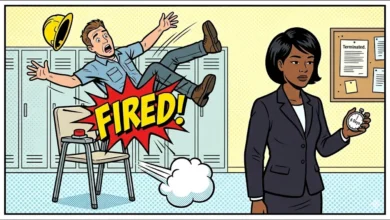
However, the victim’s professional life became increasingly fraught in the months following the assault. She reported to the company that she had developed post-traumatic stress disorder (PTSD) and that her resulting anxiety was negatively impacting her ability to perform her job duties. During this period, the company documented several performance issues. By the spring of 2023, the employee was placed on a performance improvement plan (PIP). She failed to meet the specified benchmarks, and in June 2023, the company underwent a departmental reorganization that led to the elimination of her sales team, resulting in her termination.
The Federal Legal Battle and Procedural Hurdles
The employee initiated legal action, alleging that the company had fostered a hostile work environment and that her subsequent termination was a form of retaliation for reporting the sexual assault. The case ultimately faltered due to the strict adherence to the 300-day filing deadline mandated by the Equal Employment Opportunity Commission (EEOC).
The plaintiff filed her complaint 395 days after the incident occurred. Her legal team argued that the company’s decision to retain the assailant and her eventual firing constituted "continuing violations," which would have theoretically extended the statute of limitations. The court, however, remained unconvinced. It ruled that the lingering effects of an assault—such as the psychological trauma or the knowledge that the perpetrator remained employed—do not constitute a "continuing act" of harassment that would toll the filing deadline. Because the federal harassment claim was deemed untimely, the court effectively bypassed the question of whether the company was legally liable for the assault itself.
Regarding the retaliation claim, the court scrutinized the company’s documentation. The employer provided robust evidence that the employee’s performance had declined prior to the termination and that other employees who had not filed harassment claims were subject to similar disciplinary measures and layoffs during the reorganization. Finding no causal link between the reporting of the assault and the firing, the court dismissed the federal retaliation claims. It is important to note that the court declined to rule on pending state-law claims, leaving the door open for the plaintiff to pursue litigation regarding the company’s failure to protect an employee or its internal supervision practices in state court.
The Landscape of Workplace Safety Data
The issues raised in this case reflect broader trends in workplace safety. According to data from the National Sexual Violence Resource Center, sexual harassment in the workplace remains a pervasive issue, with a significant percentage of victims experiencing secondary trauma through the employer’s response. Legal experts note that while companies are required by law to provide a safe working environment, the definition of "safe" often creates tension between HR’s desire to mitigate legal risk and the victim’s need for workplace separation.
A study by the Society for Human Resource Management (SHRM) suggests that companies that fail to conduct meaningful follow-ups after an investigation often face increased litigation risks. In this instance, the court’s decision underscores that while a company may win a federal case through meticulous documentation, the absence of a proactive, empathetic support system for the victim can leave a company vulnerable to long-term state-level litigation and significant reputational damage.
Strategic Lessons for the Modern Workplace
For employers, this ruling offers a set of critical takeaways that transcend the technicalities of federal law.
-
The Fallacy of Passive Resolution: The case highlights the risk of treating a serious incident as "resolved" once disciplinary warnings are issued. When an employee reports ongoing anxiety or safety concerns, HR must treat these as active, unfolding issues. A "check-the-box" investigation is rarely sufficient to mitigate the long-term emotional and professional fallout of an assault.
-
Documentation Must Be Holistic: The employer in this case survived the legal challenge largely because it maintained impeccable records of performance failures. However, the lesson for other firms is that performance management must be transparent. If an employee is suffering from PTSD following a workplace incident, management should consider whether reasonable accommodations under the Americans with Disabilities Act (ADA) are required to support their performance before initiating a PIP.
-
Crisis Protocols for Remote and Off-Site Work: The assault occurred during an international retreat, an environment that often strips employees of their typical support systems. Companies must establish clear, pre-planned protocols for off-site emergencies. This includes designating specific, neutral individuals for reporting incidents and ensuring that victims have immediate access to, or can be separated from, the accused without needing to navigate complex administrative hurdles.
-
The "Statute of Limitations" Trap: Employees are often told that they must report harassment through official channels, but the legal reality is that those channels have specific expiration dates. Organizations should be transparent about these deadlines, or better yet, foster a culture where such reporting is not the final step of a process, but the first step of a comprehensive safety intervention.
Implications for Future Litigation
The fact that the court left state-level claims undecided is a vital detail. While the employer "won" the federal portion of the case, they remain exposed to potential liability regarding whether they failed to properly supervise the perpetrator or whether their internal response fell below the standard of care expected under state statutes.
Ultimately, this case demonstrates that a technical legal victory is not the same as an organizational success. By relying on the expiration of a filing deadline, the company successfully avoided federal accountability for the incident. However, the case remains a cautionary tale for any organization that prioritizes the retention of a problematic employee over the long-term safety and psychological well-being of its workforce. As workplace standards continue to evolve, the expectation for employers to act as stewards of their employees’ safety—even outside of the office walls—is only likely to increase, regardless of what the federal statute of limitations dictates.