Third Circuit Court of Appeals Affirms Dismissal of Racial Hostile Work Environment and Retaliation Claims Following Prompt Employer Action

The United States Court of Appeals for the Third Circuit recently issued a precedential-style affirmation of a summary judgment in favor of a Pennsylvania-based packaging factory, providing a definitive roadmap for how corporate entities can mitigate liability through swift and decisive remedial action. The case, which centered on allegations of a racially hostile work environment, disparate treatment, and retaliation, underscores the high evidentiary threshold required for plaintiffs to succeed under Title VII of the Civil Rights Act of 1964 and 42 U.S.C. § 1981 when an employer adheres to strict disciplinary and attendance protocols.
The litigation arose from a series of events involving a Black employee who worked the night shift at a manufacturing facility located near Valley Forge, Pennsylvania. The core of the hostile work environment claim involved a single, albeit egregious, incident in the spring of 2020. A day-shift coworker utilized a racial slur—the n-word—while discussing the plaintiff with other employees. Although the plaintiff was not present to hear the slur directly, he was informed of the comment later that day and promptly reported the incident to management. The employer’s response was immediate: the offending coworker was suspended pending an investigation and was terminated from his position within one week of the report.
Despite the employer’s rapid intervention, the plaintiff filed suit following his own termination in May 2021, which the company maintained was the result of repeated violations of its neutral attendance policy. The District Court for the Eastern District of Pennsylvania originally granted summary judgment to the employer on all counts, a decision that the Third Circuit has now upheld in full.
The Legal Threshold for Hostile Work Environment Claims
To prevail on a claim of a racially hostile work environment, a plaintiff must demonstrate that they suffered intentional discrimination because of their race, that the discrimination was severe or pervasive, and that the discrimination detrimentally affected them. Crucially, for employer liability to attach, the plaintiff must prove that the employer is responsible under a theory of respondeat superior or failed to take prompt and effective remedial action.
The Third Circuit’s analysis focused heavily on the "severe or pervasive" requirement. While the court acknowledged the inherent offensiveness of the slur used, it noted that the circumstances of its utterance did not meet the legal standard for a hostile environment. The court distinguished this case from its prior ruling in Castleberry v. STI Group, where it had previously held that a single use of the n-word could, in specific contexts, be sufficient to sustain a claim. In Castleberry, however, the slur was used by a supervisor in front of several minority employees while accompanied by a direct threat of termination.
In the present case, the court identified three critical distinctions: the speaker was a peer coworker rather than a supervisor; the slur was not directed at the plaintiff in his presence; and the incident did not involve any physical or professional threats. Furthermore, the court emphasized that the employer’s immediate termination of the offender essentially "cured" the environment of the hostility. Under federal law, when an employer takes prompt and effective action that stops the harassment, it cannot be held liable for the conduct of a non-supervisory employee.
Chronology of Key Events and Litigation
The timeline of the case was instrumental in the court’s determination, particularly regarding the claims of retaliation and pretext.
- Spring 2020: A day-shift coworker uses a racial slur in reference to the plaintiff. The plaintiff reports the incident.
- One Week Later: The employer completes its investigation and terminates the offending coworker.
- Late 2020 – Early 2021: The plaintiff continues his employment but begins accumulating attendance points under the company’s "no-fault" attendance policy.
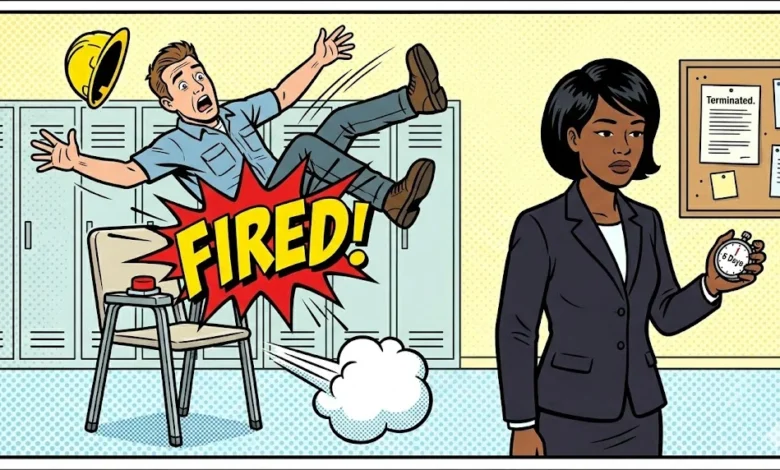
- May 2021: The plaintiff reaches 10.5 attendance points. The company policy mandates termination at 9 points.
- May 2021: The company terminates the plaintiff’s employment based on the attendance record.
- 2022-2023: Litigation proceeds in the U.S. District Court for the Eastern District of Pennsylvania.
- March 2024: The Third Circuit Court of Appeals affirms the lower court’s grant of summary judgment.
Disparate Treatment and the Failure of Pretext Arguments
In addition to the hostile work environment claim, the plaintiff alleged disparate treatment, arguing that his termination for attendance was a "pretext" for racial discrimination. Under the McDonnell Douglas burden-shifting framework, once an employer provides a legitimate, non-discriminatory reason for an adverse employment action, the burden shifts back to the employee to prove that the reason was a lie intended to cover up discrimination.
The plaintiff attempted to show pretext by pointing to other employees who he claimed were treated more leniently regarding attendance. However, the court found this evidence insufficient. Several of the "comparators" cited by the plaintiff were of the same race as him, which logically undermined the argument that his termination was motivated by racial bias.
Furthermore, the plaintiff submitted unconventional evidence in the form of videos showing cars parked in handicapped spots at the facility without the proper permits. He argued that the company’s failure to discipline these drivers showed an inconsistent application of company rules. The court dismissed this argument as speculative, noting that the plaintiff provided no evidence regarding the race of the drivers, whether management was aware of the parking violations, or whether the drivers had actually been disciplined. The court reaffirmed that "speculation and conjecture" are not substitutes for evidence of discriminatory intent.
The Impact of Temporal Proximity on Retaliation Claims
The retaliation claim faced a significant hurdle in the form of "temporal proximity." To establish a causal link between a protected activity (reporting a slur) and an adverse action (being fired), courts look at how much time elapsed between the two events.
In this instance, more than a year had passed between the plaintiff’s complaint about the slur and his eventual termination for attendance. The Third Circuit noted that while a "suggestive" proximity of a few days or weeks might support an inference of retaliation, a gap of several months—let alone a full year—is generally too wide to establish causation without other evidence of "intervening antagonism." Because the plaintiff could not show a pattern of hostility or a direct link between his 2020 complaint and his 2021 firing, the retaliation claim was dismissed.
Broader Implications for Workplace Management
The ruling serves as a vital case study for Human Resources professionals and legal counsel. It highlights the protective power of a robust and consistently applied internal investigation process. By firing the offending coworker within seven days, the employer effectively insulated itself from a hostile work environment claim that might otherwise have proceeded to a costly jury trial.
Furthermore, the case reinforces the importance of "no-fault" attendance policies. These policies, when documented accurately and applied without regard to race, provide a strong defense against claims of disparate treatment. The court’s refusal to accept the "handicapped parking" videos as evidence of pretext also suggests that courts will maintain a narrow focus on relevant comparators—specifically, other employees who committed similar infractions—rather than allowing plaintiffs to use unrelated policy lapses to prove bias.
Statistical Context of Racial Harassment in the U.S.
The Third Circuit’s decision comes at a time when racial harassment claims remain a significant portion of the Equal Employment Opportunity Commission’s (EEOC) workload. According to recent EEOC enforcement data, charges alleging race-based discrimination consistently account for over 30% of all filings annually. Furthermore, retaliation remains the most frequently cited category of charge in the federal sector, appearing in over 50% of all complaints filed with the commission.
The legal standard applied in this case reflects a broader judicial trend in the Third Circuit—which covers Pennsylvania, New Jersey, Delaware, and the U.S. Virgin Islands—to balance the protection of employee rights with the practical realities of management. By requiring that a single slur be accompanied by aggravating factors (such as supervisory authority or direct threats) to constitute a hostile environment, the court maintains a high bar for litigation while still providing a pathway for claims involving truly systemic or severe abuse.
Conclusion and Future Outlook
The Third Circuit’s affirmation in this matter provides clarity for both employers and employees within its jurisdiction. For employees, the ruling clarifies that reporting an incident is the necessary first step, but that an employer’s prompt remediation may legally satisfy their obligations. For employers, the message is clear: inaction is the greatest risk. A single racial slur, while reprehensible, does not automatically result in corporate liability if the organization demonstrates that such behavior is not tolerated and is met with immediate termination.
As workplace culture continues to evolve, this decision stands as a reminder that the "promptness" of a response is often the most critical factor in judicial reviews of harassment claims. The factory near Valley Forge avoided liability not because the incident didn’t happen, but because their internal systems functioned exactly as intended when it did.