The Rise of Answer Engine Optimization and the Fundamental Shift in Digital Search Strategies

The digital search landscape is undergoing its most significant transformation since the inception of the search engine, as Answer Engine Optimization (AEO) replaces traditional search engine optimization (SEO) as the primary battleground for brand visibility. As AI-powered interfaces—such as Google AI Overviews, ChatGPT, Microsoft Copilot, and Perplexity—become the default gateways for information retrieval, the established rules of digital marketing have become increasingly obsolete. Where once brands prioritized domain authority and backlink volume to secure a top-ten ranking, the new era demands a focus on "quotability," accuracy, and structural integrity.
The Erosion of Traditional Search Metrics
For decades, the SEO industry operated on a predictable, linear model: identify a high-volume keyword, develop long-form content, and secure high-quality backlinks to increase domain rating. This strategy was designed to appease search algorithms that prioritized relevance and authority. However, generative AI models operate on stochastic principles, meaning they do not "rank" content in a traditional sense. Instead, they curate and synthesize information from multiple sources to provide a direct answer to a user’s prompt.
This paradigm shift means that visibility is no longer guaranteed by the size of a domain or a long history of SEO optimization. Instead, answer engines favor content that is "extractable"—data that is cleanly structured, factually precise, and easily parsed by large language models (LLMs). According to recent industry analysis, brands that successfully secure citations in AI-generated answers share specific, repeatable behavioral patterns, moving away from "findability" toward "quotability."
The Anatomy of a High-Citation Brand
Data derived from recent industry reports and extensive citation analysis across major AI engines indicates that success in the current climate is driven by five core technical and content-based pillars.
-What-We-Learned-from-Analyzing-10+-Brands-With-High-AI-Search-Citations-1-20260826-304258.webp)
First, consistent content structure is essential. AI models process information by parsing and "chunking" text. Content that is cluttered or poorly formatted lacks the clarity required for an engine to confidently extract a concise answer. Research indicates that pages utilizing robust heading structures—specifically those employing H2, H3, and H4 tags—correlate with higher citation rates. A sweet spot has been identified in content containing between 7 and 15 H2 headings, which allows the AI to compartmentalize complex topics into discrete, answerable segments.
Second, the principles of E-E-A-T (Experience, Expertise, Authoritativeness, and Trustworthiness) remain paramount, though they are now applied with greater stringency. AI engines must verify the credibility of the information they present, as they risk their own reputation with every citation. Brands that display clear author bios, verifiable credentials, outbound links to primary sources, and consistent brand signals across the web are significantly more likely to be recognized as authoritative entities by AI models.
Third, a multi-channel presence is no longer optional. Modern AI engines do not look at a brand’s website in isolation; they scan the entire digital footprint, including community forums, social media platforms, and niche industry publications. Data shows that platforms like LinkedIn and YouTube carry substantial weight, as they serve as indicators of practitioner authority and demonstrated expertise, respectively.
Fourth, the cadence of content maintenance is a critical trust signal. Freshness is not merely a matter of publication frequency but of "active maintenance." Pages that include the current year in their titles, update statistics, and display clear "last updated" timestamps signal to the engine that the information is current and managed.
Finally, technical hygiene through schema markup provides the necessary map for AI models. By implementing FAQ, article, and author schema, brands remove the guesswork for the engine, providing a structured, machine-readable format that simplifies the extraction process.

Platform-Specific Dynamics and Intent
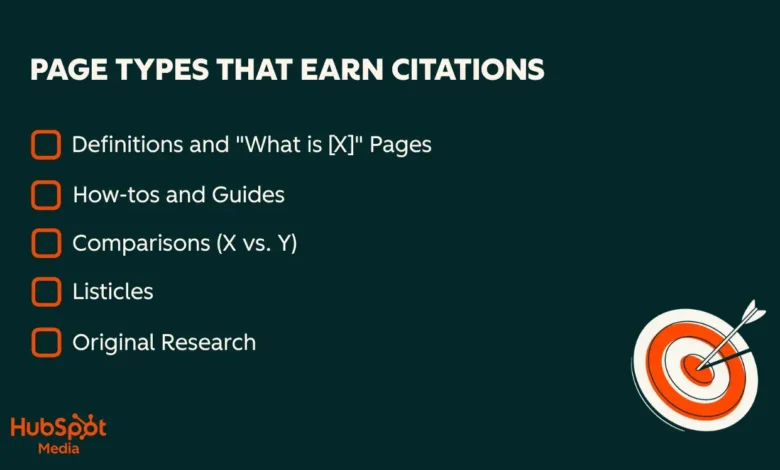
The search ecosystem is not a monolith; each platform possesses a distinct "citation appetite." Google AI Overviews (AIO) continues to show a strong correlation with traditional SEO rankings, favoring authoritative, informative articles that have already established themselves in organic search. Conversely, ChatGPT demonstrates a clear preference for comparison content—pages that evaluate options (X vs. Y) and provide user reviews.
Gemini, Google’s conversational AI, is designed for multi-step, iterative interactions, rewarding content that supports a back-and-forth dialogue. Perplexity, meanwhile, prioritizes real-time, specific, and niche data, frequently citing product pages and blog content that offer high-level specificity. These variances suggest that a one-size-fits-all strategy is inherently flawed. Effective AEO requires segmenting content based on the strengths of the target platform.
The Evolution of Performance Measurement
The transition to AEO has created a significant measurement challenge. Traditional metrics, such as click-through rates (CTR) and organic traffic, are no longer sufficient to gauge success. In many cases, AI engines provide the user with the answer directly, meaning the user never clicks through to the source website. This phenomenon has led to "zero-click" journeys, where the outcome (a conversion or brand awareness) is achieved without a traditional visit.
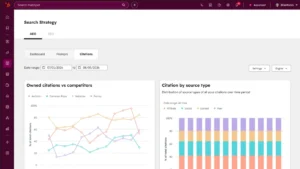
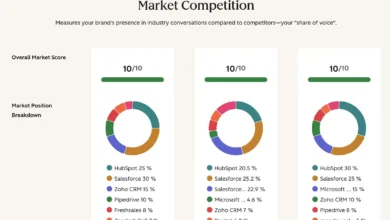
Industry experts note that dashboards reliant on click-era metrics are often misleading. AI crawlers visit websites at a significantly higher frequency than human users, which can inflate impression data while leaving actual traffic numbers flat. To effectively measure AEO, organizations must adopt new KPIs, such as "Brand Visibility Score," "Share of Voice" within AI answers, and prompt-tracking metrics that monitor how often a brand is cited in response to specific industry queries.
Governance and the Future of AI Brand Representation
The rise of AEO also introduces new requirements for corporate governance. The question of how AI engines access and represent a brand’s proprietary data is no longer solely an IT concern; it is a critical marketing and legal issue. Organizations must establish clear guidelines regarding which data points are accessible to AI crawlers and how their brand positioning is synthesized in AI-generated output.
-What-We-Learned-from-Analyzing-10+-Brands-With-High-AI-Search-Citations-2-20260826-1137108.webp?width=700&height=403&name=(non-organic)-What-We-Learned-from-Analyzing-10+-Brands-With-High-AI-Search-Citations-2-20260826-1137108.webp)
Failure to manage this "bot governance" can lead to the propagation of inaccurate or unauthorized brand information. A multi-departmental approach—involving marketing, legal, and IT—is required to ensure that the content presented by AI aligns with the brand’s strategic goals.
The Path Forward
As of late 2024, approximately 58% of global marketers have begun optimizing for answer engines, yet the majority remain in an experimental phase. The brands that will succeed in this new environment are those that treat AEO not as a one-time project, but as a continuous loop of creation, distribution, and refinement.
The 90-day action plan for organizations looking to gain a foothold in AI search includes:
- Audit and Baseline: Establishing a clear understanding of current visibility using specialized AI search auditing tools.
- Content Refresh: Prioritizing the optimization of existing high-authority pages to meet the structural requirements of AI engines.
- Distribution: Increasing activity on high-trust platforms like LinkedIn and YouTube to reinforce brand authority.
- Measurement: Transitioning from click-based reporting to citation and sentiment-based analysis.
The disruption of the search engine market represents a fundamental change in how information is synthesized and consumed. While the tools of the trade have shifted from backlink-building to structural precision, the underlying objective remains the same: ensuring that when a user asks a question, the brand provides the definitive, trusted answer. As AI engines continue to evolve, the brands that prioritize accuracy, structure, and entity authority will be the ones that command the most visibility in the future of search.
Related posts: