Under Armour CEO Kevin Plank Charts Strategic Turnaround Amidst Q2 Revenue Decline and Structural Realignment

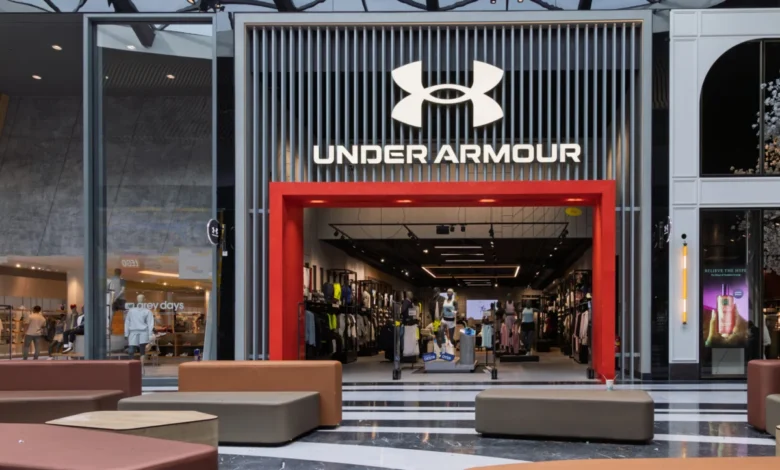
Under Armour, the iconic Baltimore-based sportswear titan, finds itself at a critical crossroads as it navigates a challenging fiscal landscape marked by shifting consumer demand and a sweeping internal reorganization. In the company’s fiscal second quarter ended September 30, net revenue dipped 6.9% year-over-year to $1.24 billion. Despite this contraction, CEO Kevin Plank, who returned to the helm to spearhead a massive brand transformation, expressed a measured sense of optimism, emphasizing that the company is successfully meeting its internal operating income outlook even as it manages top-line pressure.
The fiscal results underscore the uphill battle the brand faces in regaining its competitive edge in a crowded athleisure market dominated by giants like Nike and Lululemon. Under Armour, currently ranked No. 158 in the Digital Commerce 360 Top 1000 database of North America’s largest online retailers, is attempting to pivot from a period of stagnation toward a more streamlined, data-driven future.
The Financial Landscape: A Breakdown of Q2 Performance
The contraction in revenue during the second quarter was broad-based, affecting both wholesale and direct-to-consumer (DTC) channels. Wholesale revenue, which serves as the primary engine for the company’s distribution, fell 6% to $725 million. According to company executives, this decline was driven by softer sell-through rates for full-price merchandise and specific pressures within the distributor network, though these losses were partially mitigated by strength in select international markets and strategic accounts.
The direct-to-consumer segment faced even steeper headwinds, declining 8% to $494 million. Within this segment, the company’s owned and operated retail stores saw a 7% decline, while e-commerce revenue plummeted by 12%. Plank attributed these persistent declines to a fundamental struggle with consumer traffic, particularly within the North American market, which has historically been the brand’s most lucrative territory.
While the figures reflect a difficult environment, Plank highlighted that the company’s efforts to improve conversion rates and execute targeted digital marketing initiatives have provided some necessary buoyancy. Under Armour is currently working to integrate advanced analytical tools into its operations, as evidenced by its standing at No. 285 in the AI Commerce Rankings, a metric that tracks how effectively companies are leveraging artificial intelligence to drive digital sales.
A Chronology of Transformation: The Road to 2026
The current fiscal struggle is not an isolated event but rather a symptom of deeper structural challenges that Under Armour has been addressing through its Fiscal 2025 Restructuring Plan. This initiative, designed to simplify the business, sharpen product offerings, and reduce operational complexity, is the focal point of Plank’s current tenure.
In the second quarter alone, the company incurred $13 million in restructuring-related costs. This figure is part of a larger, long-term capital allocation strategy that expects the transformation to be "substantially complete" by the end of 2026. The roadmap for this transformation involves a painful but necessary pruning of underperforming assets and a heavy emphasis on operational efficiency.
The company has maintained a cautious outlook for the remainder of the fiscal year, projecting that total revenue will likely decrease at a mid-single-digit percentage rate. This guidance reflects the management team’s acknowledgment that the brand recovery will not be instantaneous and that the retail environment remains volatile.
The Strategic Pivot: AI as a Catalyst for Change
A significant portion of the November 6 earnings call was dedicated to the role of artificial intelligence in Under Armour’s future. Plank, viewing the current industry climate as ripe for technological disruption, argued that the sports apparel sector is uniquely positioned to benefit from AI-driven logistics and demand forecasting.
"I think that our industry actually lines and maps up perfectly for the advantage of what AI brings for us," Plank noted during the call. He identified three pillars where AI is expected to yield the most significant returns:
- Supply Chain Optimization: Enhancing the speed and accuracy of product movement from manufacturing to the retail floor.
- Merchandising: Using predictive analytics to ensure the right products reach the right demographics at the right time, minimizing excess inventory.
- Marketing: Personalizing consumer engagement to counteract the persistent traffic challenges identified in the North American market.
Despite his enthusiasm for technological integration, Plank maintained a grounded perspective on the basics of retail. He cautioned that no amount of AI can replace the fundamental necessity of operational excellence. "Ship us everything that we ordered," he remarked, underscoring that the primary mandate for the supply chain remains the consistent, on-time, and full delivery of goods. This focus on "accuracy and delivering on time" represents a back-to-basics approach that the company believes will improve customer trust and inventory health.
Broader Implications and Market Context
The decline in Under Armour’s revenue occurs against a backdrop of a global athletic apparel market that is undergoing a period of correction. Following the massive boom in demand during and immediately after the COVID-19 pandemic, many retailers have been forced to grapple with inventory gluts, changing fashion trends, and a consumer base that is increasingly price-sensitive due to inflationary pressures.
For Under Armour, the challenge is twofold: it must convince the market that its brand remains relevant to a younger, more fashion-conscious demographic, and it must prove that its operational machinery can function with the agility of its leaner competitors.
Analysts have noted that while the restructuring costs are a short-term drag on earnings, they are essential to cleaning up a balance sheet that has been burdened by bloated operations. By narrowing the focus to core competencies and leveraging AI to solve historical inefficiencies in the supply chain, Under Armour is essentially attempting to rebuild its foundation while running a marathon.
The implications for stakeholders are clear: the next eighteen months will be a proving ground for Plank’s vision. If the company can stabilize its traffic in North America and successfully execute its digital-first initiatives, the current revenue declines may be viewed in hindsight as the final tremors of a long-needed corporate realignment. However, if the traffic trends in the DTC segment continue to slide, the company may find itself forced to adopt even more drastic measures to preserve margins.
The Path Forward: Investor and Industry Outlook
Looking ahead, the market will be closely monitoring the company’s "full-price sell-through" metrics. The reliance on discounting to move product has been a historical challenge for many apparel brands, and Under Armour’s ability to move away from such practices will be the primary indicator of whether their new merchandising strategy is working.
As the retail industry continues to evolve, the integration of data science into traditional brick-and-mortar and e-commerce strategies is no longer a luxury but a requirement for survival. Under Armour’s current placement in the AI Commerce Rankings serves as a baseline, but the company will need to demonstrate tangible improvements in bottom-line profitability to satisfy institutional investors who have seen the stock struggle over the past several fiscal cycles.
The company’s commitment to transparency regarding its restructuring plan—and the candid admission of the difficulties in the wholesale and digital channels—suggests a management team that is aware of the gravity of the situation. As the Fiscal 2025 Restructuring Plan reaches its mid-point, the metrics of success will shift from "process and cost-cutting" to "growth and market share acquisition."
In summary, Under Armour is currently in a phase of strategic consolidation. By acknowledging the reality of its traffic challenges and leaning into the potential of artificial intelligence to optimize its supply chain and merchandising, the brand is positioning itself to be a more efficient, if not smaller, player in the global market. Whether this leaner approach will be enough to recapture the growth trajectory of its earlier years remains to be seen, but for now, the objective is clear: navigate the transition, satisfy the core consumer, and ensure that every item ordered is delivered on time, every time.