Mastering AI-Driven Workflow Automation to Optimize Daily Professional Productivity

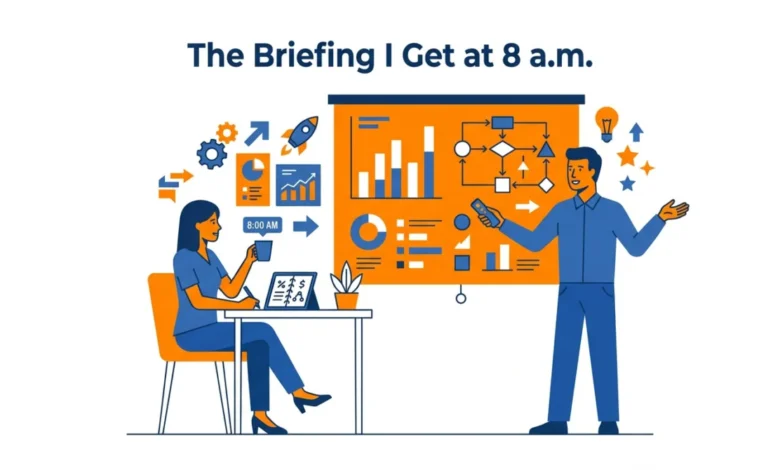
The modern professional landscape is currently undergoing a structural transformation as individuals increasingly turn to artificial intelligence not merely as a creative aid, but as an architectural component of their daily routines. At the core of this shift is the transition from ad-hoc prompt engineering to the implementation of systemic, repeatable workflows. By automating the recurring elements of one’s schedule—such as the 8 a.m. daily briefing—professionals are finding that they can reclaim significant cognitive bandwidth. This evolution in productivity management relies on three fundamental pillars: precise input management, robust workflow logic, and the systematic application of curiosity to troubleshoot automated outputs.
The Anatomy of a Scalable Routine
The foundational premise of effective automation is the identification of recurring structures within variable content. A daily briefing, for instance, involves consistent categories—meeting agendas, participant lists, and energy management guidance—even if the specific data points fluctuate daily. By formalizing these requirements into a repeatable process, users can transition from manual information gathering to a state of delegated oversight.
Industry data suggests that the average knowledge worker spends approximately 28% of their workweek managing email and related administrative tasks, a figure that remains a primary target for AI integration. When these tasks are structured into a "briefing," the tool effectively functions as a force multiplier. The goal is to move beyond simple text generation toward the creation of a "living" system that updates itself based on incoming data, provided the user has established clear, logical parameters for the AI to follow.
Chronology of Implementation: From Assistance to Autonomy
The path toward full workflow automation is rarely instantaneous; it typically follows a three-stage progression that requires careful calibration at each level.
- Assistance (The Interaction Phase): This initial stage involves iterative back-and-forth communication. The user learns to "interview" the AI, essentially forcing the model to define its own constraints. By using prompts such as "Ask me questions before we proceed," the user forces the system to clarify the scope, tone, and audience of a task. This phase is critical for building a repository of "style rules" that the AI will eventually internalize.
- Workflows (The Integration Phase): Once the interaction pattern is stabilized, the user moves to connecting disparate software tools. A common example is the automated extraction of action items from meeting transcripts. Instead of merely summarizing a meeting, the workflow triggers a sequence: extracting key tasks, pushing them into a project management platform, and drafting a follow-up email. This minimizes the "context switching" that often leads to productivity bottlenecks.
- Agents (The Execution Phase): The final stage involves autonomy. Here, the AI is granted specific permissions and access to approved datasets to run processes without manual intervention. At this level, the primary human responsibility shifts from task execution to high-level review, ensuring that the AI’s output aligns with established quality standards.
Data Integrity and the "Clean Folder" Requirement
A common failure point in AI deployment is the assumption that the model can interpret disorganized or siloed information. Before attempting to scale an automated workflow, practitioners emphasize the necessity of "data hygiene." If an AI cannot navigate a file system, it cannot provide an accurate summary or execute a task.
Background analysis from productivity consultants indicates that the most effective AI integrations are those that operate on structured, labeled, and accessible data. Before querying a large language model, the professional must ensure that the source material—such as meeting minutes, project briefs, or research documents—is stored in a logically organized repository. If the input data is messy, the output will inevitably be unreliable. Therefore, the "least glamorous" part of the process—cleaning and organizing files—is arguably the most important step for long-term success.
Troubleshooting and Iterative Refinement
Even the most sophisticated automated systems encounter failures. When an AI provides a disappointing or inaccurate response, the tendency of many users is to abandon the tool. However, expert practitioners advise a "one more question" approach. Instead of discarding the output, the user should treat the error as an diagnostic opportunity: Which files were consulted? What logic was used to reach the conclusion? By identifying the missing instruction or the irrelevant source, the user can refine the "brief" for the next iteration.
This investigative approach transforms the AI from a black-box generator into a transparent tool. Verification is paramount; every claim or action proposed by an automated agent must be cross-referenced against original, verifiable sources. This practice of "inspect, change, and rerun" serves to train the user as much as it trains the AI, fostering a deeper understanding of how the model processes information.
Broader Implications for the Workforce
The shift toward AI-managed workflows has profound implications for how organizations define "professional competence." As repetitive tasks are delegated, the value of the human worker shifts toward oversight, critical analysis, and system design.
A significant challenge remains in the transition from "drafting" to "finalizing." Many professionals currently use AI to generate a rough draft, only to perform the bulk of the editing manually in their email or document app. If the AI is not "taught" through these corrections, the cycle of inefficiency repeats. The systemic solution is to create a feedback loop where the edits made by the human are fed back into the AI’s prompt library, ensuring that the machine adapts to the user’s preferred structure and tone over time.
Furthermore, the use of multiple models can provide a competitive advantage. Because different AI models (such as those optimized for reasoning versus those optimized for creative writing) surface different possibilities, a workflow that shuttles an idea through multiple models can result in a more robust output. By maintaining a clear, documented path for this "perspective collection," professionals can avoid the procrastination that often accompanies the "blank page" syndrome.
Conclusion: Building for the Next Level
The objective for the coming quarter for many firms is the formalization of these AI practices. By choosing one recurring, low-value task and applying the principles of clear inputs, workflow thinking, and constant curiosity, professionals can systematically build a more efficient daily routine.
Whether one is at the "Assistance" level, where the focus is on mastering prompt engineering, or the "Agent" level, where the focus is on integration and permissions, the fundamental requirement remains the same: the human must act as the architect of the process. The 8 a.m. briefing is not merely a tool for organization; it is a template for how professionals can structure their entire day, ensuring that human attention is reserved for the high-level decision-making that AI is not yet equipped to handle. By building one step at a time—starting with the morning brief and expanding into more complex, automated handoffs—the modern professional can ensure that their digital tools serve as a catalyst for growth rather than a source of further distraction.