When HR Becomes the Complainant: Federal Court Upholds Employer Defense in Attendance-Related Discrimination Suit

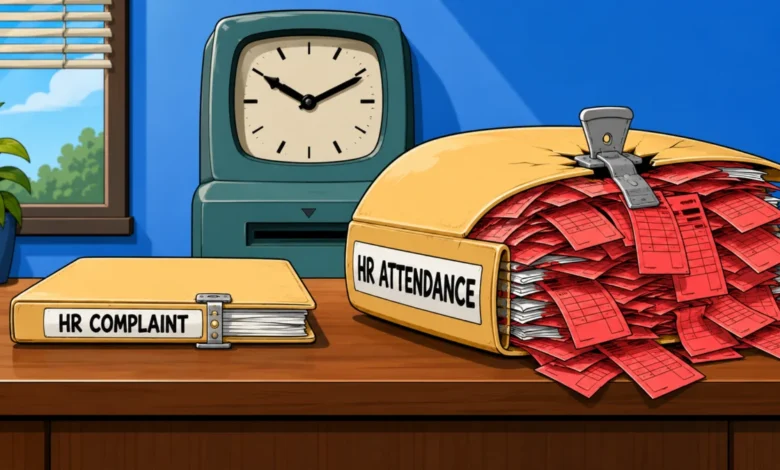
In a recent decision that underscores the importance of objective performance documentation, a federal appeals court has upheld a summary judgment in favor of an employer facing allegations of workplace discrimination, retaliation, and a hostile work environment. The case serves as a critical case study for human resources departments, illustrating how meticulous record-keeping and a consistent application of company policy can successfully shield an organization from litigation, even when the complainant is a member of the HR staff tasked with oversight duties.
The legal battle centered on a former HR employee who claimed that her employer’s actions were motivated by racial and gender bias. However, the Sixth Circuit Court of Appeals found that the employer’s actions—specifically the implementation of a performance improvement plan (PIP) following a series of documented attendance failures—were grounded in legitimate business needs rather than discriminatory animus.
Chronology of Events and Internal Escalation
The conflict originated following a corporate job fair that yielded disappointing results in terms of applicant volume. In the aftermath of the event, the employee’s manager granted her permission to leave the office early. A professional photographer arrived at the office shortly thereafter to capture images for corporate marketing materials. Upon learning that she had missed the photo session, the employee alleged that her manager had intentionally excluded her to ensure that the corporate photographs featured an exclusively white staff, thereby creating a discriminatory visual narrative.
This event served as the catalyst for a series of internal complaints. Shortly thereafter, the employee raised concerns regarding a white colleague’s schedule, which she perceived as more favorable than her own. While her initial complaint did not explicitly allege racial or gender-based discrimination, the company initiated an internal investigation led by an HR vice president. The investigation concluded that there was no evidence of intentional exclusion. Following this review, the company moved to address the employee’s scheduling grievances, eventually granting her request for a preferred shift and subsequently promoting her.
The situation deteriorated after the promotion. When the company moved to reassign her workstation, the employee objected. An HR director conducted a formal review in November, explaining the business rationale behind the office layout change while simultaneously addressing the employee’s lingering concerns about the earlier job fair and scheduling issues. By December, the tensions escalated when the employee sent an email to the director, accusing her manager of subjecting her to public embarrassment on the basis of her race. During the subsequent investigation, the director discovered that the employee had also filed a formal charge of discrimination with a state civil rights agency.
The Attendance Discrepancy: Data vs. Allegation
At the heart of the litigation was the irony of the employee’s professional responsibilities. Her role required her to monitor and record attendance violations for plant-floor employees. However, her manager had identified significant issues with her own attendance record well before the formal discrimination charge was filed.
The company’s records paint a stark picture of the performance gap. By March, a performance review revealed that the employee had accrued 29 absences, 120 late arrivals, and 136 unrecorded attendance points. The employer utilized electronic card-swipe data to verify these figures, providing an objective, immutable timeline of the employee’s physical presence in the office. Faced with this data, the employee acknowledged that her productivity had suffered and that she had fallen behind on her essential duties.
When the manager sought to address these performance failures, the HR director advised a cautious approach to avoid the appearance of retaliation, suggesting the manager address attendance during a group meeting rather than a one-on-one counseling session. Ultimately, the employer placed the employee on a performance improvement plan. Following a period of FMLA leave and several meetings regarding her performance, the employee resigned, subsequently alleging that she had been subjected to constructive discharge.
Judicial Analysis and the Burden of Proof
In the ensuing lawsuit, the employee faced the high burden of proving that the employer’s stated reasons for the PIP—attendance and incomplete work—were merely a pretext for unlawful discrimination or retaliation. Under the McDonnell Douglas burden-shifting framework typically applied in such cases, once an employer provides a legitimate, non-discriminatory reason for an adverse employment action, the burden shifts to the plaintiff to demonstrate that the reason is a lie or insufficient to explain the action.

The court found that the employee failed to meet this burden. The card-swipe data served as an objective anchor that corroborated the employer’s claims of absenteeism. Furthermore, the court noted that the manager had expressed concerns about the employee’s attendance before the discrimination charge was filed, which significantly undermined the claim that the discipline was retaliatory.
Regarding the employee’s allegation that her manager instructed her not to hire candidates from Pontiac—a city with a predominantly Black population—the court determined that while the statement was problematic, it did not constitute direct evidence of discrimination against the plaintiff herself. The court reasoned that the instruction required an inference about the manager’s motives and, crucially, did not relate to an adverse employment action taken directly against the plaintiff. Consequently, the court affirmed the summary judgment, declining to rule on the constructive discharge claim because the underlying discrimination and retaliation claims failed to hold legal weight.
Strategic Implications for Human Resources
This case provides a roadmap for employers navigating the complexities of internal complaints, particularly when the complainant is an HR professional. Legal experts and management consultants point to four primary takeaways from this ruling:
1. Independent Oversight for Internal Complaints
When an HR employee files a complaint against an HR manager or director, the standard chain of command is inherently compromised. To mitigate risks, organizations should immediately assign the investigation to an independent senior leader, a third-party investigator, or outside legal counsel. This ensures the integrity of the process and protects the company from claims of bias or internal cover-ups.
2. The Primacy of Contemporaneous Documentation
The employer’s ability to point to attendance records that predated the discrimination charge was the decisive factor in this litigation. Contemporaneous, data-driven records—such as electronic access logs—provide a neutral defense that is difficult for a plaintiff to refute. Documentation must be consistent, objective, and tied to established performance expectations to withstand judicial scrutiny.
3. The Necessity of a Structured Response
Every complaint, regardless of its perceived merit, requires a prompt and documented investigation. By interviewing relevant parties and providing a formal written response, the employer in this case demonstrated that it took the employee’s concerns seriously and followed due process. This creates a transparent paper trail that demonstrates good faith to both regulators and the courts.
4. Performance Expectations Remain Enforceable
A fundamental principle reaffirmed by this case is that filing a discrimination charge does not grant an employee immunity from performance standards. Employers are well within their rights to continue enforcing attendance policies and productivity metrics, provided those standards are applied consistently across the workforce. The key is to ensure that disciplinary actions are clearly linked to performance metrics and are not perceived as a reaction to protected activity.
Broader Impact on Employment Litigation
The decision highlights a growing trend in federal courts: the increasing reliance on objective, technology-driven evidence in employment disputes. As workplaces become more digitized, the reliance on subjective testimony is being tempered by data logs, email threads, and electronic project tracking. For HR departments, this reinforces the need to move away from purely qualitative performance reviews toward more quantitative, data-backed assessments.
Ultimately, this case serves as a reminder that the court’s role is not to act as a "super-personnel department" that re-evaluates the wisdom of an employer’s business decisions. Instead, the court’s focus is on whether the employer’s actions violated federal statutes. By maintaining a rigorous, evidence-based approach to performance management, the employer in this matter successfully defended its autonomy, proving that when performance documentation is ironclad, the legal risk is substantially reduced. This ruling underscores that even within the halls of human resources, the objective reality of the numbers remains the strongest defense against the courtroom.
Related posts: