The Department of Labor Clarifies Rules on Travel Time During Unpaid Meal Periods

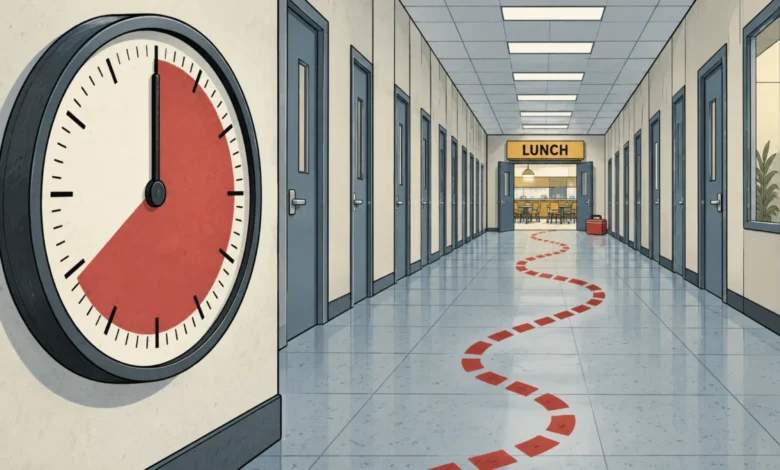
The Department of Labor (DOL) has issued a significant opinion letter, FLSA2026-11, addressing a recurring point of contention in workplace management: the extent to which mandatory travel time during a scheduled meal period can be deducted from an employee’s total break time without violating the Fair Labor Standards Act (FLSA). The guidance stems from a specific inquiry involving a detention facility where security personnel were required to traverse the premises to reach a designated break area, effectively reducing their total time away from their stations. The DOL’s determination provides a critical framework for employers, emphasizing that the primary metric for compliance is not the total scheduled break time, but rather the amount of truly "duty-free" time remaining for the employee to engage in personal activities.
The Origin of the Dispute
The inquiry was prompted by security therapy aides working at a high-security detention facility. Due to the nature of the environment, these employees were strictly prohibited from bringing food or beverages into their specific work zones. Consequently, the facility designated a remote break area where meals could be consumed. The standard operating procedure required employees to walk between three and seven minutes each way to reach this area from their assigned posts.
While the employees’ collective bargaining agreement (CBA) explicitly provided for a 60-minute unpaid meal period, the physical requirement of commuting to the break area meant that the actual time available to sit and eat was reduced to between 46 and 54 minutes. A disagreement arose when an employee challenged this practice, asserting that the walking time should be considered compensable work time and that the CBA, by promising a 60-minute break, effectively entitled them to an hour of rest, exclusive of travel. The employer sought clarification from the Department of Labor to determine if the 60-minute block could remain entirely unpaid under the FLSA.
Chronology of the Ruling
The DOL’s analysis followed a review of the employer’s specific operational constraints. The timeline of the determination process reflects the agency’s focus on the "predominant benefit" test, which courts and regulators use to decide whether a break is truly personal or effectively controlled by the employer.
- Initial Policy Implementation: The facility established a 60-minute unpaid meal period, with a mandatory transit requirement to a secure break location.
- Employee Grievance: Personnel raised concerns regarding the loss of 12 to 14 minutes of their hour-long break due to site-wide travel requirements, arguing this reduced their ability to enjoy a bona fide meal.
- DOL Request for Opinion: The employer requested a formal interpretation regarding whether the entire 60-minute period could remain unpaid, given the mandatory travel.
- Department of Labor Ruling (FLSA2026-11): The DOL concluded that because the employees were completely relieved of all job duties during the transit and the subsequent break, the employer was not required to compensate the time.
Legal Standards and the Predominant Benefit Test
Under the FLSA, the federal government does not mandate that employers provide meal periods at all. However, if an employer chooses to offer them—or is required to do so by a CBA or state law—that time must meet specific criteria to be considered unpaid. The core requirement is that the employee must be "completely relieved from duty" for the purpose of eating a regular meal.
The DOL’s recent letter highlights a critical distinction between "scheduled time" and "usable time." The federal agency pointed to the Fifth Circuit’s precedent, which has previously held that while 30-minute breaks are generally accepted, a duration reduced by employer-mandated tasks to a mere 18 minutes might be found inadequate by a jury. By contrast, in the case of the detention facility, the 46 to 54 minutes remaining after transit was deemed sufficient to allow for a "bona fide" meal.

This interpretation underscores that the FLSA does not necessarily require the employer to maximize the break time to the full extent of the policy. Instead, it asks whether the employee has enough time to eat and whether the restrictions placed upon them during that time are so burdensome that the break loses its character as a personal respite.
Comparative Analysis of Jurisdictional Standards
While the DOL’s opinion provides clarity at the federal level, the legal landscape remains fragmented due to varying state laws. The "complete-relief-from-duty" standard applied by the Ninth and Eleventh Circuits is generally more stringent than the "predominant-benefit" analysis used in other jurisdictions.
In California, for instance, the state’s labor code is notoriously rigorous, often requiring that employees be provided with a full, uninterrupted 30-minute period for every five hours worked. In such jurisdictions, the math changes significantly. If an employer’s travel requirements push the actual, uninterrupted meal time below the state-mandated 30 minutes, the employer faces potential liability for premium pay, regardless of what the federal DOL says about the FLSA. Consequently, HR departments must conduct a dual-track analysis: one for federal compliance and one for the stricter, localized requirements of the states in which they operate.
Implications for Employer Policy
The DOL’s ruling acts as a reminder that "unpaid" status is not a static designation. Employers who mandate travel to a break area must ensure that the remaining time is truly uninterrupted. The following factors are essential for any organization reviewing its timekeeping policies:
- Duty-Free Verification: Employers must document that during the transit and the break, the employee is not expected to respond to radio calls, monitor security feeds, or attend to emergencies. If an employee is "on call" during their meal, it is, by definition, compensable time under the FLSA.
- The Usable Time Threshold: The DOL’s acceptance of 46 minutes as a "sufficient" break suggests that while employers have some flexibility, they must ensure the remaining window is substantial. Reducing a break to a duration that precludes a standard meal—typically considered to be 20 to 30 minutes—invites legal scrutiny.
- Collective Bargaining and Contracts: The DOL explicitly declined to weigh in on the CBA dispute. This is a vital caveat: even if a practice is legal under the FLSA, it may still violate a contract. Employers should recognize that unions may successfully argue that a 60-minute break in the contract implies 60 minutes in the break room, not 60 minutes from the time one leaves the post.
Broader Impact on Workplace Management
The issue of transit time is becoming increasingly common in large-scale facilities, including manufacturing plants, logistics hubs, and hospitals, where the sheer size of the campus necessitates travel. As companies continue to tighten security and consolidate break areas, the potential for "hidden" work time grows.
The DOL’s opinion serves as a shield for employers who provide reasonable, duty-free breaks but also as a warning. By focusing on the actual amount of rest an employee receives, the DOL has shifted the burden onto the employer to perform a realistic audit of their employees’ daily routines. If a company mandates a 15-minute walk to a cafeteria, the employer cannot claim the employee is receiving a 60-minute lunch if they are only left with 45 minutes of rest, and they must be prepared to defend that 45-minute window against local state labor laws.
Ultimately, the ruling reinforces the necessity of transparency. Employers should be clear in their policy handbooks about what constitutes the "meal period" and ensure that their practices reflect the reality of the employee experience. When disputes arise, the evidence that will hold the most weight is the amount of time the employee spent truly disconnected from the demands of their job. In an era of increasing scrutiny regarding wage and hour litigation, this guidance provides a clear, if narrow, pathway for compliant, efficient scheduling.