The Science of Chronobiology: Why Aligning Your Schedule with Energy Rhythms Enhances Professional Performance

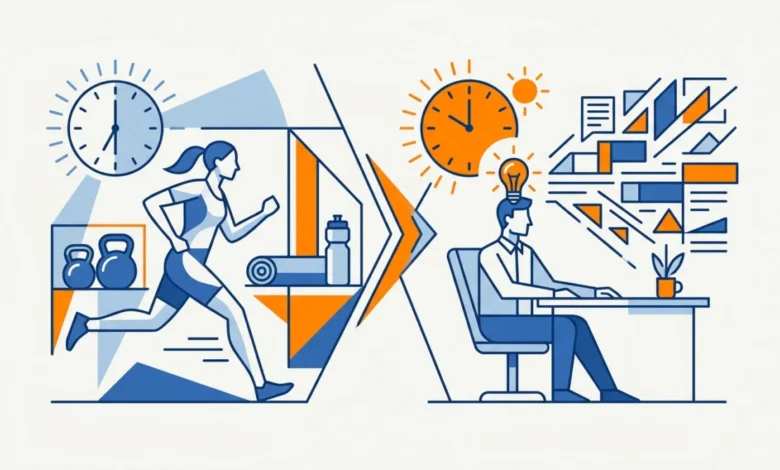
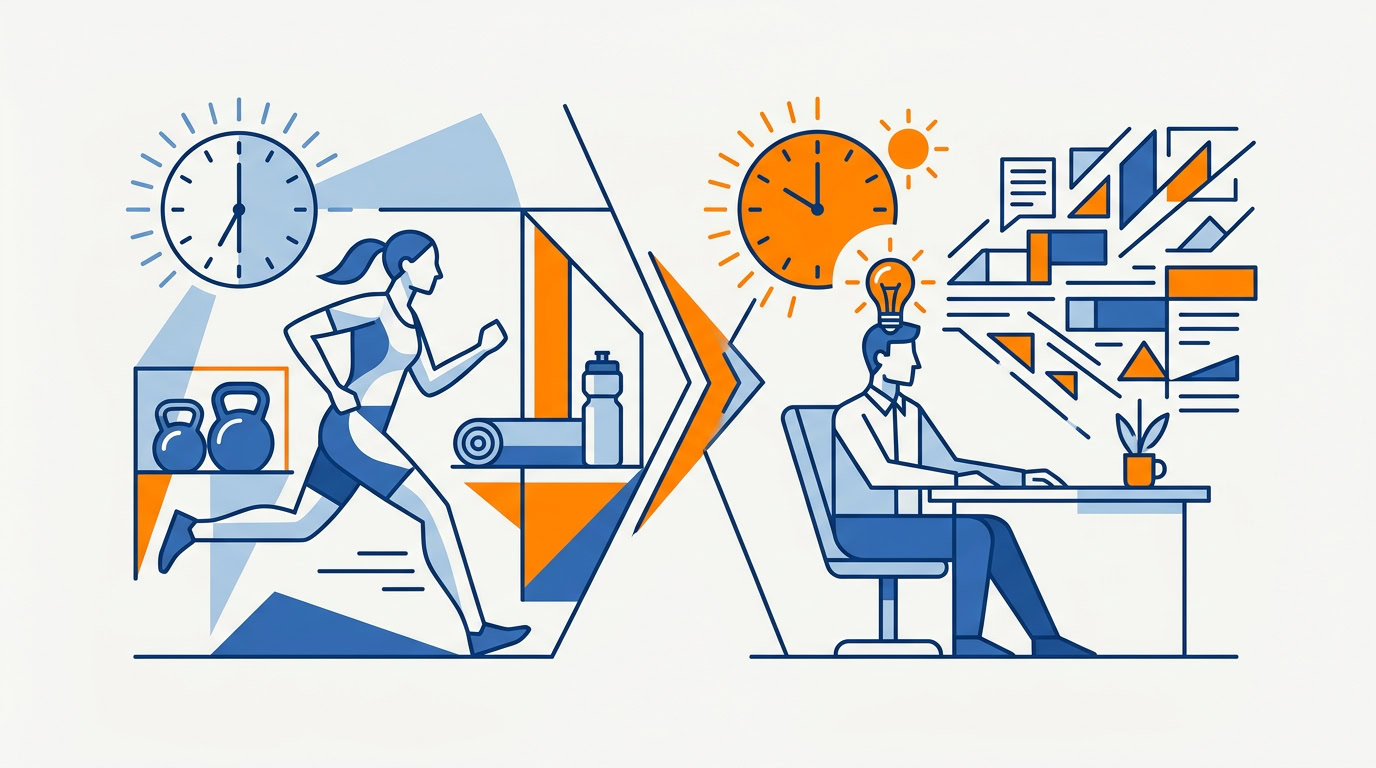
The conventional advice of rising early to exercise before starting the workday is increasingly being challenged by modern chronobiology and productivity research. While physical fitness remains a cornerstone of health, recent data suggests that the rigid adherence to "morning routines" may inadvertently cannibalize the most cognitively valuable hours of the day. For knowledge workers, the misalignment between biological peak energy and the scheduling of high-intensity creative tasks is emerging as a significant barrier to professional output and personal efficiency.
Understanding the Circadian Advantage
Chronobiology, the study of biological rhythms, posits that human performance is not constant throughout the day. Individuals possess internal clocks—circadian rhythms—that regulate hormone secretion, body temperature, and cognitive alertness. Research from the University of California, Berkeley, and other neuroscientific institutions indicates that most adults experience a peak in prefrontal cortex activity, which governs executive function, decision-making, and complex problem-solving, during a specific window, often mid-morning.
For many professionals, this window typically falls between 8:00 AM and 11:00 AM. When this period is consumed by secondary tasks—such as cardiovascular exercise, household chores, or low-stakes administrative work—the individual experiences a form of "opportunity cost." By the time the individual pivots to high-focus creative strategy, they are often entering a natural physiological trough, leading to diminished quality of output and a subjective feeling of cognitive fatigue. This phenomenon is frequently misdiagnosed as a lack of willpower, when it is, in fact, a misalignment of biological timing.
A Shift in Productivity Strategy
The transition from a "fitness-first" morning to a "work-first" morning requires a systematic recalibration of the daily calendar. By shifting physical activity to the afternoon—a period that often coincides with the post-lunch dip in alertness—workers can leverage their bodies’ natural movement patterns to combat lethargy while reserving their peak cognitive hours for tasks requiring deep synthesis.
This shift does not suggest that exercise is less important, but rather that its placement within the daily structure dictates its impact on professional efficacy. Chronotype assessments, which categorize individuals into "morning larks," "night owls," or "intermediate" types, serve as the foundational tool for this transition. By auditing the past seven days of output, professionals can objectively identify their two-hour focus peak. If this peak does not align with the most demanding tasks on the current schedule, the data suggests that the schedule, not the worker, is the primary point of failure.
The Intersection of Creativity and Systematic Execution
In the modern knowledge economy, creativity is rarely an ethereal inspiration; it is effectively defined as innovative problem-solving. This process involves the synthesis of existing information into new configurations. When this synthesis is combined with systematic productivity, it creates a multiplier effect on output.
The rise of artificial intelligence (AI) has fundamentally altered the economics of this creative synthesis. AI tools act as force multipliers, allowing workers to execute, iterate, and refine creative combinations at a pace previously unattainable. This development supports the "Unicorn Leverage Framework," a concept gaining traction in professional development circles. The framework argues that true professional irrelevance is avoided not by being the world’s foremost expert in one narrow field, but by mastering two distinct skills—such as domain expertise and AI prompting, or technical writing and data analysis—and operating in the top 10% of both.
By dedicating the identified peak energy window to this "skill-stacking," professionals can maximize the value of their time. The integration of AI literacy into existing workflows allows for a reduction in the time required for low-level execution, thereby expanding the capacity for high-level strategic thinking.
Environmental Influence on Cognitive Performance
Beyond temporal alignment, environmental ergonomics play a critical role in the maintenance of deep work. Cognitive psychology dictates that the brain is highly sensitive to environmental cues. Distraction-heavy workspaces, whether digital or physical, act as a tax on executive function. The effort required to filter out background noise, persistent notifications, or cluttered surroundings leads to "decision fatigue" and the rapid depletion of the brain’s limited glucose stores during the workday.
Professional environments that are optimized for deep work—characterized by the absence of interruptions and the availability of necessary tools—are essential for sustained performance. A 15-minute environmental audit, in which a professional identifies a single point of friction in their workspace and removes it, can yield immediate improvements in task execution speed. The objective is to design a space where the environment does the work of maintaining focus, rather than relying on the finite, depleting resource of individual willpower.
Data-Driven Scheduling and Long-Term Implications
The movement toward data-driven scheduling represents a broader trend in professional management. Companies that encourage employees to align their core work hours with their biological peaks report higher engagement levels and lower rates of burnout. This is not merely a matter of convenience; it is a strategic adjustment to human physiology.
A retrospective analysis of the work week provides the necessary data to implement these changes. By tracking the exact time intervals where complex, high-value tasks were completed most efficiently, employees can construct a "biological schedule." This timeline serves as a blueprint for the following week, prioritizing tasks by cognitive load rather than by urgency or traditional business hours.
Broader Industry Impacts
The implications for organizational productivity are significant. If, as data suggests, 9:00 AM is objectively worth more than 10:00 PM for high-focus tasks, then organizations that mandate synchronous work or meetings during these peak hours may be inadvertently stifling innovation. Industry experts advocate for a "results-only" work environment, where the focus shifts from the number of hours spent at a desk to the alignment of tasks with the worker’s biological peak.
Furthermore, the integration of AI into this framework creates a new standard for professional competitiveness. Workers who successfully combine their unique skill sets with AI-driven workflows during their most alert hours are positioning themselves to outpace those who continue to rely on traditional, manual processes. This is an evolution of labor that emphasizes cognitive efficiency over raw hours worked.
Practical Implementation Steps
For those seeking to optimize their daily performance, the process is straightforward but requires consistent application:
- Conduct a Time-Energy Audit: Over the course of one week, log energy levels every two hours. Simultaneously, track the progress made on specific tasks during those intervals.
- Identify the Peak Window: Pinpoint the two to three hours where focus, clarity, and creative output were at their highest.
- Reallocate Tasks: Move the most complex, high-stakes tasks into this window. Defer administrative work, physical exercise, or routine communication to the afternoon "lull."
- Optimize the Environment: Ensure that the peak window is protected from digital and physical interruptions.
- Apply Skill-Stacking: Use the high-energy window to practice or apply a second skill in conjunction with your core profession, leveraging AI to bridge the gap between ideation and execution.
By treating the workday as a series of biological opportunities rather than a monolithic block of time, professionals can transition from a state of constant, low-level effort to a state of high-impact, aligned output. The objective is not to work more, but to ensure that the work performed is commensurate with the potential of the time allocated. In an era of increasing complexity, the ability to align one’s biology with one’s professional objectives is a significant competitive advantage.