Understanding Vector Embeddings and Their Role in Modern Answer Engine Optimization

The landscape of digital search is undergoing a profound transformation as artificial intelligence shifts from traditional link-based results to answer-driven models. At the heart of this transition is a technical component known as vector embeddings, which serves as the fundamental bridge between human intent and machine comprehension. According to the State of AEO in 2026 report by HubSpot, 58% of marketing professionals are now actively optimizing their digital content for answer engines, signaling a permanent departure from legacy search engine optimization (SEO) tactics that prioritized keyword stuffing and link volume.
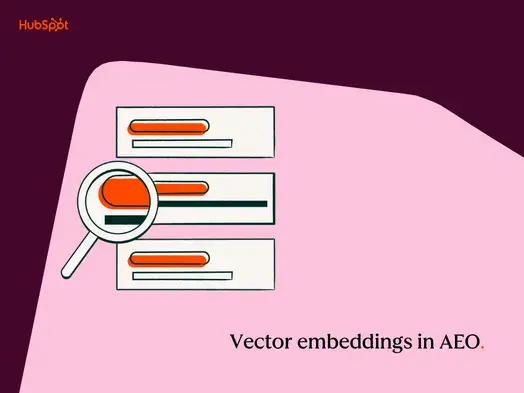
A vector embedding is essentially a mathematical translation of language. By converting text—ranging from individual words to entire paragraphs—into a list of numbers, embedding models allow artificial intelligence systems to perform semantic comparisons. Unlike traditional lexical search, which relies on the literal matching of characters, semantic retrieval understands the relationship between concepts. For example, an AI system can perceive that the phrase "budget-conscious project management for small teams" carries the same intent as "the cheapest tool for a five-person agency," even if the two strings share no common vocabulary.
The evolution of these retrieval systems has been rapid. Historically, search engines were limited by their ability to parse synonyms and context. With the rise of Large Language Models (LLMs), the industry has moved toward Retrieval-Augmented Generation (RAG). This process involves a two-step sequence: first, the system retrieves relevant information based on the vector distance between the user’s query and a database of indexed content; second, the generative model synthesizes that information into a cohesive, conversational answer.
The Chronology of the Shift toward Semantic Retrieval
The transition toward AEO began in earnest with the public release of transformer-based architectures in the late 2010s. By 2022, the launch of consumer-facing generative AI platforms, such as ChatGPT, forced a reckoning for SEO professionals. The industry moved from a "ranking" mindset—where the goal was to secure the blue link at the top of a search results page—to a "citation" mindset, where the objective is to become the authoritative source used by an AI to construct an answer.
Throughout 2024 and 2025, search platforms including Google’s AI Overviews, Perplexity, and Gemini refined their internal retrieval pipelines. The primary change was the abandonment of page-level relevance in favor of passage-level relevance. Modern systems now segment content into discrete, semantic "chunks." These chunks are evaluated independently against a user’s query, meaning that a single webpage might be cited for three different, specific questions simultaneously, provided the content is structured to address them directly.

Technical Mechanics: How Embeddings Influence Visibility
For marketing professionals, the utility of understanding vector embeddings lies in the ability to anticipate how AI "reads" content. Franklin Rios, CEO of Next Net, characterizes the process as data-centric: "Vectorizing is embedding information into a data format. The reason we use a data format is because it is the natural language of LLMs. They consume mathematics; they consume data."
When a brand creates content, it is essentially providing the training and retrieval data that the AI will use to formulate responses. If a brand’s website content is vague, the embedding model will struggle to place that brand within a specific conceptual category. Conversely, if a company uses consistent, entity-first language, it reinforces its position in the semantic vector space.
This leads to the concept of "query fan-out," a phenomenon where modern search engines break down a complex user question into a series of sub-queries. A user asking, "How do I choose project management software?" may trigger a system to search for the cost of software, the specific features for small teams, and the implementation timelines. If a brand’s content is not structured to answer these adjacent, granular questions, the AI will likely ignore that source in favor of one that provides more comprehensive, discrete information.
Strategic Implications for Content Creation
The shift toward semantic retrieval requires a move away from generic "fluff" content. Practitioners are now advised to focus on "citable passages"—short, self-contained segments of text that provide a direct answer to a potential query. An effective citable passage should be approximately 150 words and capable of standing alone without the context of the surrounding article.
The industry has identified several key patterns for optimizing these passages:

- Entity-First Statements: Brands should define themselves using clear, subject-verb-object structures (e.g., "[Brand] is a [category] for [audience] that [differentiator]"). This creates a high-density, easily retrievable "anchor" for the model.
- Direct Definitions: By leading sections with explicit definitions of technical terms or concepts, content creators ensure that the AI has a clear, concise sentence to pull for a definition-style response.
- Comparative Tradeoff Language: AI models are frequently used to help users make purchasing decisions. Providing clear, objective trade-offs (e.g., "X is better for speed, while Y is better for budget") allows the AI to accurately represent the brand’s value proposition in a comparison.
- Temporal Anchoring: Given the rapid pace of change, adding dates or temporal qualifiers (e.g., "As of September 2026") helps the system evaluate the freshness and relevance of the data.
Measuring Success in the AI Era
Measuring performance in an AI-driven environment differs significantly from traditional SEO. Metrics such as keyword rank and organic traffic are becoming less indicative of success. Instead, brands are shifting toward "AI visibility"—a measure of how frequently and accurately a brand is cited in AI-generated answers.
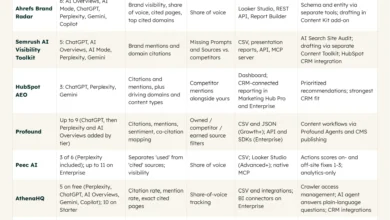
Tracking AI visibility involves monitoring which prompts trigger the brand’s presence, the accuracy of the descriptive text associated with the brand, and the "share of voice" in competitive comparison queries. This process requires a baseline, as there is no universal "waiting period" for AI indexing. While tools like HubSpot AEO now offer daily refreshes, the consensus among experts is that consistent, high-quality content output leads to a stronger "trust score" within the model’s parameters.
Fact-Based Analysis of Future Trends
Looking ahead, the tension between quantity and quality will likely intensify. There is a persistent myth that brands need massive volumes of content to achieve AI visibility. However, industry analysis suggests that the opposite is true. Excessive, low-quality content can dilute the semantic signal of a brand, making it harder for the AI to "understand" the company’s core expertise.
The future of AEO lies in "durable fundamentals": content that is technically structured, semantically clear, and contextually rich. As search engines continue to integrate generative capabilities, the role of the marketer will evolve from "traffic manager" to "knowledge architect." By focusing on the precision of information rather than the volume of pages, businesses can ensure they remain visible in an era where the answer, rather than the link, is the ultimate goal.
Ultimately, while the underlying technology of vector embeddings is complex, the path to optimization is accessible. It requires moving beyond traditional SEO hacks and embracing a strategy that prioritizes the needs of the machine-as-reader. By providing clear, structured, and trustworthy answers to the specific questions buyers ask, brands can secure their position in the new semantic web.