In the rapidly evolving landscape of digital marketing, the margins between a successful return on ad spend and a wasted campaign budget are often defined by technical precision. Social media managers and digital advertisers frequently encounter the challenge of uploading improperly formatted assets—ranging from slightly skewed aspect ratios to low-resolution video files—resulting in compromised campaign performance. While these technical oversights are honest mistakes, Meta’s advertising ecosystem is notoriously unforgiving when it comes to visual quality and technical compliance. Because the platform updates its layout guidelines, aspect ratios, and compression algorithms with regular frequency, maintaining absolute alignment with current specifications has become a specialized operational requirement for modern marketing teams.

The necessity for strict adherence to dimensional standards stems from how modern advertising auction algorithms prioritize user engagement. When an ad creative is rendered natively without forced cropping, pixelation, or awkward scaling, users are significantly more likely to pause their scrolling behavior and interact with the content. Furthermore, high-resolution assets that utilize the maximum allowable file sizes ensure that brand presentation remains sharp across an increasingly fragmented array of hardware devices, from high-end desktop monitors to budget-friendly mobile screens.
To mitigate the risk of diminished campaign delivery and suboptimal Cost-Per-Click (CPC) metrics, marketing departments must standardize their asset production pipelines around Meta’s officially sanctioned technical parameters. Below is a comprehensive breakdown of the precise ad sizes, file formats, and design specifications required across every major Facebook ad placement.
Facebook In-Feed Ad Specifications
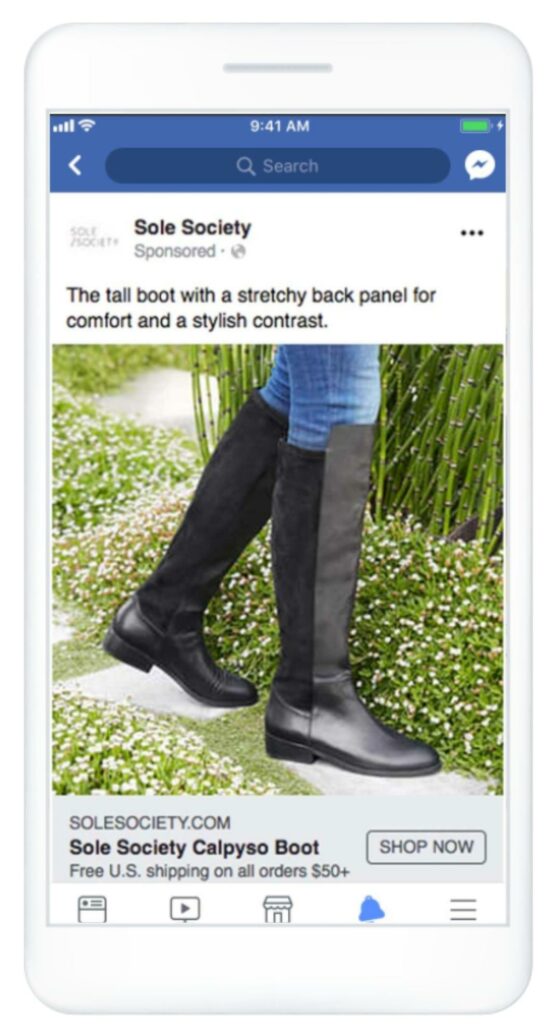
In-feed advertisements represent the cornerstone of most direct-response and brand-awareness strategies on the platform. These placements integrate seamlessly into a user’s primary news feed, appearing alongside organic posts from friends, family, and followed pages. Because these ads interrupt the natural consumption flow, the creative assets must be arresting yet native in appearance.
For single image in-feed ads, Meta supports standard JPG and PNG file types with a maximum file size of 30 MB. While the absolute minimum dimension requirement is 600 by 600 pixels, advertisers are strongly advised to upload files at a resolution of at least 1080 by 1080 pixels to accommodate high-density retina displays. The accepted image ratio spans from 1.91:1 to a square 1:1 format. Text recommendations suggest keeping the primary text concise at approximately 125 characters, while headlines and descriptions perform best when kept within 27 characters.

When deploying single video assets within the news feed, supported formats include MP4, MOV, and GIF files up to 4 GB in size. Videos can be produced in a square 1:1 aspect ratio for universal desktop and mobile display, or a vertical 4:5 ratio optimized specifically for mobile screens. The minimum resolution threshold is 120 by 120 pixels, though 1080 by 1080 pixels remains the industry standard for clarity, with acceptable durations ranging from a single second to 241 minutes.
In-Stream Video Ad Parameters
For campaigns explicitly focused on driving bottom-funnel conversions and deep user engagement, in-stream video placements offer an immersive environment. These ads are served exclusively to mobile users while they consume video content on the platform, capturing undivided attention through targeted pre-roll, mid-roll, or image-based interruptions during live streams.

In-stream video ads operate in single-video or carousel formats, the latter appearing specifically when viewers have engaged with Facebook Live broadcasts for a minimum of 60 seconds. The technical parameters require single videos to be formatted in either 16:9 or 1:1 aspect ratios, using MP4, MOV, or GIF files up to 4 GB. The minimum resolution must meet the 1080 by 1080 pixel standard, with video lengths restricted between five seconds and ten minutes. Accompanying static companion images must adhere to a 1.91:1 or 1:1 ratio, capped at 30 MB, and completely free of overlaid text to comply with Meta’s rendering guidelines.
Carousel Ad Architecture and Technical Limits
When a marketing campaign requires the exhibition of multiple product lines, distinct service features, or a sequential narrative storytelling structure, in-feed carousel ads provide the necessary versatility. This format allows advertisers to curate between two and 10 distinct scrollable cards, each capable of housing its own independent image or video asset paired with a unique destination landing page URL.

The technical specifications demand strict uniformity across all cards within a single carousel unit. Images must be provided in JPG or PNG formats up to 30 MB, while video cards can utilize MP4, MOV, or GIF files up to 4 GB. Every asset must maintain a strict 1:1 square aspect ratio with a minimum resolution of 1080 by 1080 pixels and an acceptable aspect ratio tolerance of 3%. Text allocation for carousels is tightly constrained: primary text is limited to 125 characters, headlines are restricted to 32 characters, and secondary descriptions should not exceed 18 characters to prevent truncation across mobile interfaces.
Collection Ads for E-Commerce Scale
E-commerce brands seeking to showcase a robust inventory without overwhelming prospective buyers frequently leverage collection ads. This format features a primary hero video or image paired with a grid of smaller product images underneath. Upon user interaction, the ad opens an instantaneous, lightning-fast full-screen Instant Experience loading environment directly within the application, shortening the purchase funnel and minimizing friction.

Collection ad design mandates a 1:1 aspect ratio for both hero assets and grid components, utilizing a minimum resolution of 1080 by 1080 pixels. Video hero files are capped at 4 GB, while static image components must remain under 30 MB. Because these ads heavily rely on programmatic product catalogs, maintaining precise image dimensions is critical to ensuring that the grid layout renders symmetrically across various device viewports.
Instant Articles, Marketplace, and Right Column Placements
Beyond the traditional news feed, Meta’s auxiliary placements offer specialized pathways to target distinct user intent behaviors.

Facebook Marketplace ads cater to consumers with active commercial intent who are browsing the platform’s localized buy-and-sell infrastructure. These ads require a 1:1 square image or video ratio, supporting resolutions of at least 1080 by 1080 pixels. Because Marketplace users are actively evaluating products, primary text should remain focused on clear value propositions within the 125-character limit, supported by a 40-character headline.
Facebook Right Column ads serve exclusively desktop users, appearing as compact landscape modules on the right-hand margin of the browser interface. Due to the steady migration of user traffic toward mobile environments, demand for this placement has declined; however, it remains a viable supplementary retargeting touchpoint. Assets must maintain a 1:1 ratio with a minimum width of 254 pixels and a height of 133 pixels, accompanied by a 40-character headline limitation.

Instant Articles provide a mobile-optimized publishing environment for long-form content distribution. Ads integrated within these fast-loading articles rely on standard 1:1 image ratios and 16:9 video configurations, demanding the familiar 1080 by 1080 pixel resolution floor to maintain legibility against editorial typography.
Ephemeral Content: Stories and Messenger Placements
Vertical, full-screen ephemeral formats—encompassing Facebook Stories, Instagram Stories, and Messenger Stories—demand a complete departure from traditional landscape or square creative assets. These placements require a 9:16 vertical aspect ratio to completely fill modern smartphone displays.

For both image and video Story assets, the recommended resolution is 1080 by 1080 pixels minimum, scaled vertically to 9:16. A critical design consideration for Story ads is the incorporation of safe zones: advertisers must leave approximately 14 percent (or roughly 250 pixels) free of critical text, logos, or call-to-action buttons along both the top and bottom margins. This negative space ensures that platform UI elements, such as profile icons and swipe-up indicators, do not obscure vital brand messaging. Videos within Stories can range from one second to two minutes in length for Messenger, and up to 241 minutes for Facebook feeds, though completion rates drop sharply for assets exceeding 15 seconds.
Audience Network Integration
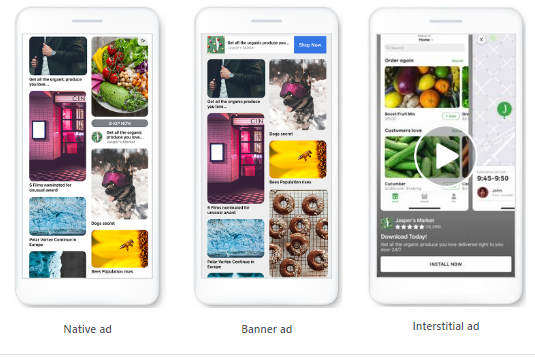
The Facebook Audience Network extends campaign reach beyond native platform boundaries, deploying ads across vetted third-party mobile applications and external websites. Audience Network ads primarily utilize 9:16 vertical ratios for native image formats and 1:1 or 4:5 ratios for video placements. Advertisers utilizing this network retain granular control over brand safety, allowing marketing teams to exclude specific content categories via Meta Business Manager prior to campaign deployment.
Strategic Optimization for Maximum Return on Investment
Selecting the correct dimensional specification is only the foundational step in building an effective paid social campaign. Advertisers must align their creative formats with specific campaign objectives—such as brand awareness, lead generation, or online conversions—while ensuring that asset dimensions complement the chosen placement architecture. By auditing creative assets against Meta’s technical thresholds prior to campaign launch, digital marketing teams can eliminate rendering errors, preserve visual integrity, and secure optimal performance across every segment of the social media ecosystem.