Behind the Scenes of the 2026 Midterm Election Coverage: How Major Networks Navigated a Historic Blue Wave

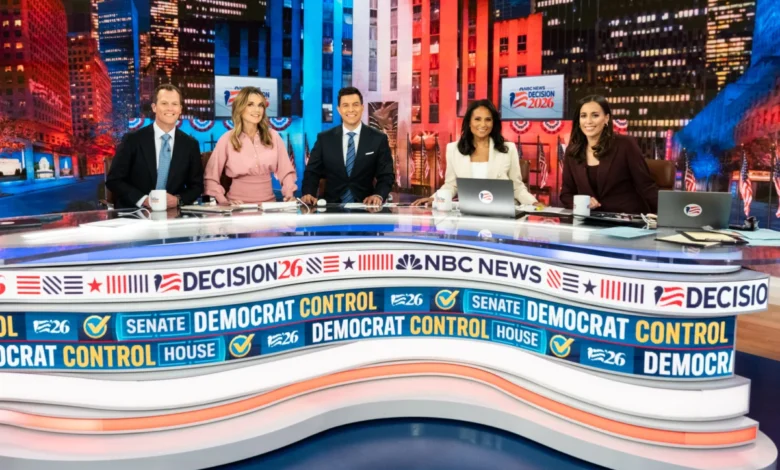
As the political dust settles following a historic 2026 midterm election that saw the Democratic Party secure control of both the U.S. Senate and the House of Representatives, the nation’s major news networks are transitioning from high-stakes, around-the-clock election coverage back to their standard programming. The election night broadcast was a monumental logistical undertaking, drawing a staggering 31 million viewers across 13 networks. This event served as a testament to the evolving synergy between traditional linear broadcasting, digital streaming platforms, and advanced data-driven reporting.
To understand the mechanics behind this massive operation, TVNewser conducted an exclusive post-election debrief with key figures from the industry: Marc Greenstein, Executive Vice President of Creative, Innovation & Field Production at NBC News; Abigail Crutchfield, Senior Vice President of Washington and Special Events Programming at CNN; and Chris Stirewalt, Political Director at NewsNation. Their insights reveal a landscape defined by rapid-fire technological integration and the relentless pursuit of accurate, real-time data.
A Chronology of the Night
The evening began with intense anticipation as polls across the East Coast closed. By early evening, the narrative began to shift rapidly. While initial models suggested a potential evening of prolonged, tight-margin counting, the momentum swung decisively toward the Democratic ticket earlier than analysts had predicted.
For many viewers, the most significant inflection point arrived around 8:30 p.m. ET, when the trends in key battleground states signaled a clear departure from traditional midterm expectations. By late evening, the networks had secured sufficient data to project that the Democratic Party would hold the Senate, a conclusion that caught many in the industry by surprise given the competitive landscape of the states in play. The night effectively ended in the early hours of Wednesday morning as the House projections finalized the "blue wave" scenario, concluding an election cycle that had been marked by intense voter mobilization and record-breaking turnout.

Data-Driven Storytelling and Technological Innovation
The success of election night was largely predicated on how effectively networks could synthesize raw voting data into a coherent narrative. NBC News, which claimed the No. 1 spot in primetime total viewers and the critical Adults 25-54 demographic, relied heavily on the expertise of national political correspondent Steve Kornacki.
Marc Greenstein noted that NBC’s strategy involved a "hybrid studio" model. By utilizing sophisticated audio and video technology, the network enabled Kornacki to simultaneously contribute to the linear broadcast and anchor a dedicated, high-intensity streaming feed. This allowed the network to maintain a cohesive editorial voice while providing tailored experiences for different platforms. With over 35,000 unique graphics deployed across their digital and broadcast zones, NBC emphasized speed, clarity, and visual consistency.
At CNN, the focus was on mobility and spatial integration. Abigail Crutchfield highlighted the work of director Reza Baktar, whose set design prioritized fluid movement for talent. The integration of John King’s "magic wall"—and his new vertical data display—allowed for a more tactile, granular analysis of the incoming returns. The Washington bureau, designed to foster collaboration between analysts and anchors, provided the energy necessary to sustain a marathon broadcast.
NewsNation, partnering with Decision Desk HQ (DDHQ), achieved a notable industry victory by being the first to call both chambers of Congress. For Chris Stirewalt, the technological edge was clear: the quality of the data feed provided by DDHQ. By prioritizing raw, accurate data over speculative modeling, NewsNation was able to stay ahead of the curve, effectively interpreting the results before they were fully reflected in the broader media landscape.
The Element of Surprise: Navigating the Unexpected
The 2026 midterms defied many of the standard models for a sitting administration’s performance in an off-year election. All three networks reported that the speed of the results caught their teams off guard.

"The biggest surprise was how quickly we were able to call control of the Senate," Greenstein remarked. "While there was a general sense that it could be a good night for Democrats, I think the early call caught many of us a little off guard."
Similarly, Stirewalt noted the irony of extensive preparation. "I was buckled in for tight contests in battleground states," he admitted. "We found out by 8:30 p.m. ET or so that what we really needed to get good at was going deep on places like Mississippi," rather than the expected "nail-biter" races that had consumed weeks of prep work. This highlights the inherent unpredictability of modern electorate behavior, which often renders pre-election modeling moot within hours of the first precinct reports.
Human Endurance and the Newsroom Culture
Operating a broadcast of this magnitude requires more than just hardware; it requires a high degree of human endurance. When asked how they stayed alert through the night, the responses varied from technical reliance to simple, effective coping mechanisms.
Greenstein, who spent the night in the director’s chair—a rare occurrence for an executive of his level—credited the adrenaline of the moment and a steady supply of caffeine. Crutchfield relied on a mixture of hot tea, a supportive team, and a bag of gummy bears. Stirewalt, reflecting the high-octane atmosphere of his network’s desk, noted that he didn’t require artificial stimulants. "When the results started pouring in, I was so thrilled at how DDHQ and our team were doing that I was just high on life," he said.
Implications and Future Outlook
The 2026 midterm coverage sets a new benchmark for how television networks handle national events. The transition toward integrated digital and linear production is no longer a "future" goal but an operational necessity. The success of vertical video feeds and AI-assisted audio production during the NBC broadcast suggests that audience fragmentation—the tendency for viewers to consume news on mobile devices while having a television on in the background—has become the primary driver of newsroom innovation.

Furthermore, the accuracy of the projections on election night serves to bolster the credibility of these institutions at a time when media trust is under scrutiny. By successfully navigating a fast-moving, high-stakes environment, the networks demonstrated that despite the rise of alternative information sources, the traditional broadcast infrastructure remains the central pillar of civic awareness during national events.
The implications for the next two years are significant. With the Democratic Party now holding the levers of both the legislative and executive branches, the political discourse is expected to shift toward policy implementation and oversight. For the networks, the challenge will be to maintain the same level of analytical depth and technological agility as the legislative agenda takes shape. The 2026 election was not merely a contest between two parties; it was a demonstration of how the American media apparatus has adapted to the digital age, proving that even in an era of rapid change, the ability to synthesize, explain, and broadcast complex information remains a critical service to the public. As the networks return to their regular schedules, the infrastructure built for this election will undoubtedly form the foundation for the coverage that lies ahead.
Related posts: