Unlocking the Future of Work: How LinkedIn’s Talent Velocity Framework is Redefining Workforce Agility in the Age of AI

In today’s fast-moving business world, skills are shifting faster than most organizations can keep up. Artificial intelligence (AI) is rewriting how work gets done, and traditional human resources playbooks are struggling to keep pace. As digital transformation accelerates across global enterprises, the half-life of professional skills has shrunk dramatically. Routine administrative tasks are being automated, complex problem-solving requirements are evolving, and leaders find themselves grappling with an unprecedented widening of the skills gap. Traditional corporate training programs, which once relied on static, annual development plans, are no longer sufficient for an economic landscape defined by volatility and rapid technological disruption.
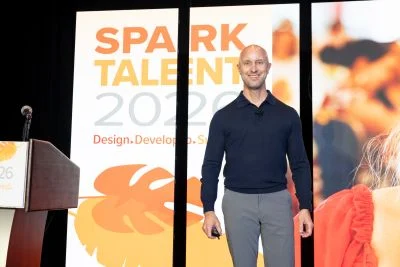
Enter a game-changing concept for talent development leaders: Talent Velocity. Introduced by SPARK TALENT speaker Kevin Bishop, Director of Talent Development at LinkedIn, talent velocity is shaking up how companies think about workforce agility. Drawing directly from insights in LinkedIn’s Talent Velocity Advantage report, Bishop explored what this concept means for modern organizations and how HR leaders can turn it into a practical, actionable strategy. The framework challenges the conventional wisdom that workforce planning must be a slow, methodical, and bureaucratic process, arguing instead that modern survival depends on speed, adaptability, and continuous learning embedded directly into the corporate culture.
What Is Talent Velocity?
At its core, talent velocity is an organization’s ability to quickly see its skills, build or acquire what is needed, and mobilize talent in real time. It is not merely a metric for how fast a company can hire or train employees; rather, it is a holistic measure of organizational agility. It gauges how efficiently a business can audit its current internal skills inventory, identify emerging capability gaps caused by market shifts or technological innovations, rapidly upskill existing employees or recruit external talent, and deploy those individuals to high-priority business initiatives before market conditions change again.
As Bishop pointed out during his keynote session, there is no single cookie-cutter recipe for success when implementing this model. "Every organization is unique," Bishop noted to the audience of HR and talent development professionals. "Every organization is going to embody talent velocity a little bit differently, but there are some things we’re gonna talk about today that are common, that can help you really bring that to life."
Organizations that master this velocity experience a massive confidence advantage over their peers who remain stuck in legacy operational models. Data featured in LinkedIn’s report reveals that designated Talent Velocity Leaders report significantly higher confidence across multiple critical business vectors compared to their lagging counterparts. Specifically, these forward-thinking enterprises enjoy a 36-point boost in confidence regarding their ability to align talent to changing business priorities. Furthermore, they report a 27-point advantage in attracting critical talent, a 26-point advantage in retaining top performers, and a 23-point advantage in overall corporate profitability. These statistical disparities underscore the direct correlation between workforce agility and the bottom-line financial health of the enterprise.
Background Context and the Evolution of HR Playbooks
To understand why the Talent Velocity framework has struck such a chord within the human resources community, one must examine the broader macro-economic shifts of the past decade. For generations, talent development was treated as a secondary function—a cost center responsible for compliance training, onboarding checklists, and occasional leadership seminars. Workforce planning operated on a multi-year horizon, assuming that job descriptions remained relatively stable and that career progression followed predictable, linear paths up the corporate ladder.
The advent of generative AI, widespread remote and hybrid work models, and shifting employee expectations fundamentally shattered this paradigm. By the early 2020s, enterprise leaders realized that technical skills were becoming obsolete within three to five years. Companies could no longer afford to wait months to source external candidates for newly minted technical roles, nor could they rely on workers to independently figure out how to integrate emerging technologies into daily workflows.
The introduction of the Talent Velocity Advantage report marks a significant milestone in how professional networks and enterprise data platforms are attempting to solve this crisis. By analyzing millions of job transitions, skill adjacencies, and learning patterns globally, LinkedIn positioned itself at the forefront of the future-of-work dialogue, providing empirical evidence that speed and adaptability are the ultimate competitive differentiators of the 2020s.
The 5 Accelerators of Talent Velocity
How do talent leaders pull ahead of the competition and cultivate this elusive agility? According to the framework outlined in LinkedIn’s comprehensive report, driving velocity relies on putting employee growth at the center of organizational transformation through five key pillars known as the Accelerators of Talent Velocity.
The first accelerator focuses on real-time skills visibility. Organizations must move away from static resume databases and outdated job profiles toward dynamic skills graphs that continuously map what employees can do, what they are currently learning, and what potential they possess. Without complete visibility into the existing talent ecosystem, leadership is essentially flying blind when strategic pivots are required.
The second accelerator centers on agile learning architectures. Traditional, multi-week training courses are too slow for modern business needs. High-velocity organizations curate bite-sized, modular learning experiences integrated directly into the flow of work, allowing employees to acquire critical competencies precisely when they need them to solve immediate business problems.
The third accelerator involves internal mobility and frictionless deployment. Building talent velocity means breaking down departmental silos that treat internal talent transfers like complex resignations and re-hires. High-performing companies make it culturally and structurally easy for employees to pivot to new internal projects, cross-functional task forces, or entirely different departments, thereby retaining institutional knowledge while filling critical capability gaps instantly.
The fourth accelerator addresses strategic talent acquisition. Even the most agile internal upskilling programs cannot generate every required skill overnight. Talent velocity requires a hybrid model where external sourcing is targeted, data-driven, and seamlessly integrated with internal talent pipelines, focusing on skill adjacencies rather than rigid degree requirements or exact past job titles.
The fifth and final accelerator relies on leadership culture and psychological safety. Leaders at all levels must champion continuous learning, tolerate intelligent failure, and actively encourage employees to step outside their comfort zones. Without executive sponsorship and a culture that rewards adaptability, even the most sophisticated skills technologies will fail to drive meaningful velocity.
Where Does Your Organization Stand?
To diagnose where a company sits on its transformation journey, LinkedIn maps progress across a structured diagnostic model known as The Talent Velocity Curve. This curve outlines the evolutionary stages an enterprise experiences as it matures from a reactive, traditional HR operational model to a proactive, highly agile talent ecosystem.
At the lowest tiers of the curve, organizations operate reactively. Talent management is siloed, skills data is fragmented or nonexistent, and workforce planning is entirely disconnected from business strategy. As companies climb the curve, they begin to establish basic skills taxonomies, introduce digital learning platforms, and encourage sporadic internal mobility. At the highest tiers of the curve—the true Talent Velocity Leaders—organizations possess fully integrated skills ecosystems where real-time workforce data drives strategic business decisions, internal mobility is celebrated as a primary growth engine, and employees view continuous professional development as an inherent part of their daily routine.
When assessing where an organization falls along this developmental curve, Bishop noted that progress can vary widely across different operational areas within the exact same enterprise.
"You can look at one accelerator and think that you’re at level four, and you could look at another one and think, ‘Ah, we’re probably at level two,’ with regard to that one, right?" Bishop explained during his address. "So really, this is meant to be a directional guide for you as you think about where you wanna focus your efforts to help accelerate talent velocity within your organization."
This nuanced perspective prevents HR leaders from becoming overwhelmed by the daunting task of total organizational overhaul. By recognizing that different departments—such as engineering, marketing, and customer service—may occupy different rungs on the Talent Velocity Curve, leaders can apply targeted interventions where they are most desperately needed.
How LinkedIn Practices What It Preaches
If human resources professionals want to build talent velocity within their own enterprises, it helps to look at how organizations like LinkedIn bring these accelerators to life internally. As a technology company operating at the epicenter of the global labor market, LinkedIn utilizes its own platform ecosystems, data analytics tools, and cultural philosophies to maintain high operational velocity.
Internally, LinkedIn emphasizes a culture defined by a clear mantra: "We dream big, get things done, and we know how to have fun." This cultural foundation supports a dynamic internal marketplace where employees are actively encouraged to explore new career trajectories, participate in cross-functional stretch assignments, and utilize personalized learning recommendations to upskill for emerging business priorities. By treating employee retention not as a static holding pattern but as a dynamic series of continuous career opportunities within the same corporate ecosystem, LinkedIn manages to minimize attrition while rapidly deploying talent to high-impact artificial intelligence and product development initiatives.
Starting Small: Turning Theory into Action
The biggest trap in talent development is trying to solve everything at once. When tackling massive, enterprise-wide initiatives—such as building out comprehensive skills architectures for tens of thousands of global employees—the secret to avoiding paralysis by analysis is to start small.
Global human resources strategies frequently fail when leaders attempt an overnight, top-down revolution that disrupts daily operations without securing buy-in from middle management or the broader workforce. Instead, transformation experts advocate for targeted pilot programs, localized experiments, and incremental improvements that demonstrate measurable return on investment before scaling enterprise-wide.
As Bishop advised attendees when wrapping up their action plans during the SPARK TALENT session, leaders must focus intensely on what can realistically be achieved in the immediate term rather than getting lost in long-term theoretical roadmaps.
"Let’s focus on what you can do in the first thirty days from when you leave here today," Bishop urged the audience.
Broader Impact and Industry Implications
The introduction and rising adoption of the Talent Velocity framework signal a profound structural shift in the corporate landscape. As artificial intelligence continues to redefine the boundaries of human productivity, the organizations that survive and thrive will not be those with the largest legacy headcounts or the most rigid operational structures. Rather, they will be the enterprises that successfully master the art of organizational agility—seeing skills clearly, building capabilities rapidly, and mobilizing talent dynamically in real time.
For human resources leaders, the message is clear: the traditional playbook is obsolete. Embracing talent velocity requires moving past administrative compliance and stepping into a strategic, data-driven advisory role capable of steering the enterprise through perpetual technological disruption. By breaking massive workforce transformations into manageable, thirty-day action plans and focusing intensely on the core accelerators of employee growth, modern enterprises can turn workforce uncertainty from an existential threat into their greatest competitive advantage.