The digital landscape is undergoing a fundamental structural shift, rendering traditional website traffic management strategies obsolete. For decades, the methodology governing how automated traffic interacted with online properties was straightforward and binary: webmasters either permitted crawlers to index their sites or deployed basic exclusionary measures to lock them out. While imperfect, this binary approach—largely reliant on the voluntary compliance of the robots.txt protocol—was historically sufficient to manage search engine indexing and basic data harvesting.
Today, the proliferation of generative artificial intelligence, large language models (LLMs), and autonomous software agents has shattered this simplistic paradigm. Websites are no longer visited solely by traditional search engine crawlers and benign indexers. Instead, digital properties face an unprecedented influx of specialized traffic, including deep AI model training crawlers, real-time retrieval-augmented generation (RAG) bots, user-initiated queries, and highly sophisticated autonomous consumer agents.
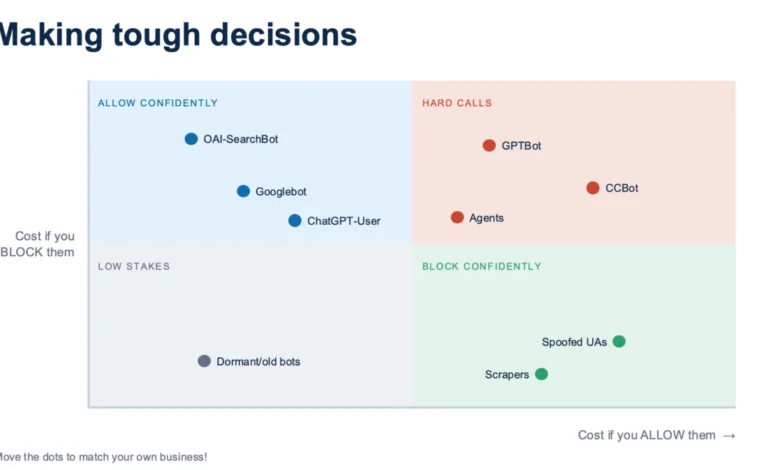
Despite fulfilling radically divergent functions—from scraping massive datasets for foundational model training to fetching precise, real-time answers for conversational search users—these distinct entities are frequently lumped together under the catch-all term "AI bots." This lack of differentiation presents a critical operational challenge. Blocking a crawler utilized exclusively for foundational model training carries drastically different commercial and visibility consequences than restricting a retrieval bot that feeds live data into an AI-powered search engine answer box. Consequently, modern search engine optimization (SEO) requires a sophisticated evolution: transitioning away from rudimentary block lists toward deliberate, multi-departmental bot management policies.

The Breakdown of the Voluntary Protocol
At the heart of modern bot management friction lies the widening gap between theoretical guidelines and technical enforcement. The robots.txt file has long served as the foundational standard for controlling web crawler access. However, industry experts emphasize that robots.txt is entirely voluntary. While reputable AI developers and search engines generally respect these directives, bad actors, scrapers, and aggressive commercial entities frequently ignore them.
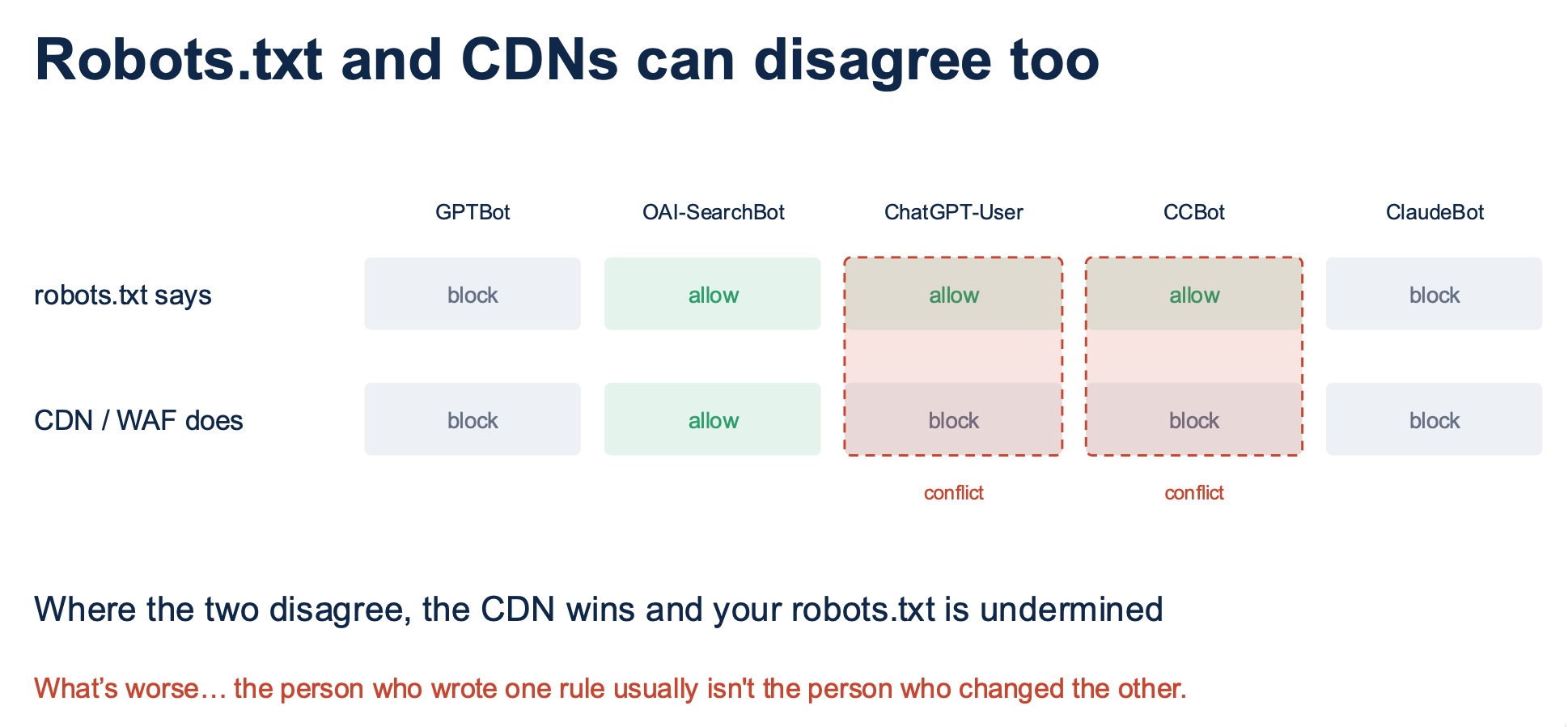
More critically, actual enforcement of website access policies rarely happens at the directory level anymore. In modern web infrastructure, real-time gating is predominantly managed through Content Delivery Networks (CDNs), Web Application Firewalls (WAFs), and specialized bot mitigation services. These security and infrastructure layers operate on strict security heuristics, rate limits, and threat intelligence feeds.
As a result, a website’s infrastructure security team may implement automated bot-blocking rules at the CDN level that directly contradict or override the strategic intent of the SEO team’s robots.txt configurations. Crucially, this often happens entirely without the knowledge or oversight of digital marketing and SEO departments. A security engineer blocking suspicious traffic spikes may inadvertently sever the connection between the website and valuable AI-driven discovery engines, erasing visibility without internal awareness.
The Rise of Autonomous Agents and the Threat of Invisibility
The complication deepens with the emergence of autonomous AI agents. Unlike traditional web crawlers that systematically index pages for later retrieval, modern personal and commercial agents browse websites in ways that closely mimic human user behavior. These advanced programs can execute JavaScript, simulate user sessions, trigger downstream analytics tracking, and interact with dynamic elements on a page.
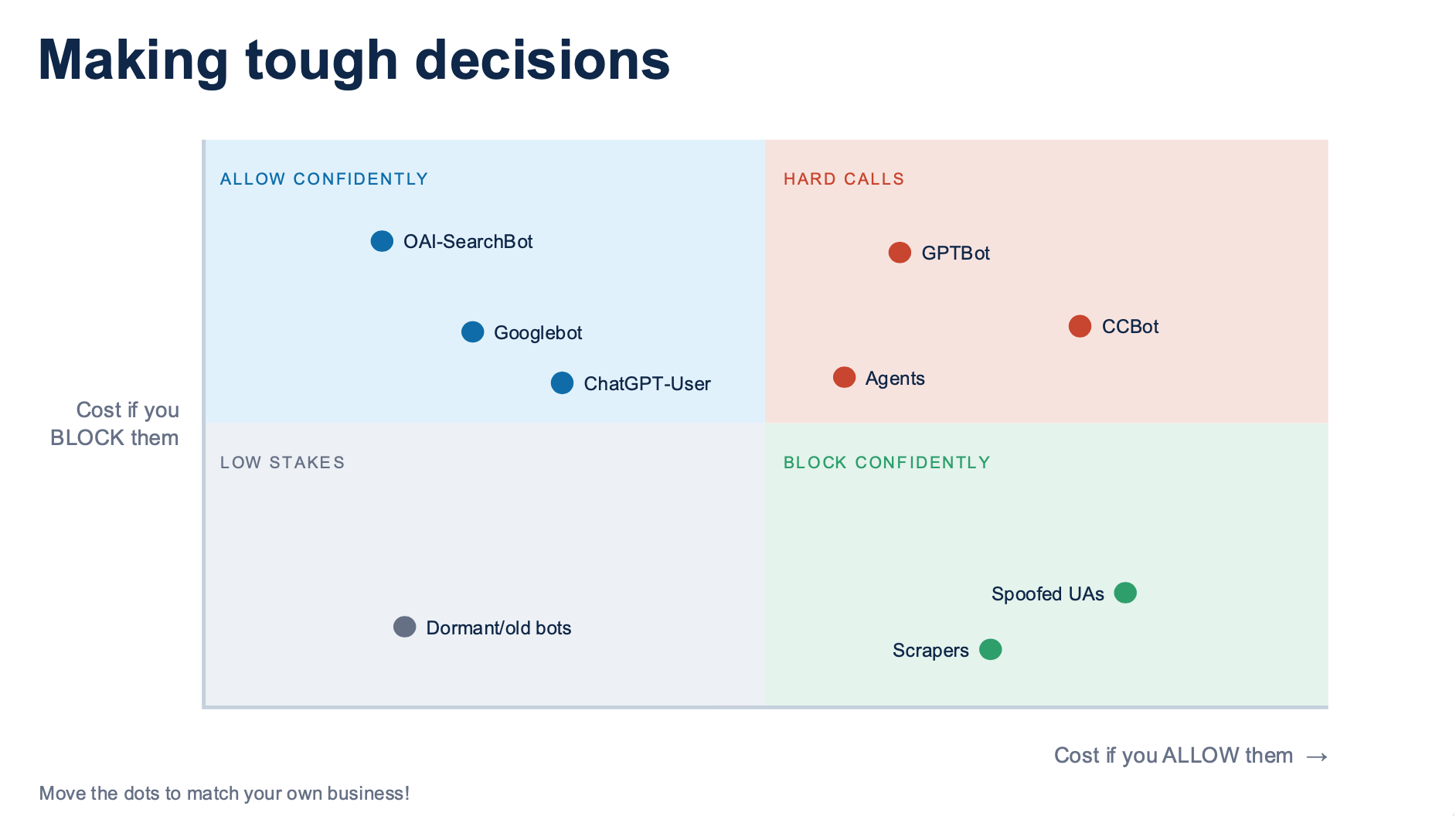
Distinguishing these sophisticated autonomous agents from authentic human visitors has become an escalating technical hurdle for web administrators. This convergence of behavior creates high-stakes strategic dilemmas for digital enterprises. If a website aggressively deploys blanket bot-blocking measures to protect its intellectual property, it runs the risk of mistakenly flagging and restricting autonomous agents that perform legitimate product comparisons, travel bookings, or research tasks on behalf of consumers.
The penalty for misclassification is severe. In the era of conversational search and zero-click answer engines, blocking an autonomous agent performing a product comparison does not merely result in the loss of a traditional organic ranking position. It can cause a brand to disappear entirely from the synthesized answers delivered to consumers, effectively cutting off an entire emerging channel of commercial discovery.
Shifting from Block Lists to Strategic Bot Policies
In response to these complex realities, digital marketing and technical authorities argue that the traditional reliance on reactive block lists must be replaced by comprehensive, intentional bot governance frameworks. Crafting a deliberate bot policy requires organizations to systematically evaluate several core factors:
- Identity: Who or what is attempting to access the digital property?
- Intent: What is the precise purpose of the automated visit (e.g., brand discovery, transactional execution, data scraping, or model training)?
- Impact: What are the immediate and long-term commercial, technical, and legal consequences of permitting or blocking the specific category of traffic?
Establishing these governance policies requires an unprecedented level of cross-functional collaboration. Decisions regarding bot management can no longer be siloed within the marketing or SEO department. Instead, they demand coordinated alignment across SEO, engineering, cybersecurity, legal, and commercial business units.
Furthermore, these policies cannot be treated as a "set-and-forget" configuration. Because the AI landscape evolves rapidly—with new agent frameworks, retrieval mechanisms, and monetization models emerging continuously—bot management frameworks must be consistently enforced, audited, and regularly reviewed to balance data protection with discoverability.
Broader Industry Implications and the Future of GEO
The challenges surrounding bot management highlight the broader evolution of optimization practices into the realm of Generative Engine Optimization (GEO). As search engines transition from blue links to direct, synthesized answers, the mechanics of how digital content is discovered, evaluated, and utilized are fundamentally altering the digital economy.
Publishers, e-commerce platforms, and content creators are increasingly forced to grapple with the tension between protecting proprietary content from uncompensated commercial scraping and maintaining visibility within emerging AI ecosystems. Without granular control mechanisms that differentiate between cooperative search retrieval and exploitative data harvesting, enterprises risk either losing control of their intellectual property or rendering themselves invisible to the next generation of consumers.
Ultimately, mastering bot management in the modern era requires organizations to treat automated traffic not as a binary security threat or an administrative afterthought, but as a critical variable in digital strategy. By bridging the communication gap between security infrastructure and search optimization, businesses can successfully navigate the complexities of the AI-driven web.