Amazon Pharmacy and eNavvi Partner to Integrate Prescription Fulfillment Directly into Physician Workflows

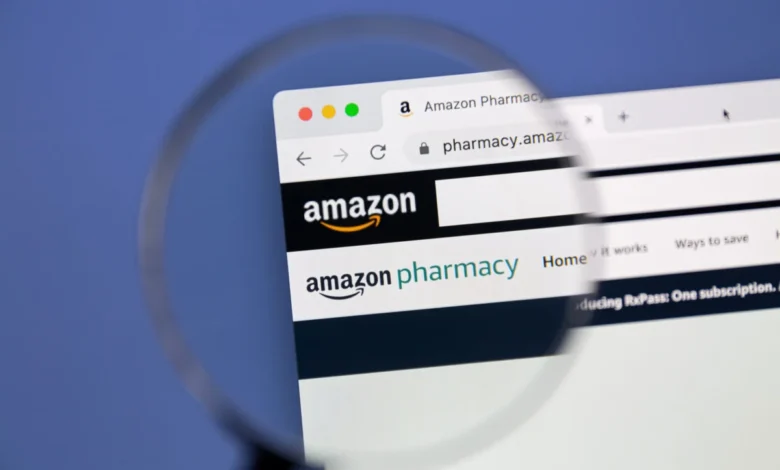
The digital health landscape is witnessing a significant shift as the e-commerce giant Amazon Pharmacy announces a strategic collaboration with eNavvi, a leading digital prescription platform. This partnership aims to bridge the gap between clinical consultation and medication fulfillment by integrating real-time pricing, stock availability, and delivery logistics directly into the physician’s prescribing workflow. By embedding these critical data points into the software used by healthcare providers, the two companies intend to transform the traditional patient visit into a streamlined, single point-of-sale (POS) experience. This initiative leverages Amazon’s extensive logistics infrastructure, including its same-day delivery network which is currently operational in nearly 3,000 U.S. cities, to ensure that the transition from diagnosis to treatment is as frictionless as possible.
The Mechanics of Workflow Integration
At the heart of this collaboration is the technical integration of Amazon Pharmacy’s Application Programming Interfaces (APIs) into the eNavvi platform. Historically, the process of prescribing medication has been fragmented. A physician selects a drug based on clinical efficacy, but often lacks visibility into the out-of-pocket costs for the patient or the local availability of the medication. This information vacuum frequently leads to "sticker shock" at the pharmacy counter, resulting in prescription abandonment—a major hurdle in patient care.
Under the new arrangement, when a physician uses eNavvi to generate a prescription, they will have access to a dashboard powered by Amazon’s data. This dashboard displays the transparent price of the medication, accounting for insurance or Prime member discounts, and confirms whether the item is in stock. If the patient chooses to proceed, the prescription can be routed directly to Amazon Pharmacy for fulfillment. This real-time transparency allows for better-informed clinical decisions; for instance, if a specific brand-name drug is prohibitively expensive, the physician and patient can immediately discuss generic alternatives or different therapeutic classes that fit the patient’s budget.
Simon Chang, Chief Executive Officer at eNavvi, emphasized that this move fundamentally alters the power dynamics within the exam room. "This collaboration fundamentally changes what physicians can see and do at the moment of prescribing," Chang stated. He noted that by removing barriers such as opaque pricing and uncertain availability, the partnership ensures that the "prescribing moment" is also the "fulfillment moment," thereby increasing the likelihood that patients will follow through with their treatment plans.
Leveraging Amazon’s Logistics and Prime Ecosystem
Amazon’s entry into the healthcare sector has been characterized by its ability to apply its world-class logistics expertise to the delivery of essential goods. The company currently ranks No. 1 in Digital Commerce 360’s Top 1000 Database, which tracks the largest North American online retailers by annual e-commerce sales. While it holds the No. 158 spot in the AI Commerce Rankings, its dominance in global online marketplaces—ranking No. 3 in third-party gross merchandise value (GMV)—provides it with an unparalleled scale for distribution.
The partnership with eNavvi utilizes Amazon’s same-day delivery network, a logistical feat that has expanded rapidly across 3,000 U.S. cities. For many patients, particularly those in urban environments, this means a prescription written at 10:00 AM could be delivered to their doorstep by the afternoon. This level of convenience is intended to match the expectations of modern consumers who are accustomed to the speed of the broader e-commerce market.
Furthermore, the integration heavily features benefits for Amazon Prime members. Patients with a Prime subscription can access generic medications at discounts of up to 80% off the list price. Additionally, the partnership incorporates RxPass, Amazon Pharmacy’s $5-per-month subscription program that provides unlimited access to over 50 commonly prescribed generic medications. By bringing these financial incentives directly into the physician’s workflow, the eNavvi platform allows clinicians to act as advocates for their patients’ financial health as well as their physical well-being.
Parallels with Modern E-commerce Trends
The integration of a "checkout" function into a discovery or diagnostic environment is not a new concept in the broader world of retail, but its application in healthcare is revolutionary. Industry analysts suggest that Amazon and eNavvi are applying a logic similar to that of "social commerce."
Vivien Garnès, co-CEO and co-founder of the influencer marketing platform Upfluence, observed that this shift mirrors patterns seen on platforms like Instagram and TikTok. "The purchase decision used to happen after the discovery moment," Garnès explained. In traditional e-commerce, a consumer would see a product, leave the app, search for it on a separate website, and then complete a purchase—a process with multiple "friction points" where the sale could be lost.
"ENavvi embedding Amazon Pharmacy into the prescribing screen is the same logic Instagram and TikTok are applying to shoppable content," Garnès added. "Whenever and wherever a decision gets made, that’s where checkout needs to live. The winners in any industry right now are the ones erasing the friction between deciding and buying." In the context of healthcare, "deciding" is the physician’s diagnosis, and "buying" is the patient’s commitment to the treatment. By merging these two steps, Amazon and eNavvi are treating the medical prescription as a "shoppable moment" to ensure higher compliance.
Addressing "Pharmacy Deserts" and Healthcare Inequity
Beyond convenience, the collaboration has significant implications for healthcare equity and access. Alys Reynders, Chief Marketing Officer at Quickbase, pointed out that the partnership addresses a longstanding weakness in the U.S. healthcare infrastructure: the "pharmacy desert." These are geographic areas, often in low-income or rural communities, where residents lack easy access to a physical pharmacy.
"Given that the healthcare sector has long struggled with inefficiencies when it comes to digital transformation and the secure flow of patient data, the collaboration between eNavvi and Amazon Pharmacy for real-time prescription orders and medication pricing has the potential to transform patient access to important treatments," Reynders stated.
She noted that by providing clinicians with direct access to real-time medication costs and availability at the point of care, the innovation helps eliminate the "hidden fees" and physical bottlenecks that prevent patients from obtaining their medicine. As the economy moves toward an online-first ecosystem, Amazon’s delivery network can act as a bridge, ensuring that a patient’s zip code does not determine their ability to recover from an illness.
A Chronology of Amazon’s Healthcare Expansion
The partnership with eNavvi is the latest milestone in Amazon’s decade-long journey into the healthcare industry. To understand the significance of this move, it is essential to look at the timeline of Amazon’s strategic acquisitions and launches:
- 2018: Amazon acquires PillPack for approximately $750 million, gaining the necessary pharmacy licenses in all 50 states and the technology for pre-sorted dose packaging.
- 2020: The company officially launches Amazon Pharmacy, allowing customers to order prescription medications through the Amazon app and website.
- 2022: Amazon announces the acquisition of One Medical, a primary care provider, for roughly $3.9 billion, signaling a move into direct patient care.
- 2023: The launch of RxPass provides a subscription model for generic drugs, aimed at chronic condition management.
- 2024: The collaboration with eNavvi marks a transition from being a consumer-facing pharmacy to becoming a deeply integrated part of the professional clinical workflow.
This progression shows a clear trajectory: Amazon is no longer just a retailer; it is becoming a foundational layer of the healthcare infrastructure, connecting insurance, primary care, and pharmaceutical fulfillment.
Analysis of Implications for the Healthcare Industry
The implications of this partnership extend far beyond the two companies involved. For traditional retail pharmacies like CVS and Walgreens, the integration of fulfillment into the physician’s workflow represents a significant competitive threat. For decades, these retailers relied on the "foot traffic" generated by the pharmacy counter to drive sales in their front-store aisles (groceries, cosmetics, and household goods). If the prescription process moves entirely online and begins at the doctor’s office, the primary incentive for visiting a physical drug store diminishes.
From a clinical perspective, the data-driven approach offered by eNavvi and Amazon could lead to improved health outcomes. Studies have shown that roughly 20% to 30% of prescriptions are never filled, and approximately 50% of medications for chronic diseases are not taken as prescribed. Cost is cited as one of the primary reasons for non-adherence. By solving the cost-transparency issue at the point of care, this partnership could theoretically save the healthcare system billions of dollars in costs associated with untreated chronic conditions and emergency room visits.
Tanvi Patel, Vice President and General Manager at Amazon Pharmacy, reiterated this goal. "Amazon Pharmacy is committed to providing a transparent pharmacy experience that removes the friction preventing patients from reliably accessing the medications they are prescribed," Patel said. "We know that when patients can conveniently access their medications, they take them and live healthier lives."
Conclusion: The Age of Digital Transformation in Medicine
The partnership between eNavvi and Amazon Pharmacy provides a glimpse into the future of medicine in an age of total digital transformation. By creating a "secure corridor" for prescription data, the two companies are setting a new standard for how patient data and commercial logistics can interact to serve the public good.
While the model mimics the efficiency of modern e-commerce, its ultimate value lies in its ability to humanize the healthcare experience by removing the anxiety of the unknown cost and the physical burden of the pharmacy trip. As this integrated model rolls out across more healthcare systems, it may well define the next era of clinical care, where the "point-of-sale" is not just a transaction, but a critical step in the journey toward better health.