Anthropic IPO Filing Reveals Massive Compute Liabilities and Shifts Enterprise AI Procurement Strategy

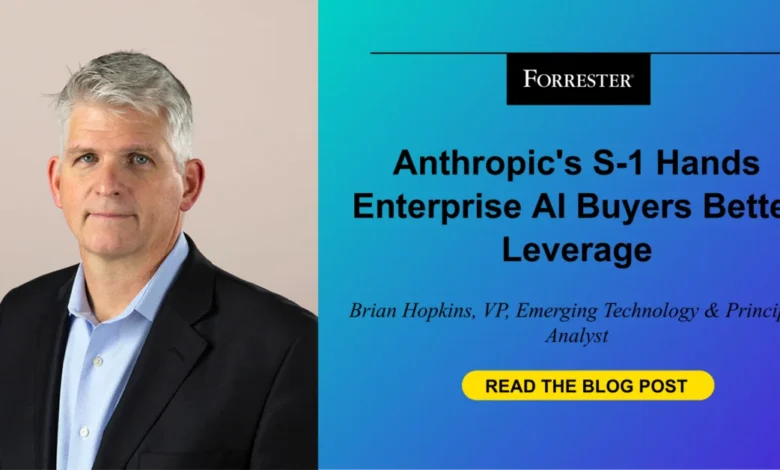
The filing of Anthropic’s S-1 registration statement with the U.S. Securities and Exchange Commission on October 26 marked a watershed moment for the generative AI sector. While market analysts had long hypothesized that an initial public offering would impose fiscal discipline on the high-flying AI startup, the raw data within the filing reveals a more complex reality. Anthropic, which has positioned itself as a premium provider of safe and reliable large language models, is currently operating under a business model defined by massive, long-term infrastructure commitments that fundamentally alter the power dynamic between the company and its enterprise clients.
A Chronology of Capital and Capacity
The trajectory of Anthropic’s growth has been characterized by an aggressive pursuit of compute power. Since its inception, the company has sought to differentiate itself through high-end research and development, necessitating access to the world’s most powerful GPU clusters. In June 2024, market observers largely anticipated that an IPO would force Anthropic to pivot toward cost-optimization and margin-focused growth.
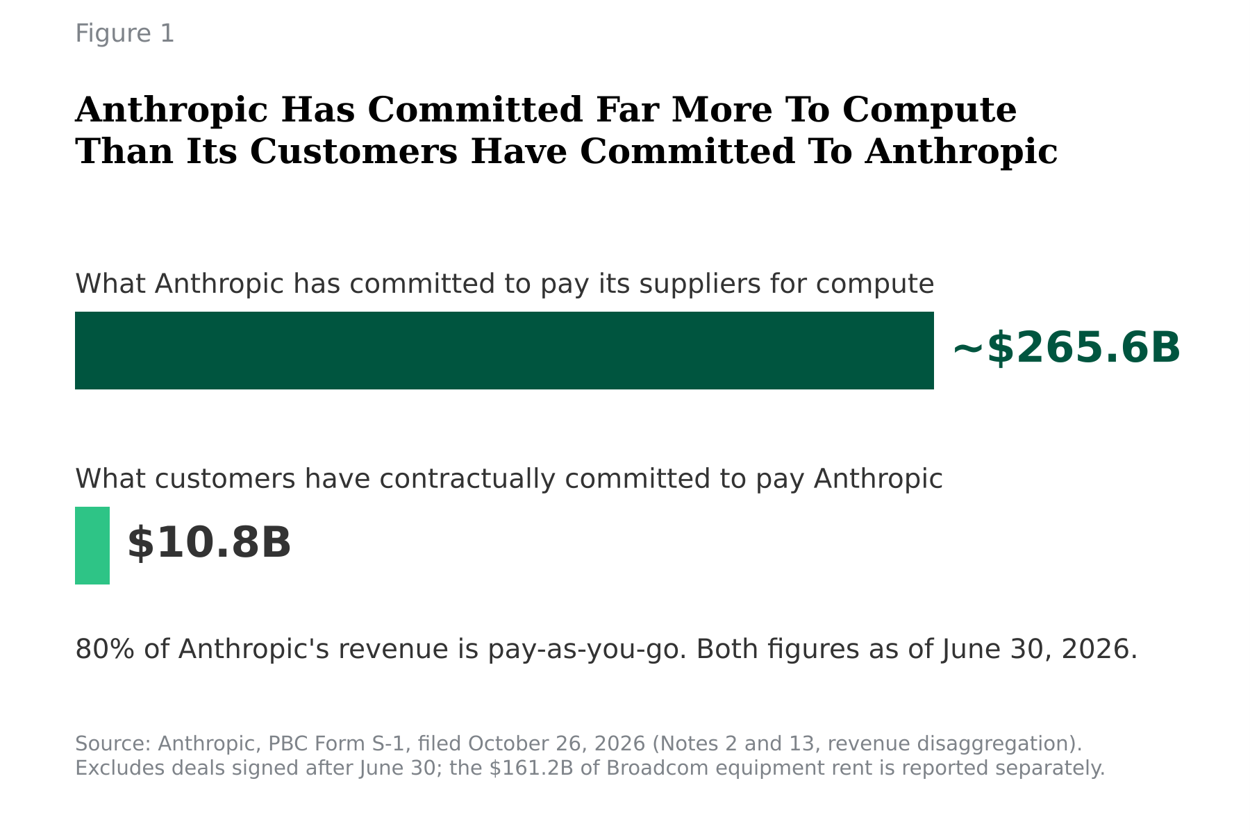
However, the S-1 filing demonstrates that the company’s capital expenditure strategy remains heavily weighted toward securing long-term compute capacity. Anthropic has committed to paying suppliers—primarily cloud infrastructure giants—a staggering $265.6 billion over the coming decade. This figure stands in stark contrast to the $10.8 billion in contractual commitments currently locked in by its customer base. This disparity, a ratio of roughly 25-to-1 in favor of compute liability over revenue, highlights the intense pressure the company faces to drive massive volume across its infrastructure to justify these astronomical overheads.
Analyzing the Compute-to-Revenue Disparity
The fundamental shift identified in the aftermath of the October 26 filing is the realization that Anthropic has transitioned from a specialized, premium-service provider into a high-volume utility player. For an enterprise procurement officer, this is a critical distinction. Historically, AI models were treated as scarce, boutique resources where the buyer had limited leverage against a provider with near-total control over supply.
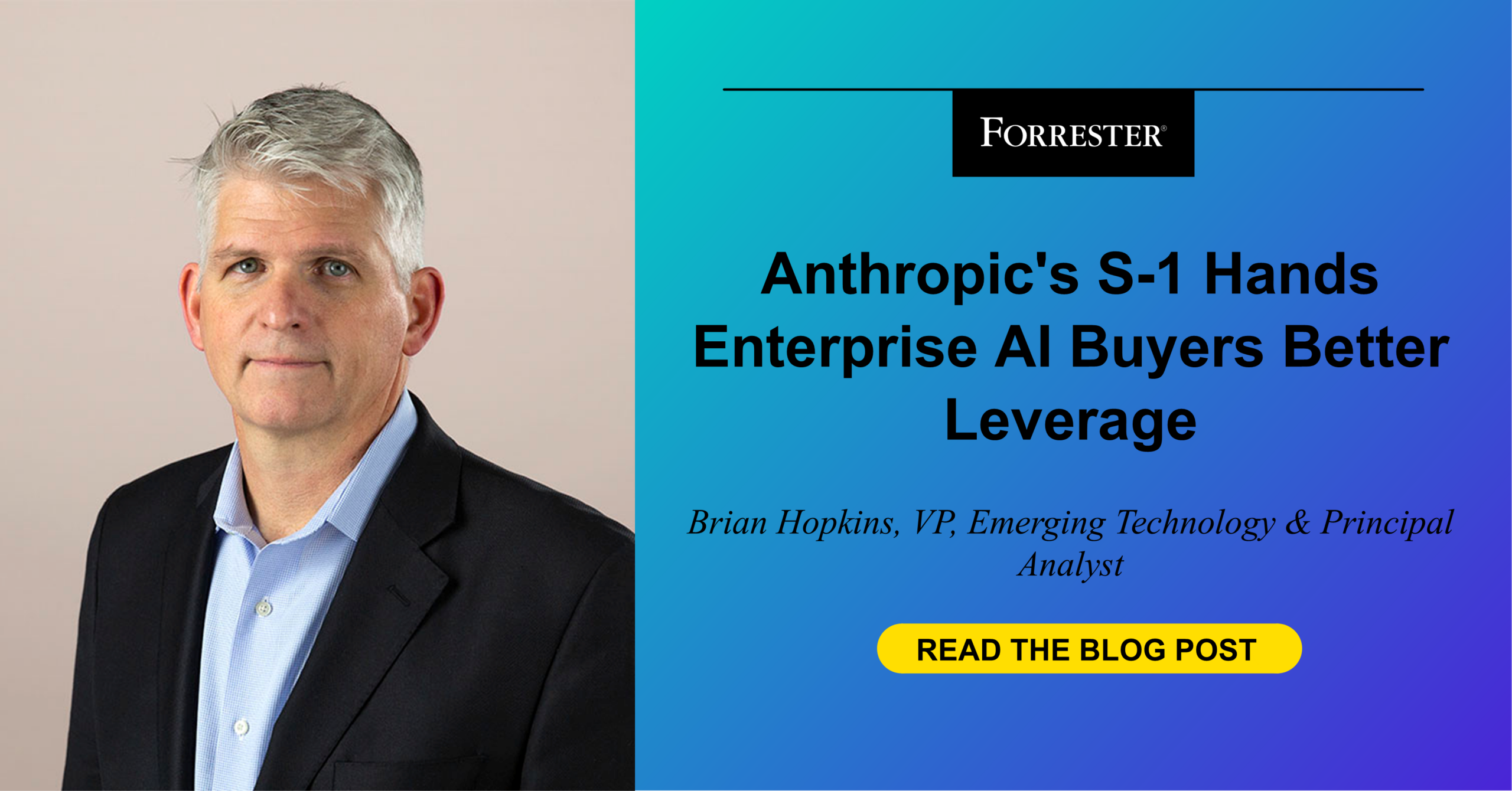
The S-1 data suggests that the inverse is now true. Because Anthropic has signed "take-or-pay" style agreements with providers like Amazon Web Services (AWS), Google Cloud, and Microsoft Azure, it is legally obligated to meet specific usage targets or face penalties regardless of actual customer demand. This creates a significant "capacity overhang." If Anthropic does not fill this capacity with enterprise workloads, the fiscal impact on their balance sheet could be substantial.
For the enterprise buyer, this creates an opening. Anthropic’s need for volume is a lever that can be used during contract negotiations. Procurement departments that recognize this shift can argue for more favorable pricing or shorter-term commitments, as the provider is inherently incentivized to secure the workload to satisfy its own infrastructure obligations.
The Risks of Long-Term AI Commitments
In the current economic climate, the prevailing advice for enterprise technology procurement has been to avoid long-term lock-in agreements for AI services. This sentiment is reinforced by the volatility of the AI market, where model capabilities change on a quarterly basis.
The S-1 filing confirms that Anthropic’s compute contracts extend well into 2033 and 2036. By signing a multi-year, fixed-cost contract with Anthropic, an enterprise buyer is effectively de-risking the provider’s balance sheet. The buyer is assuming the burden of a long-term commitment that the provider itself was forced to take on to secure its supply chain. Given the rapid pace of innovation, committing to a specific AI provider for five to ten years is not only strategically risky but potentially financially disadvantageous, as it prevents the enterprise from pivoting to newer, more efficient, or more cost-effective models as they emerge.
The Role of Hyperscalers as Intermediaries
A secondary, but equally important, implication of the filing is the role of the hyperscalers—AWS, Google, and Azure—in the distribution of Claude. When an enterprise purchases access to Anthropic’s models through a major cloud provider, they are entering a triangular relationship.
The cloud provider has a vested interest in the transaction at multiple levels: they earn revenue from the compute usage, they likely hold equity in the AI startup, and they are the recipient of the "take-or-pay" compute fees mentioned in the S-1. This creates a unique dynamic where the cloud provider acts as a strategic intermediary. In many instances, the cloud provider has the flexibility to offer credits or bundled pricing because they are capturing value across the entire stack. Enterprises should be cognizant of this "multi-layered" relationship, as it provides additional avenues for negotiation that are not available when purchasing directly from a standalone software vendor.
Broader Market Implications and Strategic Recommendations
The transition of Anthropic toward a volume-driven model has broader implications for the AI industry at large. As AI models move toward commoditization, the competitive advantage will likely shift from purely technical superiority to the ability to efficiently manage infrastructure and maintain customer volume.
For organizations currently pressure-testing their AI contracts, the following strategic pillars are recommended:
- Prioritize Flexibility: Avoid multi-year commitments that do not allow for service level adjustments. The "S-1 effect" demonstrates that Anthropic is in need of usage volume; therefore, short-term contracts should be positioned as a way to maintain agility.
- Leverage the "Volume Necessity": When entering negotiations, recognize that the provider is under pressure to fill infrastructure capacity. This reality gives the buyer significantly more bargaining power than was evident even six months ago.
- Analyze the Cloud Ecosystem: If purchasing through a hyperscaler, leverage the cloud provider’s relationship with the model developer. Ask for total-cost-of-ownership (TCO) assessments that account for the cloud provider’s underlying stake in the AI company.
- Monitor Infrastructure Utilization: As public disclosures continue, keep a close watch on the relationship between compute commitments and revenue growth. A widening gap may signal that the provider will become even more aggressive in seeking long-term enterprise commitments, which should serve as a warning to procurement teams to remain disciplined.
Conclusion: A New Era of Enterprise AI Procurement
The filing of Anthropic’s S-1 has effectively punctured the myth of the "premium-only" AI provider. By revealing the sheer scale of the company’s compute liabilities, the document has transformed the narrative from one of supply-constrained scarcity to one of demand-driven necessity.
For the enterprise, this is a positive development. It moves the conversation from "how can we get access" to "how can we optimize the cost of our usage." As the market continues to mature and further information becomes available through the IPO process, it is clear that the leverage in the AI sector is shifting. The enterprises that succeed in the coming years will be those that view their AI consumption not just as a technology purchase, but as a strategic negotiation within a complex, interconnected, and volume-hungry ecosystem. The era of blind, long-term commitment to AI providers is ending, replaced by an era of calculated, data-driven procurement.