EEOC Rescinds Criminal Background Check Guidance Signaling Shift in Disparate Impact Enforcement

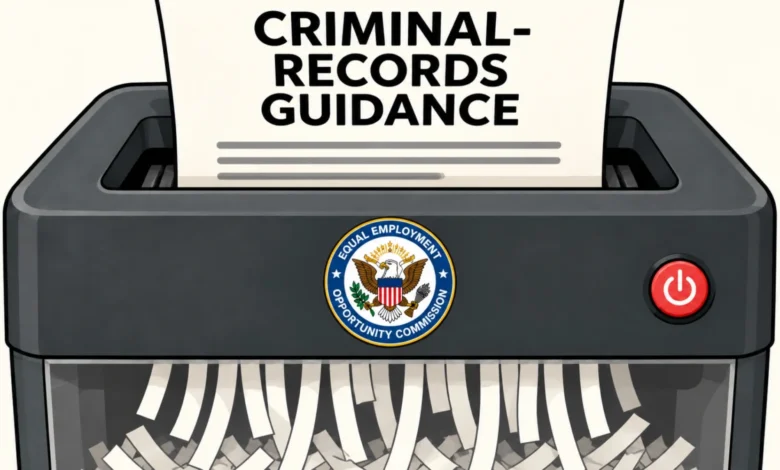
The Equal Employment Opportunity Commission (EEOC) has officially rescinded its 2012 enforcement guidance on the use of arrest and conviction records in employment decisions. This move, finalized on October 29, 2026, marks a significant departure from over a decade of federal policy and underscores a broader administration-led initiative to dismantle the legal framework surrounding disparate-impact liability. While the agency has removed its internal regulatory interpretation, human resources departments and legal counsel are cautioned that this administrative pivot does not equate to a change in federal law or a safe harbor for exclusionary hiring practices.
The Evolution of EEOC Guidance and the 2012 Standard
To understand the weight of this rescission, one must consider the historical context of the 2012 guidance. For fourteen years, that document served as the primary roadmap for employers attempting to balance security concerns with Title VII of the Civil Rights Act of 1964. The 2012 guidance was predicated on the finding that broad, automatic criminal record exclusions disproportionately screened out Black and Latino applicants, a phenomenon known as disparate impact.
Under the 2012 standard, the EEOC advocated for a "targeted screen," encouraging employers to consider three critical factors: the nature and gravity of the offense, the time elapsed since the offense or completion of the sentence, and the nature of the specific job held or sought. Furthermore, the guidance championed "individualized assessments," which permitted candidates to explain the circumstances of their records, provide evidence of rehabilitation, or correct inaccuracies in the background reports. By removing this guidance, the EEOC has essentially signaled that it no longer views these specific procedures as the required standard for complying with Title VII, though the underlying statutory obligations of the Civil Rights Act remain untouched.
A Chronology of Policy Shifts
The road to the October 2026 rescission has been paved with increasing administrative pressure on federal agencies to narrow their regulatory scope. The timeline of these events is critical for understanding the current landscape:
- April 2012: The EEOC issues its formal Enforcement Guidance on the Consideration of Arrest and Conviction Records in Employment Decisions under Title VII.
- April 2025: President Trump issues an executive order titled "Restoring Equality of Opportunity and Meritocracy," which explicitly instructs federal agencies to evaluate and deprioritize the enforcement of disparate-impact theories, citing concerns that such theories often lead to mandated social engineering rather than merit-based hiring.
- June 2026: The Department of Justice (DOJ) Office of Legal Counsel releases a formal opinion arguing that the EEOC’s long-standing reliance on disparate-impact liability in the context of background checks rests on an overextension of statutory authority.
- October 28, 2026: The EEOC commissioners vote to formally rescind the 2012 guidance.
- October 29, 2026: The commission releases the official announcement, clarifying that previous policy statements superseded by the 2012 guidance are not automatically reinstated, effectively creating a regulatory vacuum.
Data and Demographic Context
The debate surrounding criminal background checks is rooted in persistent demographic disparities in the U.S. justice system. According to data from the Bureau of Justice Statistics, incarceration rates have historically been significantly higher for Black and Hispanic men compared to their white counterparts. When employers implement blanket "no-hire" policies for individuals with any criminal record, the resulting workforce composition often skews away from minority representation.
Proponents of the 2012 guidance argued that without the EEOC’s intervention, these statistical disparities would become institutionalized in the private sector. Conversely, critics—including many industry trade groups—argued that the guidance forced employers to ignore legitimate safety risks in the interest of social equity. With the rescission, the federal government is shifting the burden of justification away from the agency and back toward the individual employer’s internal risk management protocols.

Implications for Employer Liability
While the EEOC’s internal guidance has been rescinded, the legal reality for private employers remains complex. Title VII itself still prohibits intentional discrimination (disparate treatment). If an employer selectively uses criminal history to screen out minority candidates while ignoring identical records for non-minority candidates, they remain fully exposed to litigation.
Furthermore, the rescission does not grant immunity against private class-action lawsuits. Plaintiffs’ attorneys are expected to continue filing disparate-impact claims under the existing text of Title VII. Because federal courts are not bound by the EEOC’s internal guidance or even the recent DOJ opinion, they may continue to look to the principles established in the 2012 guidance as a benchmark for "business necessity." If an employer adopts a hiring policy that results in a significant statistical disparity, they will likely still need to prove in court that the policy is job-related and consistent with business necessity.
The Patchwork of Local and State Regulations
Perhaps the most significant risk for national employers following this announcement is the "fair-chance" landscape at the state and municipal levels. Over the past decade, numerous jurisdictions—including Philadelphia, New York City, and the state of California—have enacted "Ban the Box" and fair-chance ordinances that are significantly more restrictive than the federal government ever was.
For instance, Philadelphia’s Fair Criminal Records Screening Standards Ordinance mandates specific, individualized review processes and restricts when in the hiring cycle an employer can inquire about criminal history. These local laws are unaffected by the EEOC’s decision. Employers who mistakenly believe that the federal rescission allows for a "clean slate" in hiring policies may find themselves in violation of local statutes that impose strict procedural requirements and potential civil penalties.
Additionally, the Fair Credit Reporting Act (FCRA) remains a formidable federal hurdle. The FCRA dictates how background checks must be conducted, requiring clear disclosure to the applicant, written authorization, and a specific "pre-adverse action" process if an employer intends to deny employment based on a report. This process includes providing the applicant with a copy of the report and a summary of their rights. The rescission of the EEOC guidance does not alter these FCRA mandates, meaning that any automation of the hiring process must still account for these rigid notification requirements.
Strategic Recommendations for HR Departments
In the wake of this change, organizations are advised to take a measured approach rather than immediately pivoting to broad, restrictive screening policies. Before modifying current procedures, legal and human resources teams should conduct a comprehensive audit.
- Job-Relatedness Validation: Re-examine every screening criterion. Employers must be able to articulate a legitimate, job-related reason for why a specific type of conviction serves as a disqualifier for a specific role. A blanket exclusion for a retail clerk position, for example, is harder to justify than one for a security guard or a position involving fiduciary responsibility.
- Jurisdictional Mapping: Because local laws remain in effect, employers must map their hiring locations. A "one-size-fits-all" national policy is now effectively impossible to implement without running afoul of one of the many state or city-level fair-chance laws.
- Workflow Integrity: Ensure that the automated systems used by third-party background screening vendors do not bypass legally required notifications. Even if the EEOC has stepped back, the FCRA remains the primary federal oversight mechanism for the mechanics of background checks.
Ultimately, the EEOC’s action reflects a profound shift in the federal regulatory philosophy regarding the relationship between the state and the private labor market. However, for the average employer, the operational reality is that the move away from federal oversight increases, rather than decreases, the need for localized compliance strategies and robust, defensible documentation of hiring decisions. As the legal community anticipates further challenges to disparate-impact theories in the courts, the most prudent path remains one of caution, ensuring that any hiring decision can be defended as a rational, job-related necessity.
Related posts: