The Perils of Attribution: How Fabricated Executive Approval Can Sink a Discrimination Defense

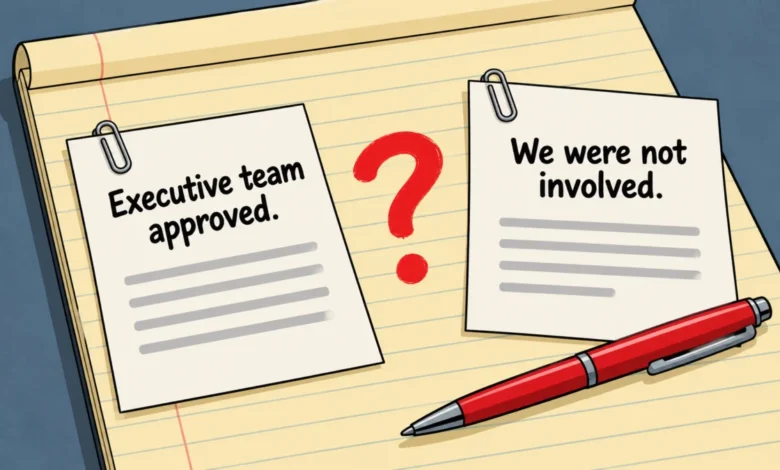
Before informing an employee that a termination decision was sanctioned by the Chief Executive Officer, human resources departments and management must first verify the accuracy of that claim, particularly when the decision becomes the subject of formal litigation. A recent ruling from a federal district court in Michigan highlights the disastrous consequences that occur when a company’s internal narrative regarding a termination is dismantled during the discovery phase of an employment lawsuit. The case serves as a cautionary tale for organizations that lean on the perceived authority of executive leadership to justify employment actions, only to have those same executives contradict the narrative under oath.
The litigation involves a 55-year-old sales professional with a 21-year tenure at a technology firm. Following a serious injury sustained during a business trip—which required multiple surgeries and led to ongoing physical and psychological challenges—the employee found herself in the crosshairs of a corporate restructuring. While the company maintained that her termination was the result of a performance-based workforce reduction, the inconsistencies in the company’s explanation provided the court with sufficient grounds to allow her claims of age, sex, and disability discrimination to proceed to a jury trial.
A Chronology of Contradictions
The timeline of the employee’s departure reveals a sharp disconnect between the company’s stated performance standards and its administrative actions. In May 2024, despite her ongoing recovery and the physical challenges associated with her injury, the company awarded the employee a 10% merit raise. Internal documentation acknowledged that such raises were rare, suggesting that the company viewed her as a valuable contributor at that time.
By December 2024, the employee’s standing on the sales leaderboard placed her at 12th out of 24 representatives. While not the top performer, she was firmly in the middle of the pack. However, in January 2025, the company abruptly terminated her employment. During the exit meeting, human resources representatives cited poor sales performance and explicitly stated that the CEO had personally approved the decision. When the employee requested the implementation of a performance improvement plan (PIP)—a procedure explicitly outlined in the company handbook—she was informed that no such process would be provided.
The Breakdown of the Executive Narrative
The company’s defense began to unravel during the discovery process. In response to formal interrogatories, the firm asserted that a total of six employees had been selected for a performance-based layoff. The company claimed that its executive leadership team had collectively reviewed and approved the decision to terminate the lowest performers to optimize business operations.
To substantiate these claims, the court permitted the employee’s legal counsel to depose the executive team. In a strategic move, the court offered the executives an alternative: if they could provide a sworn statement confirming they had no involvement in the termination, they would be excused from the deposition. Every executive, including the CEO, disclaimed involvement.

The CEO’s testimony was particularly damaging. He testified that the executive team had never met to discuss the specific terminations, that he had no role in the decision-making process, and that he had no knowledge of the criteria used by the supervisor and HR to select the individuals for the reduction in force. This direct contradiction of the company’s earlier filings led the court to characterize the firm’s account of the process as a "suspiciously fluid narrative."
Data Analysis and Disparate Impact
The company’s justification for the layoffs—that they were based on objective performance metrics—failed to hold up under statistical scrutiny. While the company claimed the termination was part of a broader workforce reduction, the actual distribution of the layoffs told a different story. Of the six employees identified in the "performance-based" layoff, four were younger men whose departments had actually been shuttered. This left the plaintiff and one other woman, both over the age of 50, as the only employees actually terminated due to the alleged performance criteria.
Furthermore, the company’s reliance on quota achievement as a firing metric was undermined by the internal performance data. In 2024, only five out of 24 sales representatives successfully hit their full quotas. Despite this widespread failure to reach targets, younger employees with sales figures inferior to those of the plaintiff were retained. Evidence also suggested that the two women over the age of 50 had been assigned unusually large quota increases compared to their peers, potentially setting them up for failure. Finally, internal records indicated that the plaintiff’s accounts were transferred to a younger male colleague, and the supervisor maintained the same number of total sales representatives after the "reduction," contradicting the claim that the layoff was a necessary cost-cutting measure.
Broader Implications for Corporate Compliance
The legal ramifications of this case extend far beyond the specific facts of the termination. Employers often use the weight of executive authority to insulate themselves from challenges at the time of firing. However, when those statements are untrue, they create a "pretext" for discrimination. Under the McDonnell Douglas burden-shifting framework commonly used in employment discrimination cases, once an employee establishes a prima facie case, the employer must provide a legitimate, non-discriminatory reason for the adverse action. If the court finds evidence that the employer’s stated reason is a lie or a fabrication, the case almost invariably moves to a jury.
The implications for HR departments are threefold:
- Verification of Decision-Makers: Organizations must maintain a clear, documented chain of command for terminations. If a supervisor or HR representative invokes the name of the CEO, there must be a paper trail—emails, meeting minutes, or memos—confirming that the executive was briefed on the facts and gave their consent. Fabricating executive involvement is a major liability that can be easily exposed in court.
- Consistency in Performance Management: If a company utilizes performance data as a justification for termination, that data must be applied consistently across the workforce. If a majority of the team is missing quota, using it as a pretext for firing specific individuals—particularly those in protected classes—will be viewed by a court as evidence of discriminatory intent.
- Adherence to Internal Policies: Bypassing standard procedures, such as a Performance Improvement Plan (PIP), during a termination process requires a strong, defensible rationale. When an employee is given a raise and then fired shortly thereafter without the benefit of a promised improvement period, it creates a narrative of arbitrary or retaliatory action that is difficult to overcome during litigation.
The Path Forward
While the company may still prevail at trial if it can convince a jury that the performance issues were genuine and the contradictions were merely administrative errors, the court’s decision to deny the company’s motion for summary judgment is a significant defeat. The firm now faces the time, expense, and reputational risk of a jury trial.
This case underscores that in the modern regulatory and litigious environment, transparency and accuracy are not just ethical imperatives but essential components of risk management. When a company’s "official" account of an event is shown to be a shifting, contradictory narrative, it loses the credibility required to defend its business decisions. For HR leaders, the lesson is clear: before justifying a firing in the name of the CEO, ensure that the CEO is prepared to stand behind that decision under oath. If the facts do not support the narrative, the resulting lawsuit may prove far more costly than the performance issues the company sought to address.