Google Maps Integrates Generative AI with Ask Maps Feature to Transform Local Business Discovery and Consumer Engagement

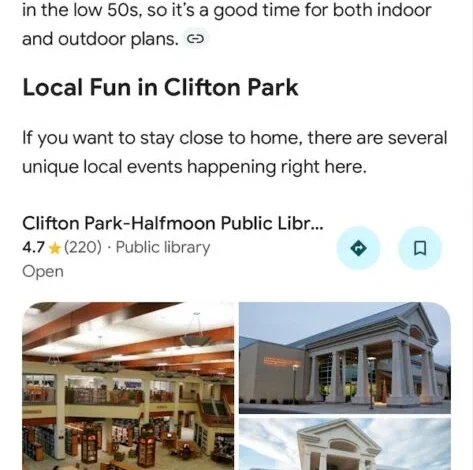
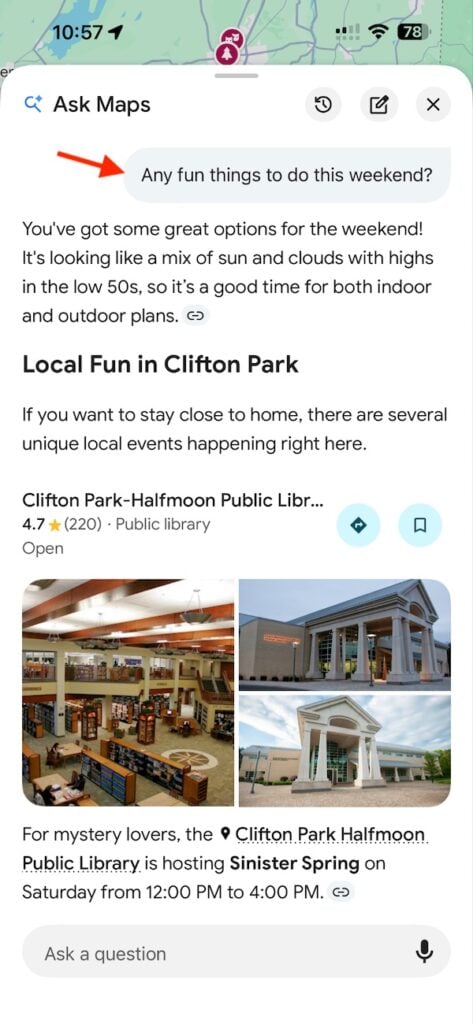
Google has officially rolled out its most significant update to its navigation ecosystem in years, introducing Ask Maps, a generative AI-powered search interface designed to revolutionize how consumers interact with local environments. This feature, powered by Google’s proprietary Gemini large language model (LLM), transitions the platform from a traditional utility tool for navigation into a sophisticated discovery engine. By allowing users to pose complex, conversational queries such as “Any fun things to do this weekend?” or “Where can I find a vintage lamp with a mid-century aesthetic?”, Google Maps is now capable of synthesizing billions of data points—including business listings, user reviews, and photos—to provide curated, human-like recommendations in seconds.
The implementation of Ask Maps marks a fundamental shift in the digital marketing landscape, particularly for small and medium-sized enterprises (SMEs). Traditionally, local search relied heavily on specific keywords and proximity. However, the new AI-driven interface prioritizes context and nuance, offering a major opportunity for local businesses to elevate their visibility among consumers who may not yet be aware of their specific brand. For merchants, this shift necessitates a transition from basic Search Engine Optimization (SEO) to a more comprehensive AI-readiness strategy, ensuring that their digital footprint is robust enough for an LLM to parse and recommend.
The Evolution of Google Maps: A Chronological Context
The journey toward Ask Maps began nearly two decades ago, but the integration of generative AI represents the final stage of Google’s transformation into an “AI-first” company. In the early 2000s, Google Maps was primarily a web-based tool for driving directions. By the mid-2010s, the introduction of the "Local Pack" and "Google My Business" (now Google Business Profile) turned the app into a vital directory for local commerce.
In 2023, following the rapid rise of generative AI competitors, Google declared a "Code Red," accelerating the integration of its Gemini AI into core products. During the Google I/O conference in early 2024, the company previewed features that would allow Maps to "understand" the world in a more conceptual way. By mid-2024, experimental rollouts of conversational search began appearing for select users in the United States. The current iteration of Ask Maps is the culmination of these efforts, moving beyond the "Search Experience Greenhouse" (SGE) into a full-scale consumer feature that bridges the gap between intent and discovery.
Technical Mechanics: How Ask Maps Processes Information
To generate accurate responses to low-intent queries—where a user has a general need but no specific destination in mind—Ask Maps utilizes a multi-layered data retrieval process. When a user asks for "activities for a rainy afternoon," the AI does not simply look for the word "rainy." Instead, it analyzes the semantic meaning of the request and cross-references it with several data silos:
- Google Business Profiles: The AI scans for "attributes" such as indoor seating, wheelchair accessibility, and Wi-Fi availability.
- User-Generated Content: It parses millions of reviews to identify sentiment and specific mentions of activities (e.g., "This cafe has great board games for rainy days").
- Website Crawling: The system analyzes the linked websites of local businesses to find deep-context information that might not be present in a standard directory listing.
- Real-Time Data: It integrates live traffic, weather patterns, and event calendars to ensure recommendations are timely and actionable.
This deep integration allows the AI to serve as a digital concierge, providing users with a "reasoning" for its suggestions, such as, "I recommend this market because it features local artisans and is covered, making it a great option for the current weather."

Strategic Imperatives for Local Merchants
The transition to AI-driven discovery requires businesses to move beyond the "set it and forget it" mentality of traditional listings. To be featured in Ask Maps responses, businesses must provide an exhaustive amount of structured and unstructured data.
Optimizing the Google Business Profile
The Google Business Profile (GBP) remains the primary source of truth for the Maps AI. Experts suggest that businesses must go beyond basic contact information. Comprehensive details regarding hours of operation, precise location data, and accessibility features are now mandatory for visibility. Furthermore, the "Updates" feature has become a critical signal for the AI. By regularly posting about time-sensitive events, sales, or product demonstrations, a business provides the AI with "fresh" data that can be used to answer queries about "what’s happening now."
Deep-Context Website Content
Because Ask Maps crawls linked websites to satisfy highly specific queries, the depth of on-site product information has never been more important. If a consumer asks, "Where can I buy a sustainable wool sweater under $100?", the AI will prioritize businesses that have detailed product descriptions including materials, pricing, and sustainability certifications.
Journalistic analysis suggests that "Search Generative Optimization" (SGO) will soon supersede traditional SEO. This involves creating content that answers the "Who, What, Where, and Why" of a consumer’s journey. For example, a local hardware store might publish a guide on "How to prepare your garden for a frost," which provides the AI with the context necessary to recommend that store when a user asks Maps, "What should I do about my plants tonight?"
Leveraging Local Event Ecosystems
Unique events such as workshops, seasonal promotions, and pop-up markets serve as high-value signals for generative AI. Beyond updating their own profiles, businesses are encouraged to list their events on third-party platforms, local news sites, and community calendars. This creates a "web of citations" that validates the business’s relevance to the AI, increasing the likelihood of being featured in "things to do" recommendations.
Data and Economic Implications
The economic stakes of this technological shift are significant. According to recent industry data, approximately 46% of all Google searches have a local intent, and 76% of consumers who conduct a local search on their smartphone visit a physical place within 24 hours. By capturing "low-intent" queries through Ask Maps, Google is effectively expanding the top of the sales funnel for local businesses.
Market analysts suggest that this feature could level the playing field between small independent retailers and "Big Box" competitors. While mass-market brands rely on high-volume keywords, local businesses can win on "niche" and "experience-based" queries. For instance, a boutique bookstore that hosts weekly poetry readings may outrank a national chain in an AI response to "Where can I find a cozy literary atmosphere?" because the AI can synthesize the specific sentiment found in local reviews and event postings.
Industry Reactions and Expert Analysis
The rollout of Ask Maps has met with a mixture of optimism and caution from digital marketing experts. "We are seeing the death of the ‘blue link’ in local search," says Marcus Thorne, a senior analyst at a leading digital strategy firm. "Users no longer want to click through five different websites to find a place that is both kid-friendly and serves gluten-free options. They want the answer immediately. For businesses, this means your data hygiene must be perfect. If the AI can’t verify your information, you simply won’t exist in the conversational interface."
However, some privacy advocates and small business unions have expressed concerns regarding the "Zero-Click" trend. If Google Maps provides all the necessary information—prices, reviews, and event times—directly within the interface, traffic to the actual websites of small businesses may decline. This creates a dependency on Google’s ecosystem, where visibility is determined by an opaque algorithm that prioritizes businesses with the most "crawlable" data.
The Broader Impact on Main Street Retail
The long-term implications of Ask Maps extend beyond mere search rankings; they represent a shift in urban navigation and consumer behavior. As AI becomes more integrated into wearable technology and automotive interfaces, the conversational discovery provided by Maps will become the default mode of interaction with the physical world.
For Main Street retailers, this technology offers a lifeline in the battle against e-commerce giants. By emphasizing "localness" and "real-world experiences"—elements that Amazon cannot replicate—small businesses can use Ask Maps to draw in foot traffic. The key to success in this new era lies in transparency and detail. The more an AI knows about a business, the better it can advocate for that business to the right consumer at the right time.
As Google continues to refine the Gemini integration, the boundary between the digital search and the physical visit will continue to blur. Ask Maps is not just a search tool; it is a predictive assistant that aims to understand the pulse of a city in real-time. For local merchants, the message is clear: the future of discovery is conversational, and the data provided today will determine the customers of tomorrow.
Related posts: