Google Official Guidelines for AI Search Debunk Optimization Myths and Reaffirm SEO Fundamentals

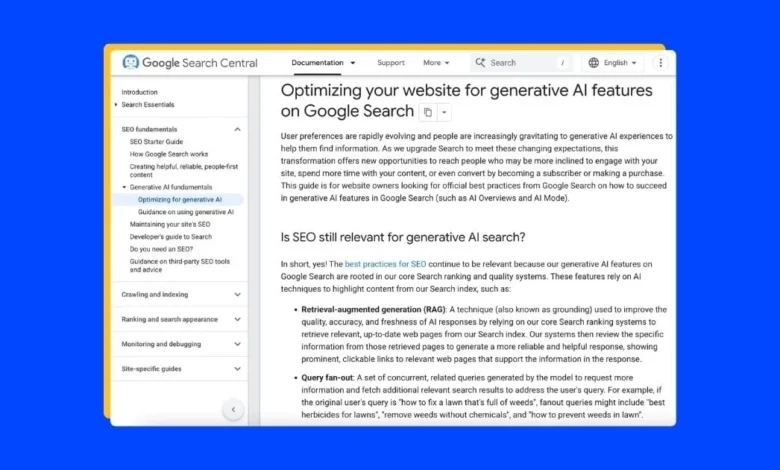
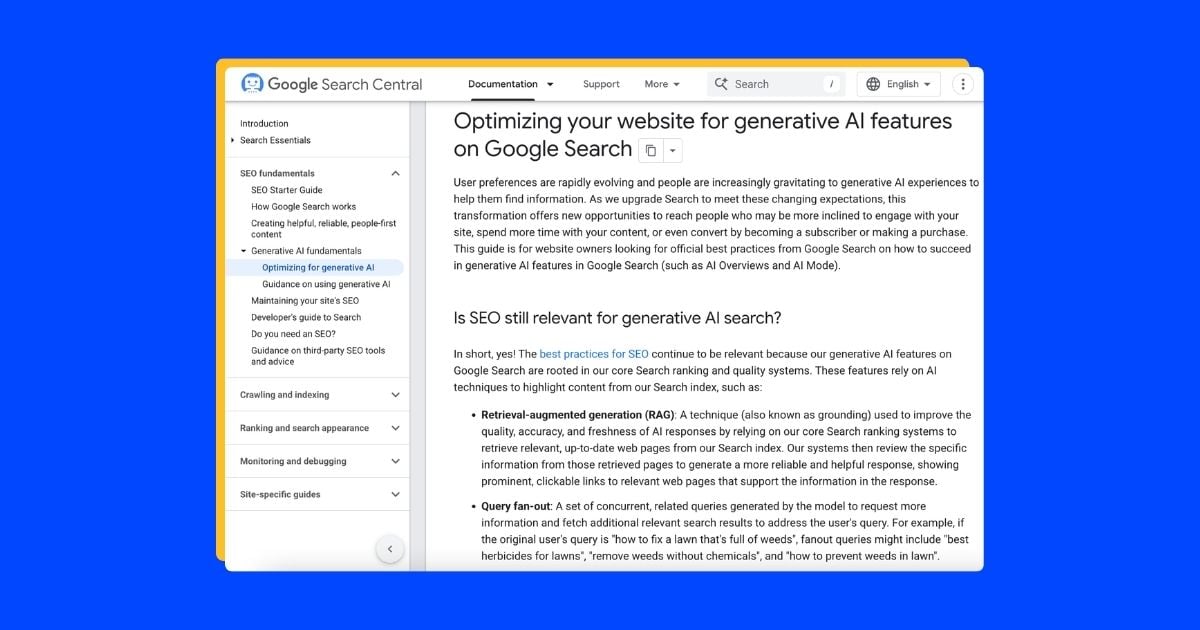
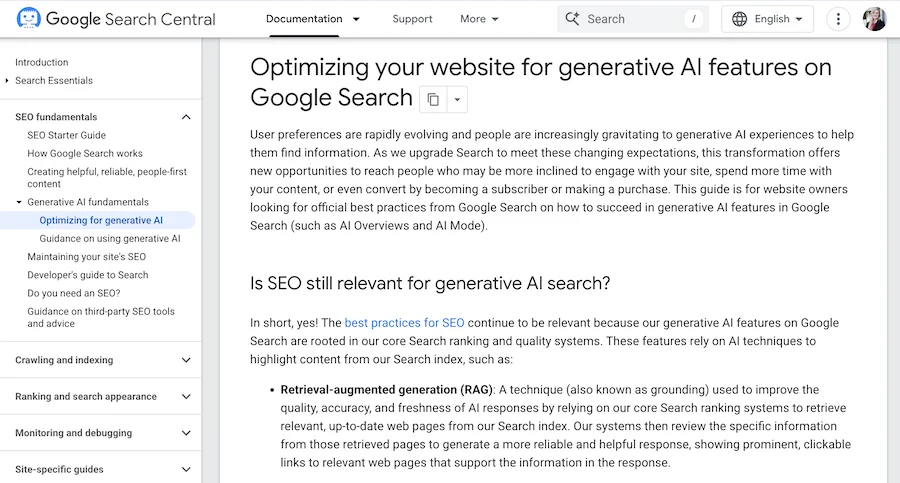
In a move that has recalibrated the digital marketing landscape, Google published its first comprehensive official guidance regarding the mechanics of AI Overviews and AI Mode in late May 2026. The documentation, released through Google Search Central, serves as the definitive word on how the search giant’s generative AI features interact with the open web. For over a year, the search engine optimization (SEO) industry has been flooded with speculative services promising "AI-ready" content, specialized file formats, and proprietary schema. However, Google’s latest missive suggests that the most effective strategy for the AI era is a return to foundational web principles: speed, accessibility, and verifiable human expertise.
The publication, titled "Optimizing for generative AI features on Google Search," was a centerpiece of the Google I/O 2026 conference. It addresses the emerging category of "agentic search"—where AI bots perform complex tasks on behalf of users—and the ubiquitous AI Overviews that now sit atop the majority of informational queries. By clarifying that its AI features pull from the same index and ranking systems as traditional search, Google has effectively merged the concepts of SEO and Generative Engine Optimization (GEO).
The Convergence of SEO and GEO: A Chronological Shift
The road to these guidelines began in early 2023 with the introduction of the Search Generative Experience (SGE). For three years, the SEO community operated in a vacuum of official information, leading to the rise of specialized "AI optimization" agencies. These firms advocated for radical changes to website architecture, such as "chunking" content into small, bot-friendly fragments and implementing experimental files like llms.txt.
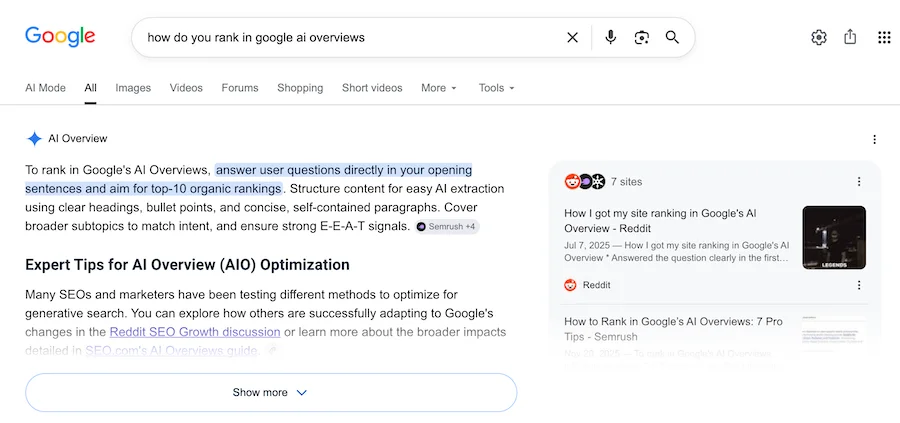
By mid-2025, the market for AI-specific SEO services was estimated to be worth hundreds of millions of dollars. However, as Google’s AI models became more sophisticated, they demonstrated an increased ability to parse traditional web formats. The May 2026 guidelines represent the end of this speculative era. According to the documentation, the "new" playbook for AI search is, in fact, the old playbook executed with higher precision.
Nikiya Griffith, Director of Organic Growth at BX Studio, noted that the industry had already begun seeing this convergence in practice. "We’ve seen that about 80% of the time, what’s good for SEO is good for GEO," Griffith stated. "Our most successful strategic initiatives over the last year have been ones where SEO and GEO were approached in unison as one holistic strategy. Overall, we really see GEO as an extension of good SEO."
Foundational Technical SEO in the AI Era
Google’s guidance explicitly identifies technical health as the primary gatekeeper for AI visibility. AI systems do not possess a "backdoor" to the web; they rely on the same crawling and indexing infrastructure that has powered Google for decades. The documentation highlights four critical technical pillars:
- Crawlability and Indexability: If a site’s robots.txt file or server configuration prevents Googlebot from accessing content, the AI systems—including the Gemini-powered retrieval models—will remain unaware of that content’s existence.
- Site Structure and Internal Linking: AI Overviews utilize internal linking structures to understand the relationship between different topics. A logical hierarchy helps the AI determine which pages are the authoritative "pillars" of a site’s knowledge base.
- Mobile Usability and Page Speed: The guidance confirms that AI Overviews prioritize content from fast, mobile-friendly sites. A plumbing company in a competitive market like Phoenix, for instance, may lose its spot in an AI-generated recommendation list if its mobile site takes more than three seconds to load.
- Security and Trust: Standard protocols like HTTPS remain non-negotiable signals of safety for AI agents.
For the vast majority of small and medium-sized businesses (SMBs), this means the technical bar has not been raised so much as it has been clarified. Businesses do not need to build new "AI-only" versions of their websites; they need to ensure their existing sites meet modern web standards.
The Rise of Non-Commodity Content
Perhaps the most significant portion of the 2026 guidelines is Google’s distinction between "commodity" and "non-commodity" content. As large language models (LLMs) become capable of generating infinite amounts of generic text, Google has pivoted its ranking systems to reward what it calls "demonstrable expertise."
Commodity content is defined as information that is widely available and easily summarized by an AI—such as "how to change a tire" or "the benefits of vitamin C." Google’s AI Overviews are designed to summarize this information themselves, often reducing the need for users to click through to a source.
Conversely, non-commodity content is born from first-hand experience and original data. The guidance provides a clear example: a general summary of home inspection advice is commodity content, whereas a first-hand account titled "Why We Waived the Inspection and Saved Money: A Look Inside the Sewer Line" is non-commodity. This content reflects genuine, unique knowledge that an AI cannot replicate without a primary source.
This shift provides a structural advantage to SMBs. A local HVAC technician who writes about the specific failure points of heat pumps during a polar vortex in Cleveland provides more value than a national publisher writing generic maintenance tips. "If you have genuinely unique insights to share, whether it’s in the form of expert quotes, original data, or something else, you’re going to have a much better chance of winning," Griffith added. "Quality beats quantity if you’re aiming for long-term growth."
Mythbusting: The Failure of Specialized AI Files
A major highlight of the new documentation is the "Mythbusting" section, where Google systematically dismantles several popular AI optimization tactics.
The llms.txt Phenomenon
In 2024, the "llms.txt" file—a markdown document intended to help AI bots quickly understand a site’s purpose—was hailed as the "robots.txt of the AI age." However, data suggests the adoption was largely performative. A May 2026 study by Ahrefs analyzed 137,000 websites and found that 97% of llms.txt files received zero traffic. Of the remaining 3%, AI bots accounted for only 1.1% of requests. Google’s guidance confirms that its systems do not require, nor do they prioritize, these files. Search Advocate John Mueller previously described the file as a "temporary crutch" for coding tools, rather than a necessity for general search.
Content Chunking and AI Rewrites
The guidelines also address "chunking"—the practice of breaking articles into small, 200-word blocks to satisfy AI retrieval systems. Google states that its models are capable of understanding multiple topics on a single long-form page. Similarly, the company warned against "AI-focused rewrites" that attempt to pepper content with "retrieval phrases." Because modern AI understands synonyms and intent, chasing specific long-tail keyword variations is increasingly viewed as a waste of resources.
The Problem of "Schema Slop"
While structured data (Schema.org) remains vital for traditional features like review stars and FAQ boxes, Google explicitly stated there is no specialized "AI Schema." Attempting to use AI to generate massive amounts of complex schema can lead to what experts call "schema slop"—inaccurate or redundant code that does not match the page content. Nikiya Griffith warns that if schema does not match the visible page content or is not validated by an expert, it can actually result in a ranking penalty.

Local Relevance and Trust Signals
For businesses with physical locations, the AI search guidelines reaffirm the importance of local signals. Google Business Profiles, citation consistency, and the specific language used in customer reviews are cited as heavy-weight signals for AI-powered local results.
The guidance suggests that specific reviews are more valuable than generic ones. An AI system can derive more "trust data" from a review that says, "They fixed my emergency 2 a.m. pipe burst that two other companies couldn’t diagnose," than a simple five-star rating with no text. This specificity allows Google’s agentic search features to match users with businesses that have a proven track record for very specific problems.
Broader Impact and Industry Implications
The release of these guidelines is expected to lead to a contraction in the specialized AI-SEO consulting market. By framing AI search as an extension of existing high-quality SEO, Google has essentially validated the work of traditional digital marketers while delegitimizing "black box" AI optimization services.
The broader implication is a move toward a "utility-first" web. As AI Overviews become more dominant, the only way for a website to maintain traffic is to provide information that is too specific, too expert-driven, or too locally relevant for an AI to summarize without giving credit.

The ultimate test for any webpage in 2026, according to Google, is a simple question: "Would a customer who already trusted your business find this genuinely useful?" If the answer is yes, the page is likely already optimized for the future of search. If the page feels interchangeable with a competitor’s, it is at risk of being rendered invisible by the very AI systems it was designed to attract.
In conclusion, Google’s 2026 guidance serves as a stabilizing force for a volatile industry. It confirms that while the interface of search is changing from a list of links to a conversational assistant, the underlying requirements for visibility remain rooted in technical excellence and human-led expertise. For businesses that have ignored the "AI optimization" hype and focused on their customers, the right call has finally been officially recognized.