The digital retail landscape is undergoing a significant transformation as the traditional holiday shopping season experiences a steady, aggressive expansion. What was once a concentrated period of activity surrounding Black Friday and Cyber Monday has morphed into a multi-month marathon. As retailers begin their promotional cycles as early as late summer, the resulting "promo fatigue" among consumers has created a challenging environment for e-commerce merchants. To succeed in this hyper-competitive era, businesses must shift their focus from mere volume-based marketing to the tactical optimization of the user journey.
The Evolution of the Holiday Shopping Timeline
Historically, the holiday shopping season was defined by a distinct start on the day after Thanksgiving. However, the last decade has seen a consistent pull-forward effect. Industry data indicates that the "peak season" now effectively begins in October. According to the 2026 Holiday Shopping Report by Optimove, which surveyed 648 consumers, 59% of shoppers report feeling fatigued by holiday promotions by the time October arrives. By November, this sentiment rises to 70%.
This shift is largely driven by supply chain concerns and the desire for retailers to capture consumer share of wallet before competitors. Yet, this "manufactured urgency"—characterized by constant "last chance" banners and countdown timers—is increasingly falling on deaf ears. Modern consumers have become desensitized to synthetic pressure, leading to a decline in the effectiveness of traditional high-pressure sales tactics. Instead, the current market trend favors retailers who prioritize clarity, navigation, and seamless checkout experiences over aggressive, repetitive discounting.
Data-Driven Optimization: The Need for Granular Insights

To combat declining engagement, successful merchants are moving away from surface-level metrics. While a high-level conversion rate provides a general view of store health, it fails to diagnose where friction exists in the customer journey. The transition toward website performance optimization has been stark; a recent survey of merchants revealed that 33.4% are prioritizing technical performance and user experience (UX) refinements for the upcoming season, a significant increase from the 13% reported just two years prior.
The primary tool for this diagnostic process is the integration of advanced analytics, specifically through platforms like Google Analytics 4 (GA4). By utilizing the Purchase Journey Report, merchants can observe the exact progression of a customer from product discovery to the final transaction. This granular visibility allows for the identification of specific bottlenecks. For instance, if data shows a 60% completion rate on desktop devices compared to a 35% rate on mobile, retailers can isolate the issue—whether it be unresponsive form fields, complex payment gateways, or excessive loading times on mobile interfaces.
Strategic Alignment of Offers and Content
Once the friction points are identified, the objective becomes the removal of unnecessary steps. A common mistake in holiday e-commerce is directing traffic from a specific promotional email or social media ad to a generic homepage. This forces the customer to navigate multiple menus to find the advertised product. To improve conversion, the landing page must act as a curated destination that reiterates the offer immediately.
Automation serves as a critical component in this simplification process. Tools that automatically apply coupons when a cart meets specific eligibility requirements remove the cognitive burden from the shopper. By eliminating the need for a customer to locate, copy, and paste a code, retailers reduce the probability of cart abandonment at the final step.
The Intersection of Content and Commerce
The integration of educational content within the shopping experience is a powerful tool for increasing conversion. In an age of information overload, consumers often struggle to distinguish between various product offerings. By utilizing a "content-first" strategy, retailers can provide gift guides and comparison charts that serve as a bridge between the shopper’s intent and the merchant’s inventory.
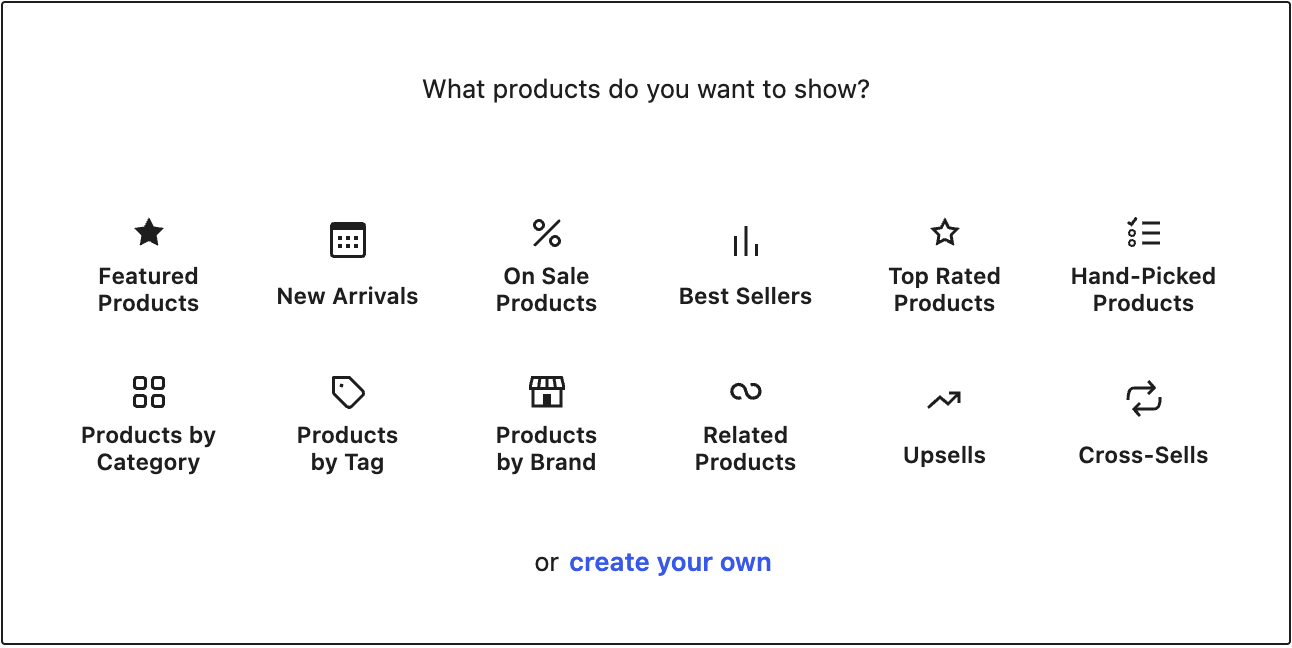
For example, a business selling specialized equipment, such as coffee brewing gear, can utilize Product Collection blocks to group items based on user expertise levels—beginner, intermediate, and expert. When paired with Product Filters that allow customers to sort by price, brewing method, or capacity, the retailer transforms the shopping experience from a search mission into a guided consultation. This approach builds the trust necessary to finalize a transaction.
The Rise of AI-Powered Assistance
Artificial intelligence is no longer a peripheral technology; it is becoming a central feature of the holiday shopping experience. PwC’s 2026 Holiday Outlook reports that 29% of consumers intend to leverage AI tools to assist in their purchasing decisions. Among those who have already adopted AI in their shopping habits, 68% credit these tools with helping them discover gift options they would have otherwise overlooked.
Retailers are responding by integrating AI-powered shopping assistants directly into their storefronts. These tools function as virtual sales clerks, capable of answering queries regarding budget, recipient interests, and product compatibility in real-time. For a business, this requires a more robust approach to product metadata. Descriptions must be optimized not just for human readers, but for AI parsing, ensuring that key attributes—such as suitability, compatibility, and price points—are clearly defined in the backend of the store.
Mitigating Friction at the Checkout Threshold
The final phase of the purchase journey—the checkout—is where the highest rate of abandonment occurs. To counteract this, merchants are increasingly adopting a "minimalist checkout" philosophy. This includes the mandatory implementation of guest checkout options, which bypasses the need for account creation. For many one-time holiday shoppers, the requirement to register an account is a significant deterrent.
Furthermore, the integration of express payment methods such as Apple Pay and Google Pay has become a baseline expectation for modern e-commerce. By allowing customers to utilize pre-saved payment and shipping information, merchants can compress the checkout process into a single interaction. Data consistently suggests that every additional form field required at the checkout stage correlates with a measurable decrease in conversion. Retailers are advised to delay requests for non-essential information—such as marketing preferences or birth dates—until after the transaction has been successfully processed.
Logistics, Inventory, and Transparency
The promise of a promotion is only as good as the retailer’s ability to fulfill it. A recurring issue during peak seasons is the disconnect between online inventory and actual warehouse stock. Before launching a campaign, merchants must ensure their sales channels—whether physical, marketplace, or web-based—are synchronized. A product that is promoted as a "bestseller" but is out of stock upon checkout not only results in a lost sale but also causes long-term damage to brand reputation.
Transparency regarding holiday logistics is equally critical. Clearly stated "order-by" dates for guaranteed holiday delivery should be visible on every product page. Additionally, clearly defining return policies, particularly for gift-heavy categories, provides the reassurance shoppers need to commit. If a customer is uncertain whether a gift can be returned after the holiday season, they are less likely to finalize the purchase.
Strategic Prioritization for Peak Performance

The preparation for peak season should not be viewed as an exhaustive, top-to-bottom site redesign, but rather as a series of surgical, data-backed interventions. Retailers should maintain a "priority list" of issues discovered through analytics, ranked by the potential impact on conversion.
Once an intervention is implemented, the process must be iterative. By comparing the performance of the updated journey against historical data from similar promotional periods, retailers can isolate the efficacy of the change. This method of testing, measuring, and refining ensures that resources are allocated to the most significant pain points.
As the retail calendar continues to expand, the businesses that succeed will be those that view the digital storefront not merely as a catalog, but as a dynamic service environment. By reducing friction, utilizing data to understand user behavior, and prioritizing transparency, merchants can effectively navigate the complexities of an increasingly early and crowded holiday season. In the final analysis, conversion is not a product of aggressive promotion, but of a frictionless, helpful, and transparent path to purchase.