Interactive Visual Gym and the Future of Real-Time AI Assistance for Physical Labor

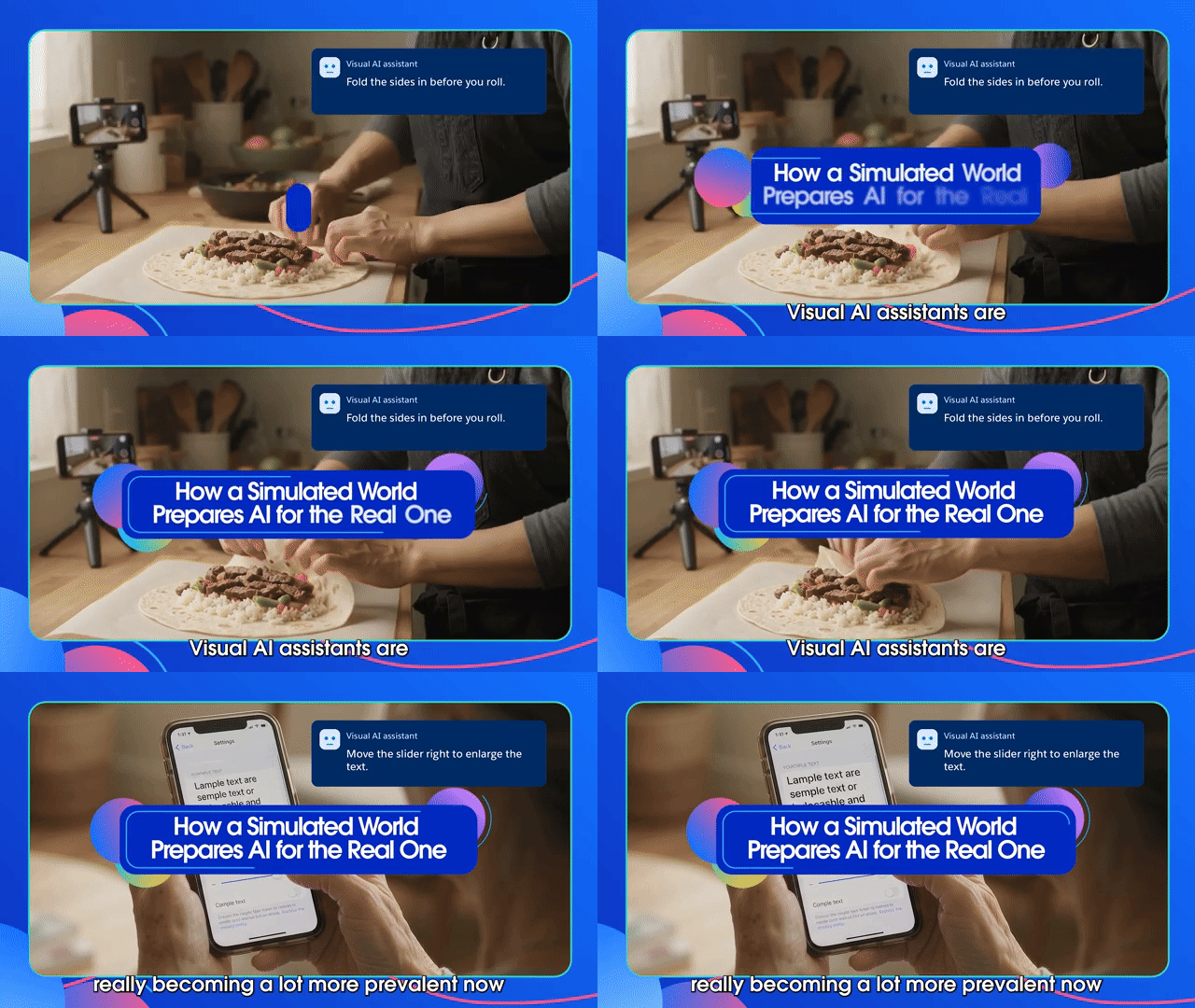
A technician kneels beside a commercial water heater, her smartphone propped against a rusted pipe as an artificial intelligence assistant observes the scene through the camera lens. As she reaches for a valve, the AI issues a sharp, immediate warning: "Stop, that is the supply line." This interaction represents the next frontier of artificial intelligence—a transition from static chat windows to active, real-time guidance for complex, multistep physical tasks. However, the efficacy of such a warning is not merely defined by its accuracy, but by its timing, the user’s level of trust, and whether the guidance prevents a critical error without inducing cognitive overload. As industries ranging from manufacturing to home repair look toward AI-driven augmentation, the ability to test these systems in dynamic, high-stakes environments has become a technological imperative.
The rapid evolution of multimodal AI throughout 2024 and 2025 has moved the field from theoretical research to practical application. In May 2024, Thinking Machines previewed advanced interaction models capable of continuous, simultaneous processing of audio, video, and text streams, eliminating the lag associated with turn-based conversational AI. By June, Meta researchers released a comprehensive wearable video dataset specifically designed for proactive procedural assistance, focusing on "off-plan" recovery—the ability of an AI to guide a user back to safety after a mistake. This momentum culminated in September with the launch of Google’s Gemini 3.8 Live, a model that integrates visual intelligence with persistent background task management, signaling that the industry is ready to move beyond the screen.
The core challenge facing developers is that current benchmarking methods are fundamentally flawed. Most existing evaluations rely on static datasets, where AI models are graded against prerecorded videos. While this confirms whether an AI can identify a mistake, it fails to measure the "interaction loop." Because a video recording cannot react to an AI’s advice, researchers have been unable to determine if a warning actually changes a user’s behavior, if it arrives too late to be useful, or if it causes confusion during the heat of a task. To solve this, Salesforce AI Research has introduced the Interactive Visual Gym (IVG), a simulated environment designed to provide the rigorous, scalable feedback of a live field trial within a controlled digital space.
The Evolution of Procedural AI: A Chronology of Progress
The journey toward effective visual AI assistance has been marked by three distinct phases of development. Initially, research was confined to "image captioning," where models simply described what they saw. This was followed by the "instructional era," where models could parse manuals and provide static checklists. We are currently in the third phase: "real-time dynamic guidance."
In early 2024, the focus shifted toward large-scale video understanding. Researchers began training models on thousands of hours of YouTube tutorials and technical repair videos. However, these models often suffered from "temporal blindness," failing to recognize when a user had deviated from a prescribed set of instructions. The middle of 2024 saw a pivot toward active intervention. Companies began experimenting with models that could predict the next likely error before it occurred, a proactive approach that requires high-speed inference capabilities. By the end of 2024, the industry consensus was clear: the bottleneck was no longer vision or language, but the human-AI feedback loop.
Bridging the Simulation Gap with IVG
The Interactive Visual Gym (IVG) functions as a high-fidelity simulator that addresses the scalability issues inherent in human-centric testing. Recruiting hundreds of technicians to perform thousands of repairs to test a single AI model is economically and logistically unfeasible. By using virtual agents that mimic human behavior, IVG allows developers to run large-scale trials that simulate the unpredictability of human labor.
The architecture of IVG rests on three primary design pillars. First, the system utilizes natural language communication. Instead of requiring developers to program complex robotics coordinates, the AI communicates in plain English, allowing for a more natural interaction that mirrors a foreman-to-technician relationship. Second, the environment is programmable for "off-plan" events. Researchers can trigger specific errors, such as grabbing the wrong tool or skipping a step, at precise intervals to see how the model adapts to the change in state. Third, the simulation incorporates diverse user profiles. The IVG virtual workers are programmed along four distinct axes: skill level, trust in AI, speed of execution, and tolerance for interruption. This is critical, as a novice apprentice requires different levels of intervention compared to a seasoned veteran who may view frequent, overly verbose instructions as a hindrance.

Performance Metrics: The IVG-Bench Analysis
To validate the utility of this simulation, researchers developed IVG-Bench, a comprehensive suite of 315 scenarios across diverse environments, including kitchens, workshops, and utility maintenance rooms. The evaluation tested 15 different AI models, yielding sobering results. Even the most advanced model tested, running on the Gemini 4 Argon architecture, achieved only a 53.4% task completion rate within designated time limits.
The findings from IVG-Bench have exposed critical systemic failures that were previously obscured by static testing:
- Latency-Induced Stale Guidance: In a dynamic environment, a correct instruction delivered three seconds too late is functionally useless. The simulator revealed that even highly accurate models often suffer from latency, leading to instructions that arrive after the user has already completed or bypassed the relevant step.
- The "Clumsiness" Factor: A model might successfully guide a user to the end of a task but provide unnecessarily repetitive or poorly phrased instructions along the way. This leads to the development of two separate metrics: "Task Success" and "Interaction Quality."
- Degradation Over Time: Many open-weight models showed a clear pattern of "cognitive fatigue," where the quality of guidance remained high during the first few minutes of a task but deteriorated significantly as the complexity increased or the session lengthened.
The implications of these metrics are significant for developers. In testing, the researchers found a 78.5% correlation between the automated interaction-quality scores generated by the simulation and the preferences of actual human participants. This suggests that the simulator is a high-fidelity proxy for real-world experience, offering a reliable way to stress-test models before they are deployed into physical work environments.
Economic and Industrial Implications
The move toward AI-assisted physical work holds the promise of significant economic efficiency. According to industry analysts, skilled labor shortages in trades like HVAC repair, electrical work, and specialized manufacturing are projected to reach record highs by 2030. Real-time visual AI could potentially bridge this gap, allowing less experienced workers to perform complex tasks with higher safety margins and lower error rates.
However, the transition requires a shift in how corporate leaders evaluate AI procurement. The focus must move away from marketing claims about "accuracy" and toward "interaction outcomes." Before integrating these systems, organizations should prioritize three key performance indicators:
- Outcome Efficacy: Does the AI measurably increase the successful completion of the job compared to traditional manuals?
- Temporal Precision: Does the guidance arrive in a window where it can proactively influence the outcome?
- Robustness to Deviation: Can the model handle a user who goes "off-script," or does the system collapse when the environment becomes unpredictable?
Moving Forward: The Future of Proactive Assistance
The early results from proof-of-concept testing suggest that simulation-based training can dramatically improve model performance. By training models within the IVG environment and incentivizing the prioritization of error prevention, researchers observed marked improvements in both speed and accuracy. The assistant evolved from a reactive voice into a proactive guide, capable of anticipating a mistake before the user even grasped the wrong tool.
As these models continue to improve, the next phase will involve integrating them into augmented reality (AR) hardware. While current testing often uses smartphones or tablets, the logical conclusion for this technology is heads-up displays that overlay visual guidance directly onto the workspace. This will require even lower latency and higher environmental awareness than current smartphone-based systems.
For leaders and stakeholders, the message is clear: the technology is moving from the abstract to the tangible. The success of AI in physical labor will not be decided by its ability to write code or compose essays, but by its ability to observe the physical world, understand human intent, and provide meaningful, timely, and safe guidance in the most chaotic of environments. The era of the "AI foreman" is not yet here, but the proving grounds are being built, and the standards for its performance are being set today. Through tools like the Interactive Visual Gym, the industry is finally building the feedback loops necessary to ensure that when an AI says "stop," the human listening can trust it, and the error can be avoided before it ever happens.