Jensen Huang Reinstated as Nvidia CEO Following High-Stakes Corporate Turmoil

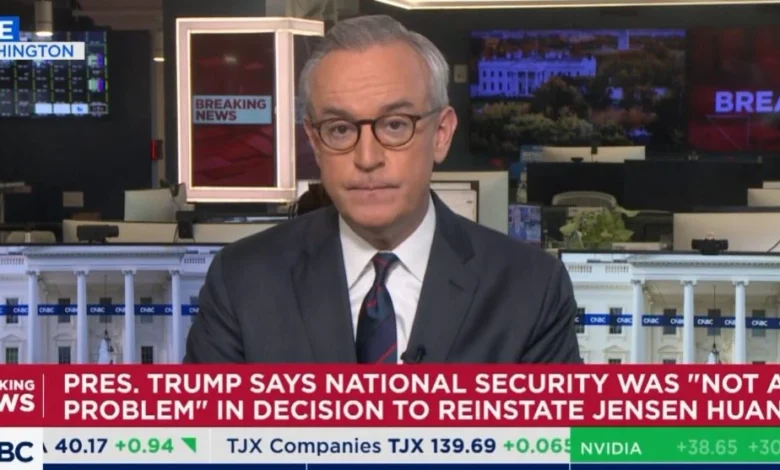
The tech sector and global financial markets were plunged into a state of unprecedented flux on Monday morning as Nvidia Corporation officially announced the reinstatement of Jensen Huang as Chief Executive Officer. This sudden reversal of corporate policy occurs only days after the company’s board of directors accepted Huang’s resignation, which followed a series of damaging revelations regarding his personal conduct, including allegations of multiple extramarital affairs and reports of an entanglement with a woman suspected of intelligence operations for the Chinese government.
The announcement has effectively disrupted the typically quiet atmosphere of the pre-Thanksgiving business cycle, forcing investors, policymakers, and corporate governance experts to scramble to interpret the long-term viability of the world’s most valuable semiconductor manufacturer under a leader whose reputation has been fundamentally altered by scandal.
A Chronology of the Crisis
The turbulence surrounding Nvidia’s leadership began earlier this month when internal investigations and subsequent leaks to the press brought Huang’s private life into the public sphere. The initial disclosure—that Huang had engaged in extramarital relationships, one of which involved a foreign national alleged to have ties to Chinese intelligence—sent shockwaves through Silicon Valley. Concerns regarding national security and the protection of proprietary intellectual property were immediate, given Nvidia’s central role in the global artificial intelligence infrastructure.
Following the initial fallout, the board of directors moved quickly to distance the company from the controversy. Huang stepped down, and the company began the process of searching for a successor to maintain stability in a market that relies heavily on Nvidia’s H100 and Blackwell series GPUs. However, the period of transition proved to be short-lived. By Monday, November 25, the board issued a statement confirming that, after a period of intense deliberation and internal review, it had decided to bring Huang back to the helm, citing his unique vision and technical expertise as irreplaceable at this critical juncture in the company’s trajectory.
The Role of Presidential Involvement
The reinstatement was not merely a matter of internal corporate governance; it became a focal point of national interest. Shortly after the news broke at 8:56 a.m. ET, CNBC’s senior Washington correspondent, Eamon Javers, secured a live conversation with President Donald Trump, who provided insight into the administration’s view on the matter.
Javers, who was commuting to the CNBC Washington bureau when the news surfaced, described the atmosphere as chaotic and fast-paced. "It’s maybe the most important business story of the year, and I was a little frustrated that I was out of position when it broke," Javers recounted. The interaction with the President was unscripted and immediate. According to Javers, the President reached out directly to the correspondent while he was en route to the office, necessitating an impromptu broadcast setup.
"I pulled over on the side of the road, called my desk, and was able to patch into the control room for a live interview," Javers noted. The subsequent hour of reporting provided a rare, real-time window into how the White House is weighing the stability of a company as critical as Nvidia against the severe security concerns raised by the allegations against its CEO.
Market Implications and Corporate Governance
From a financial perspective, the volatility associated with Nvidia has been profound. As a bellwether for the artificial intelligence industry, Nvidia’s stock performance influences the broader S&P 500 and Nasdaq indices. Analysts have expressed concern that the reinstatement of a CEO embroiled in such high-profile scandal may create a "governance discount" on the company’s valuation.
Nvidia’s market capitalization, which has soared to historic heights due to the insatiable demand for AI compute, is inherently tied to the perceived stability of its leadership. Investors are now forced to calculate whether the technical necessity of Huang’s leadership outweighs the geopolitical and reputational risks.
"We’ve really never seen anything this extraordinary in corporate America—at least in my lifetime," Javers remarked during his post-broadcast analysis. "I think it’s too early to say how this will play out, and certainly too early to say whether it will be successful or not. One thing is for sure: This story isn’t over yet."
The National Security Dimension
The intersection of private corporate conduct and national security is perhaps the most significant aspect of this saga. Because Nvidia’s technology is subject to strict U.S. export controls—particularly concerning shipments to China—any allegation involving a foreign intelligence asset creates a direct conflict with federal oversight.
Industry experts suggest that the government’s reaction to Huang’s return will be scrutinized for signs of how the administration intends to treat corporate leaders who maintain relationships that could be leveraged by foreign adversaries. The fact that the President commented on the situation so quickly indicates that the White House is treating the "Huang situation" as a matter of domestic industrial policy as much as a private sector labor issue.
Operational Challenges and Future Outlook
For the engineers and staff at Nvidia, the reinstatement creates a complex work environment. The company must now navigate the dual pressures of maintaining its aggressive R&D roadmap while potentially facing renewed scrutiny from federal regulators and intelligence agencies.
During the live interview, Javers highlighted the technical difficulties of covering such a story in real-time, noting the lack of preparation time and the reliance on raw reporting. "We didn’t coordinate it or prep in advance at all. It happened too quickly," he explained. This lack of prep time mirrors the environment inside Nvidia, where the decision-making process was reportedly compressed, leaving little time for the standard vetting processes usually required for a CEO of such a significant firm.
Analyst Perspectives on Long-Term Viability
Moving forward, the primary question for shareholders is the long-term security of the firm’s intellectual property. If the allegations regarding the CEO’s contact with foreign intelligence are substantiated, the company could face a barrage of lawsuits and potentially more stringent oversight from the Committee on Foreign Investment in the United States (CFIUS).
While some argue that the "technocratic necessity" of keeping Huang—the architect of Nvidia’s modern AI success—in power is the only way to avoid a total collapse of shareholder value, others argue that the precedent of ignoring such moral and security failures sets a dangerous standard.
Conclusion: A Turning Point for Corporate America
The reinstatement of Jensen Huang represents a watershed moment in American corporate history. It challenges the traditional boundaries of how boards of directors handle personal scandal, executive leadership, and the integration of national security interests into corporate strategy.
As the business world awaits the next development in this saga, the focus will likely shift to Nvidia’s upcoming quarterly filings and any potential updates from the Department of Justice or the Department of Commerce regarding the security of the company’s supply chain. For now, the semiconductor giant remains on a razor’s edge, balancing its technological dominance against the weight of a leadership crisis that shows no signs of dissipating. The industry remains in a state of watchful waiting, cognizant that the events of this week have irrevocably altered the landscape of executive accountability.