Shake Shack Opens a Record 21 Stores in 3 Months With One Strict Rule for Growth

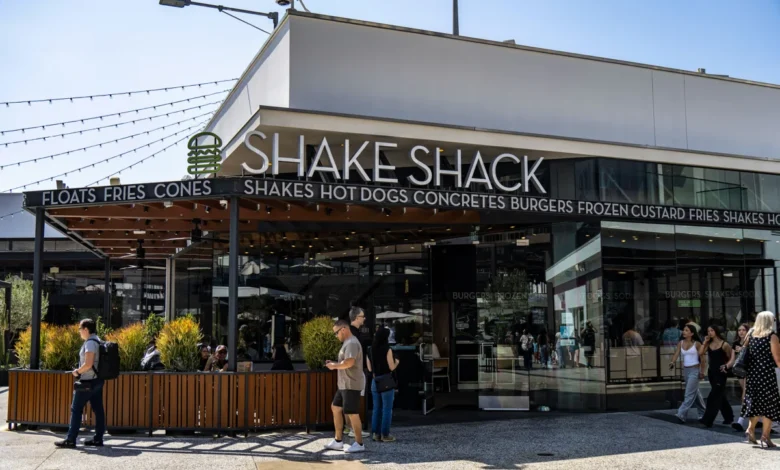
In the fast-casual restaurant industry, expansion is often treated as a chaotic land grab. Competitors frequently open overlapping locations in close proximity, saturating urban and suburban markets in a bid for immediate market share, sometimes at the expense of long-term brand health. However, Shake Shack is charting a distinctly different course under the leadership of Chief Executive Officer Rob Lynch. The popular burger and milkshake chain has adopted a disciplined, calculated approach to scaling its footprint, relying on a strict geographical rule to protect its existing operations while maintaining a rapid growth trajectory.
During a record-breaking third quarter, Shake Shack debuted 21 new restaurants—the highest quarterly opening volume in the company’s history. This milestone brings the brand’s total number of new store openings to 54 for the year thus far, with corporate projections pointing toward a total of 60 to 65 new locations by the close of the calendar year. Wall Street has taken favorable note of this aggressive yet measured expansion strategy, driving a nearly 9% surge in the company’s stock price following the latest financial disclosures.
At the heart of Shake Shack’s physical expansion strategy is a steadfast internal guideline: outside of high-density urban environments like Manhattan, the company enforces a strict 10-mile buffer zone between existing and newly constructed restaurants. By refusing to flood local markets, Shake Shack aims to mitigate the classic pitfalls of rapid retail scaling, chief among them being self-cannibalization. As the brand continues its march toward a long-term domestic goal of at least 1,500 locations, this policy is proving to be a cornerstone of both financial stability and investor confidence.
The Mechanics of the 10-Mile Rule and the Cannibalization Threat
Cannibalization occurs when a company opens a new retail outlet so close to an existing one that the new location primarily siphons customers and revenue away from its sibling store rather than attracting a genuinely fresh consumer base. In the restaurant sector, this phenomenon can quietly erode profit margins, inflate operational costs, and create internal friction without generating net-new growth.
For Shake Shack, the 10-mile rule serves as an operational shield against this risk. According to CEO Rob Lynch, the company carefully evaluates trade areas, demographic density, and regional commuting patterns before greenlighting any new real estate development. The only notable operational overlap the company encounters under this model stems from digital and third-party delivery services, which typically operate within a radius of approximately seven miles. Even with this delivery overlap factored in, the physical distance maintained between bricks-and-mortar storefronts ensures that walk-in traffic, dine-in experiences, and localized brand affinity remain intact.
This localized protection policy allows each new restaurant to carve out its own distinct geographic community. While newer Shacks frequently open with average unit volumes that trend slightly lower than the chain-wide historical average of $4 million, the separation distance ensures that these developmental locations do not compromise the financial health of established neighborhood fixtures.
Chronology of Growth: A Record-Breaking Quarter and Year
The implementation of Shake Shack’s disciplined expansion model coincides with a broader period of sustained commercial momentum for the company. The brand’s financial trajectory over the past several quarters reflects the success of its operational strategies under Lynch’s leadership.
During the third quarter, Shake Shack achieved a 2.5% increase in same-store sales. This metric marks the fifth consecutive quarter of positive same-store sales growth for the enterprise, signaling that customer demand remains robust even as the broader macroeconomic environment fluctuates and consumer spending habits face tighter scrutiny.
Simultaneously, total revenue climbed 15.2% to reach $423.3 million for the quarter, outperforming analyst expectations and reinforcing the viability of the company’s hybrid real estate and digital ordering model. The opening of 21 restaurants in a single three-month period represents an unprecedented operational cadence for the company, requiring seamless coordination across supply chain management, real estate acquisition, construction, and staff recruitment. With 54 units already opened in the year leading up to November 2026, and an additional pipeline pushing toward the 65-store threshold by year’s end, Shake Shack is demonstrating that rapid scale is achievable without sacrificing operational discipline.
The Long-Term Vision: Scaling to 1,500 Domestic Locations
Shake Shack’s current footprint represents only a fraction of its ultimate ambitions within the domestic market. Company leadership maintains a long-term target of expanding the brand to a minimum of 1,500 locations across the United States. Achieving this ambitious milestone requires striking a delicate balance between aggressive market penetration and the preservation of brand equity.
Unlike legacy coffee giants and legacy fast-food chains that historically relied on high-density cluster models—such as placing multiple storefronts within blocks of one another—Shake Shack’s leadership is betting that modern consumers value distinct, community-centered locations. By maintaining the 10-mile rule outside of unique urban exceptions like Manhattan, the company ensures that each new restaurant functions as a premier destination for its immediate region rather than a redundant outpost.
This real estate philosophy also allows the brand to target mid-sized suburban markets and emerging commercial corridors that were previously underserved. As suburban populations continue to shift and commercial real estate dynamics evolve, Shake Shack’s measured spacing strategy positions the brand to capture new suburban consumers who prefer premium fast-casual dining options closer to residential hubs without requiring travel into dense metropolitan centers.
Wall Street Reaction and Market Implications
The financial markets have responded enthusiastically to Shake Shack’s balanced approach. Following the release of the third-quarter earnings report and CEO Rob Lynch’s commentary regarding the 10-mile non-cannibalization policy, Shake Shack’s stock experienced a significant rally, jumping nearly 9% in a single trading session.
Wall Street analysts frequently scrutinize restaurant chains for signs of overexpansion, noting that aggressive unit growth can lead to diminishing returns, margin compression, and eventual store closures—traps into which several prominent competitors have fallen in recent years. By explicitly addressing the risk of cannibalization and presenting empirical data showing consecutive quarters of positive same-store sales alongside record unit growth, Shake Shack has reassured institutional investors that its expansion is both profitable and sustainable.
The broader implications of Shake Shack’s strategy suggest a potential shift in how fast-casual and quick-service restaurant brands approach real estate development in the mid-2020s. As digital ordering, delivery apps, and drive-thru automation alter consumer behavior, the traditional metric of physical store density is losing favor. Brands are increasingly recognizing that digital reach can compensate for lower physical store density, reducing the need to crowd local markets with competing company-owned real estate.
As Shake Shack marches toward its year-end target of up to 65 new openings and looks ahead to its ultimate goal of 1,500 domestic units, the company’s adherence to its core growth principles will remain a central focus for industry observers. By prioritizing strategic distance over reckless saturation, Shake Shack has established a compelling blueprint for modern retail and restaurant expansion—one that proves scale and stability can successfully coexist.