Elevating B2B Sales Efficiency: The Indispensable Role of Specialized Meeting Scheduling Tools

In the intricate landscape of B2B sales, a silent but significant impediment often derails promising deals: inefficient meeting scheduling. This challenge, frequently overlooked in conventional sales dashboards, manifests as a cascade of missed opportunities, frustrated prospects, and wasted sales representative time. From protracted email threads to routing errors, time zone miscommunications, and dropped handoffs, the buyer experience suffers, leading to diminished interest and ultimately, lost revenue. Industry analysis consistently points to scheduling friction as a critical choke point, with reports suggesting that sales teams can spend up to 20% of their time on administrative tasks, a substantial portion of which is dedicated to the arduous process of coordinating meetings. This administrative burden not only diverts valuable resources from core selling activities but also directly impacts conversion rates and customer satisfaction. The imperative for B2B sales organizations is clear: transition from generic calendar-sharing solutions to purpose-built meeting schedulers designed to navigate the complexities of modern sales motions. These specialized tools offer multi-calendar syncing, intelligent routing, seamless handoffs, and deep integration with CRMs and revenue workflows, transforming a notorious pain point into a strategic advantage.
The Evolving Landscape of B2B Sales Challenges
The modern B2B sales environment is characterized by increased complexity, globalization, and heightened buyer expectations. Unlike transactional B2C interactions, B2B sales cycles are often longer, involve multiple stakeholders, and require a series of well-coordinated engagements. The shift towards remote and hybrid work models has further exacerbated scheduling challenges, necessitating robust solutions that transcend geographical boundaries and time differences. Prospects today expect a frictionless, personalized experience from their initial touchpoint. When a high-intent prospect encounters delays or confusion in simply booking a meeting, it erodes trust and signals potential inefficiencies within the vendor’s organization. Sales leaders increasingly recognize that the "speed to lead" and the ease of engagement are critical competitive differentiators. Manual scheduling, or reliance on basic calendar links, simply cannot keep pace with these demands, leading to a significant drag on sales velocity and overall pipeline health.
Quantifying the Cost of Inefficient Scheduling

The financial and operational costs associated with poor scheduling are substantial, yet often hidden. According to recent sales performance benchmarks, an estimated 10-15% of qualified leads fail to convert into initial meetings due to scheduling friction alone. This represents a direct loss of potential revenue and a squandering of marketing efforts to generate those leads. Furthermore, sales representatives report spending an average of 3-5 hours per week on scheduling-related administrative tasks, time that could otherwise be dedicated to prospecting, strategizing, or engaging with high-value accounts. For a team of 10 representatives, this translates to 150-250 lost selling hours per month. Analysis reveals that delays in initial meeting bookings can increase deal abandonment rates by as much as 15% within the first 48 hours. Moreover, a suboptimal buyer experience early in the funnel can negatively impact customer lifetime value (CLTV) and increase churn risk down the line. Sales strategists widely agree that optimizing this initial interaction point offers one of the most immediate and impactful opportunities for efficiency gains and revenue acceleration.
Defining the Modern B2B Meeting Scheduler
A meeting scheduler tool specifically designed for B2B sales is not merely a calendar invite generator; it is a sophisticated software solution engineered to streamline the entire meeting lifecycle within a revenue team. It automates the booking, management, and tracking of sales meetings, effectively eliminating the cumbersome back-and-forth communication that traditionally impedes deal progression. By intelligently connecting calendars, predefined availability rules, and critical prospect data, these tools ensure that meetings are scheduled at the optimal time, with the most appropriate individuals, and with all necessary contextual information seamlessly attached. The distinction from generic calendar-sharing applications lies in their deep understanding and support for complex sales workflows, shared lead ownership, and the urgent need for rapid, yet controlled, engagement without disrupting internal processes.
Key Features for Optimized B2B Sales Workflows
The efficacy of a B2B sales meeting scheduler is determined by its suite of specialized features:

-
Multi-Calendar Syncing: This foundational feature consolidates all of a representative’s various calendars—personal, internal, and external—into a single, unified source of availability. It dynamically updates in real time, ensuring that only genuinely open slots are presented to prospects, thereby preventing double-bookings, last-minute cancellations, and the need for awkward apologies. For reps juggling internal meetings, customer calls, and strategic planning blocks, this ensures an accurate reflection of their true capacity.
-
Automatic Time Zone Detection: Essential for global sales operations, this feature intelligently identifies a prospect’s geographical location and displays available meeting times in their local time zone. This eliminates the need for manual time conversions, significantly reducing confusion, preventing missed meetings, and fostering a more professional, considerate buyer experience, especially across international markets.
-
Buffer Time Rules: To combat meeting fatigue and ensure reps are adequately prepared and can perform follow-up tasks, buffer time rules automatically insert configurable gaps before or after scheduled calls. Once a meeting is booked, the scheduler blocks off this buffer, safeguarding valuable time for note-taking, CRM updates, or mental preparation for the next engagement, thereby improving focus and productivity throughout the day.
-
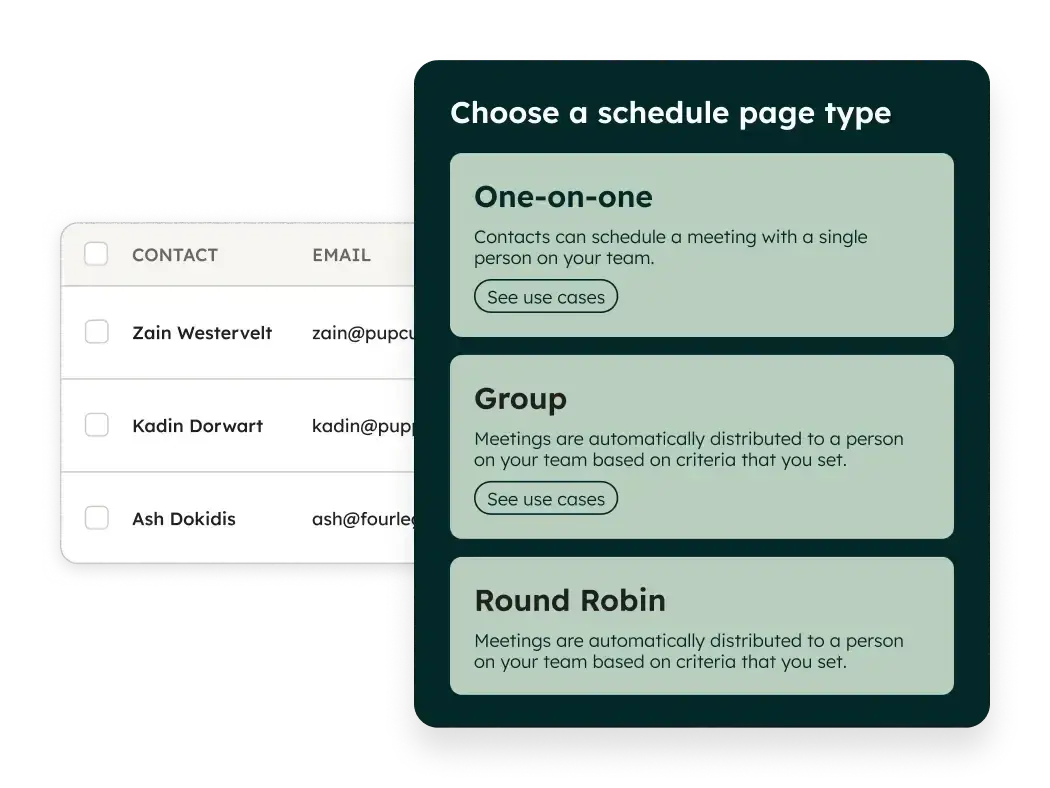
Round-Robin Scheduling: This feature automates the equitable distribution of incoming meetings among a group of sales representatives based on their availability and predefined rules (e.g., territory, product focus, seniority). Rather than prospects selecting a specific rep, the tool assigns the next eligible person, balancing workloads, ensuring rapid response times, and preventing any single rep from becoming overwhelmed, thereby minimizing lead leakage.
-
Automated Reminders and Follow-ups: Critical for maximizing show rates and maintaining deal momentum, this functionality automatically dispatches timely messages to prospects via email or SMS before and after meetings. These typically include meeting confirmations, pre-meeting reminders with call links, and follow-ups for missed meetings, often with rescheduling options. This proactive communication significantly reduces no-shows and helps recover potentially lost opportunities.

-
Intelligent Lead Routing and Qualification: Beyond simple assignment, advanced schedulers route meetings based on granular prospect and opportunity data. Rules can be configured based on company size, industry, location, product interest, or even intent signals, ensuring that high-value leads are directed to senior account executives, while smaller accounts might be routed to an SMB team or a dedicated qualification call. This protects valuable rep time and ensures prospects engage with the most appropriate expert from the outset.
-
Bi-directional CRM Integration: A cornerstone of B2B sales efficiency, this feature establishes a seamless, two-way data flow between the scheduling tool and the team’s CRM. All meeting activities—bookings, reschedules, cancellations—are automatically logged in the CRM without manual intervention. Conversely, changes in lead status or account ownership within the CRM can update scheduling workflows. This ensures data consistency, clear ownership, streamlined handoffs, and accurate reporting, eliminating administrative overhead for sales and RevOps teams.
-
Analytics and Performance Tracking: Comprehensive analytics provide sales leaders with invaluable insights into booking volumes, show rates, no-show trends, response times, and meeting outcomes across individual reps, teams, and lead sources. This data empowers informed decision-making, allowing teams to identify bottlenecks, optimize routing rules, adjust reminder cadences, and proactively manage capacity before scheduling issues negatively impact revenue targets.
Leading Solutions in B2B Meeting Scheduling
The market offers a diverse range of meeting scheduling tools, each with distinct strengths. The following stand out for their robust support of B2B sales workflows:
-
HubSpot Meeting Scheduler:
- Best for: B2B sales teams deeply embedded in the HubSpot CRM ecosystem, seeking a unified platform for scheduling, sales activity, and customer data.
- Overview: Integrated directly within HubSpot Sales Hub and connected to the Smart CRM, this tool automates appointment booking as a native function. Reps can share booking links that automatically log meetings, trigger follow-ups, and update deal stages within the CRM. Its strength lies in its holistic approach, ensuring seamless data flow across sales, marketing, and customer support within a single, consistent platform.
- Key Features: Native CRM integration, automated logging, personalized meeting links, team scheduling, robust reporting within HubSpot.
- Pricing: Free as part of HubSpot Sales Hub, which starts at $19/month per seat.
- Insights: Its appeal lies in eliminating the need for separate integrations, fostering a "single source of truth" across customer-facing teams, which simplifies handoffs and ensures consistent data.
-
Chili Piper:
- Best for: High-velocity B2B sales teams requiring advanced inbound lead routing and instant meeting booking at scale.
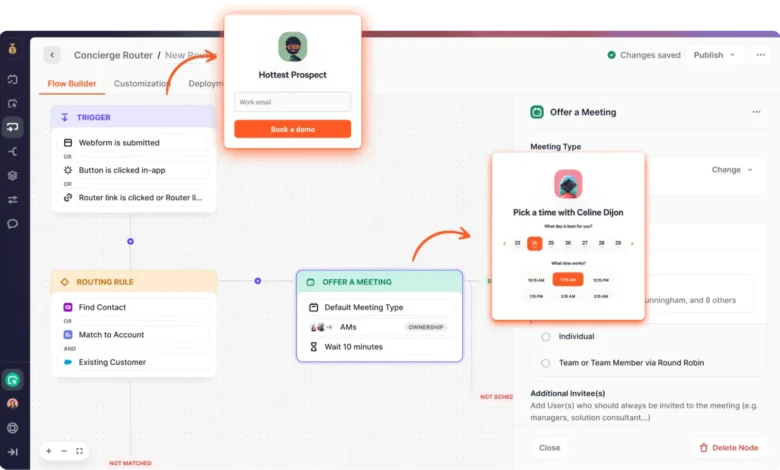
- Overview: Chili Piper excels in connecting inbound prospects with the right representatives immediately. It leverages territory, account ownership, deal size, and custom rules to instantly schedule meetings upon form submission or link click, drastically reducing response times and preventing lead leakage.
- Key Features: Instant Booker, intelligent routing rules, form scheduling, Handoff for warm transfers, CRM integration.
- Pricing: No free plan or trial. Paid plans start at $15/user per month (scheduling links only); full routing and qualification features start at $30/user per month (billed annually).
- Insights: Positioned as a revenue generation tool, Chili Piper prioritizes speed-to-lead and precise qualification, making it ideal for organizations where capturing intent quickly is paramount.
-
Calendly:
- Best for: B2B sales teams seeking a simple, reliable, and widely compatible scheduling tool that integrates easily across various tech stacks.
- Overview: A lightweight yet powerful solution, Calendly allows reps to create personalized scheduling links with custom availability rules. Its ease of use and broad integration capabilities with calendars, CRMs, and video conferencing tools make it a popular choice for teams that prioritize flexibility and minimal setup overhead without overhauling their existing sales infrastructure.
- Key Features: Personalized booking links, multi-person scheduling, customizable event types, robust integrations, automated notifications.
- Pricing: Free plan available. Paid plans start at $10/seat per month (billed yearly).
- Insights: Calendly’s strength lies in its universal applicability and user-friendly interface, making it an excellent choice for teams needing dependable scheduling without extensive operational complexity.
-
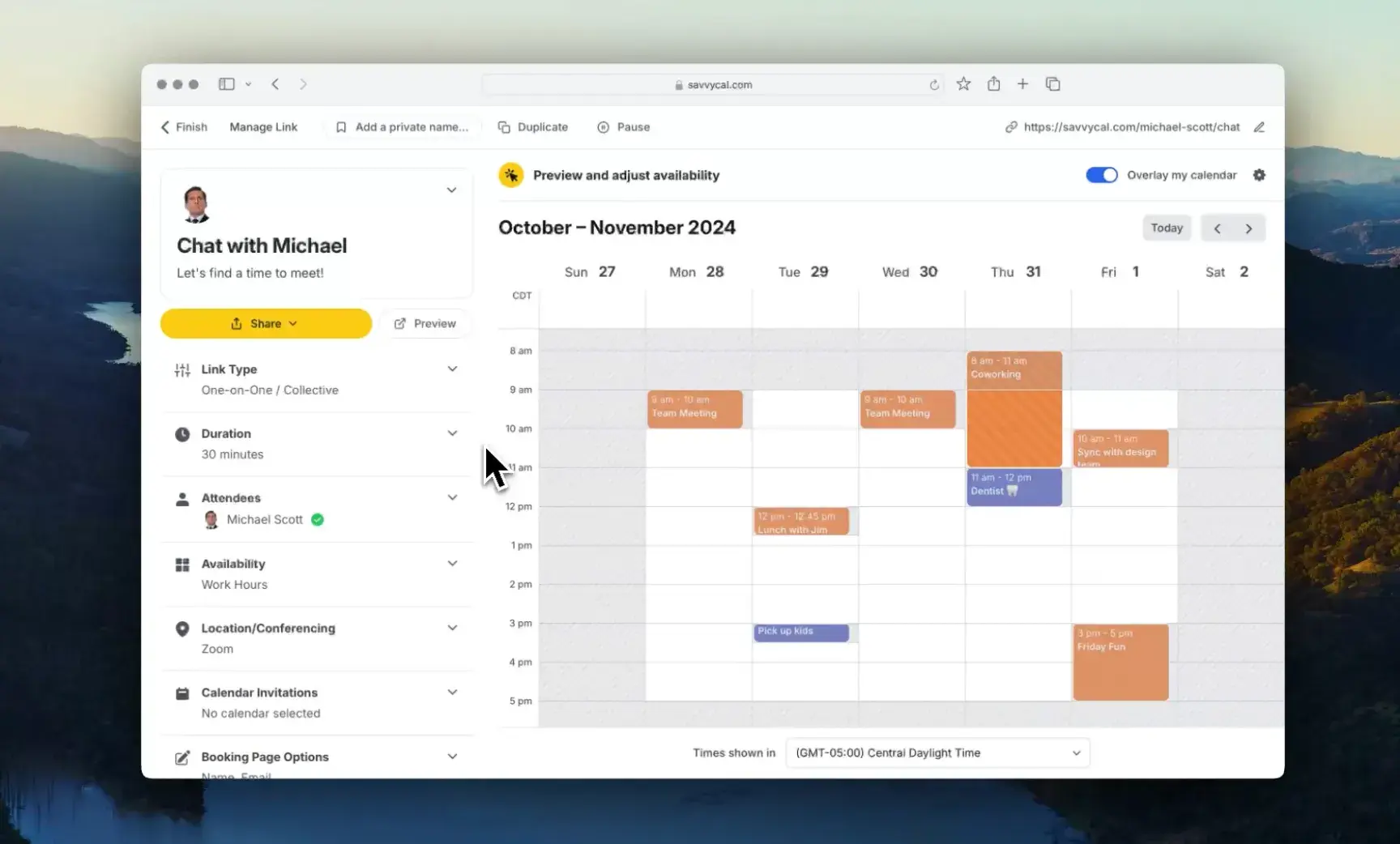
SavvyCal:
- Best for: B2B sales teams prioritizing a flexible, prospect-centric, and collaborative scheduling experience, particularly in one-to-one or relationship-driven sales.
- Overview: SavvyCal offers a unique collaborative approach where both parties can overlay their calendars to find mutually agreeable times. This makes the scheduling process feel less transactional and more engaging, especially beneficial for outbound, partner, or account-based sales where building rapport is key.
- Key Features: Calendar overlay, personalized booking links, custom availability, team scheduling, flexible scheduling options.
- Pricing: Paid plans start at $12/user per month.
- Insights: Its emphasis on a thoughtful, non-rigid scheduling flow makes it suitable for sales conversations that benefit from a more nuanced approach to time coordination.
-
Default:
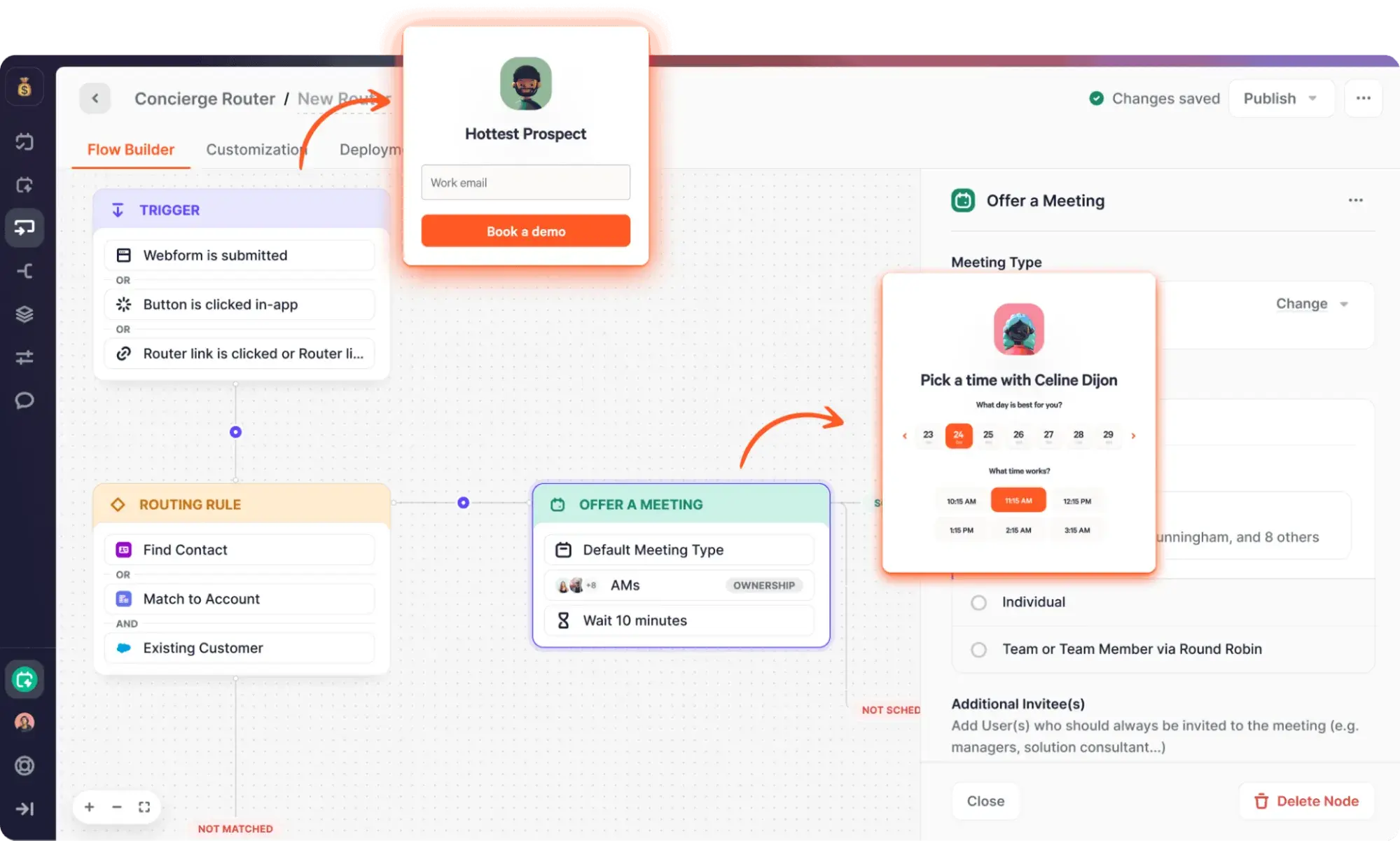
- Best for: B2B sales teams aiming to fully automate inbound scheduling and lead routing within a single, integrated workflow solution.
- Overview: Default combines meeting scheduling, lead routing, and sales automation into a cohesive system, minimizing manual effort in moving prospects from initial interest to a booked meeting. It acts as a control layer between web forms, calendars, and CRMs, applying routing rules and assigning reps automatically.
- Key Features: Automated lead routing, intelligent qualification, custom workflows, CRM integration, analytics.
- Pricing: Paid plans start at $750/month (+ $45/month per user, billed annually).
- Insights: Default’s comprehensive workflow automation for inbound demand generation helps teams scale without increasing operational overhead, ensuring leads are acted upon swiftly and intentionally.
-
Cal.com:
- Best for: B2B sales teams that require extensive control over scheduling workflows, deep customization, and data ownership, often leveraging an open-source model.
- Overview: As an open-source platform, Cal.com provides unparalleled flexibility for sales teams to tailor booking logic, embed scheduling into custom applications, and align workflows precisely with internal rules around ownership, regional requirements, or deal types. It caters to organizations that prefer to adapt the tool to their unique processes rather than conforming to fixed product constraints.
- Key Features: Open-source platform, extensive customization, self-hosting options, API access, team scheduling, diverse integrations.
- Pricing: Free plan for individuals. 14-day free trial for paid plans, which start at $15/user per month.
- Insights: Cal.com offers a high degree of freedom and control, appealing to teams with strong technical capabilities or specific governance requirements that off-the-shelf solutions cannot meet.
Critical Security and Governance Considerations
Given the sensitive nature of B2B sales data, security is paramount for meeting scheduling tools. These platforms integrate with CRMs, calendars, and handle prospect contact details, making robust security a non-negotiable requirement, particularly for enterprises or those operating in regulated industries.
- Single Sign-On (SSO) and SCIM: SSO allows employees to access the tool using corporate credentials, enhancing security and user experience. SCIM (System for Cross-domain Identity Management) automates user provisioning and deprovisioning, ensuring that only active employees retain access, mitigating risks associated with former employees.
- Role-Based Access Controls (RBAC): RBAC defines granular permissions, dictating what different users can view, edit, or manage within the scheduling tool. This ensures that sales reps can manage their availability, while managers and RevOps teams control routing rules, analytics, and system-wide settings, thereby reducing the risk of unauthorized changes or data exposure.
- Audit Logs: Comprehensive audit logs track all significant actions performed within the scheduling tool, such as changes to routing logic, calendar connections, or user permissions. This provides an invaluable trail for troubleshooting, compliance reviews, and internal investigations, crucial for maintaining accountability and diagnosing operational issues.
- Data Processing Agreements (DPAs): A DPA legally outlines how the scheduling vendor processes, stores, and protects customer data. Given that these tools handle contact information and meeting metadata, clear contractual assurances about data handling practices are essential, especially for organizations adhering to regulations like GDPR or CCPA.
- Data Residency: For global organizations, data residency controls specify the geographical location where customer and meeting data is stored. Compliance with local data protection laws often requires data to remain within specific regions, making this a critical consideration for enterprise-level procurement.
- Encryption: All sensitive scheduling data, both at rest (stored) and in transit (moving between systems), must be protected through robust encryption protocols. This safeguards against unauthorized access, breaches, and interception, preserving prospect trust and internal data integrity.
- Industry Certifications (SOC 2, ISO): Adherence to industry-recognized security frameworks like SOC 2 Type 2 or ISO 27001 demonstrates a vendor’s commitment to established security best practices. These certifications often streamline security reviews during enterprise sales cycles, accelerating procurement and building trust.
- Admin Controls: Robust administrative controls enable IT and RevOps teams to enforce organizational policies, such as mandatory SSO, restrictions on sharing public meeting links, or limitations on third-party integrations. This centralized governance ensures consistent security posture across the entire organization while still empowering sales teams.
HubSpot’s Smart CRM exemplifies a platform designed with this level of security and governance in mind. Its role- and permission-based model allows granular control over access to contacts, deals, meetings, and reports, applied consistently across all customer-facing teams. This integrated approach ensures that as teams scale, governance remains robust and consistent, with clear ownership and auditability, reducing risk without impeding efficiency.
Strategic Selection: Matching Tools to Sales Motions
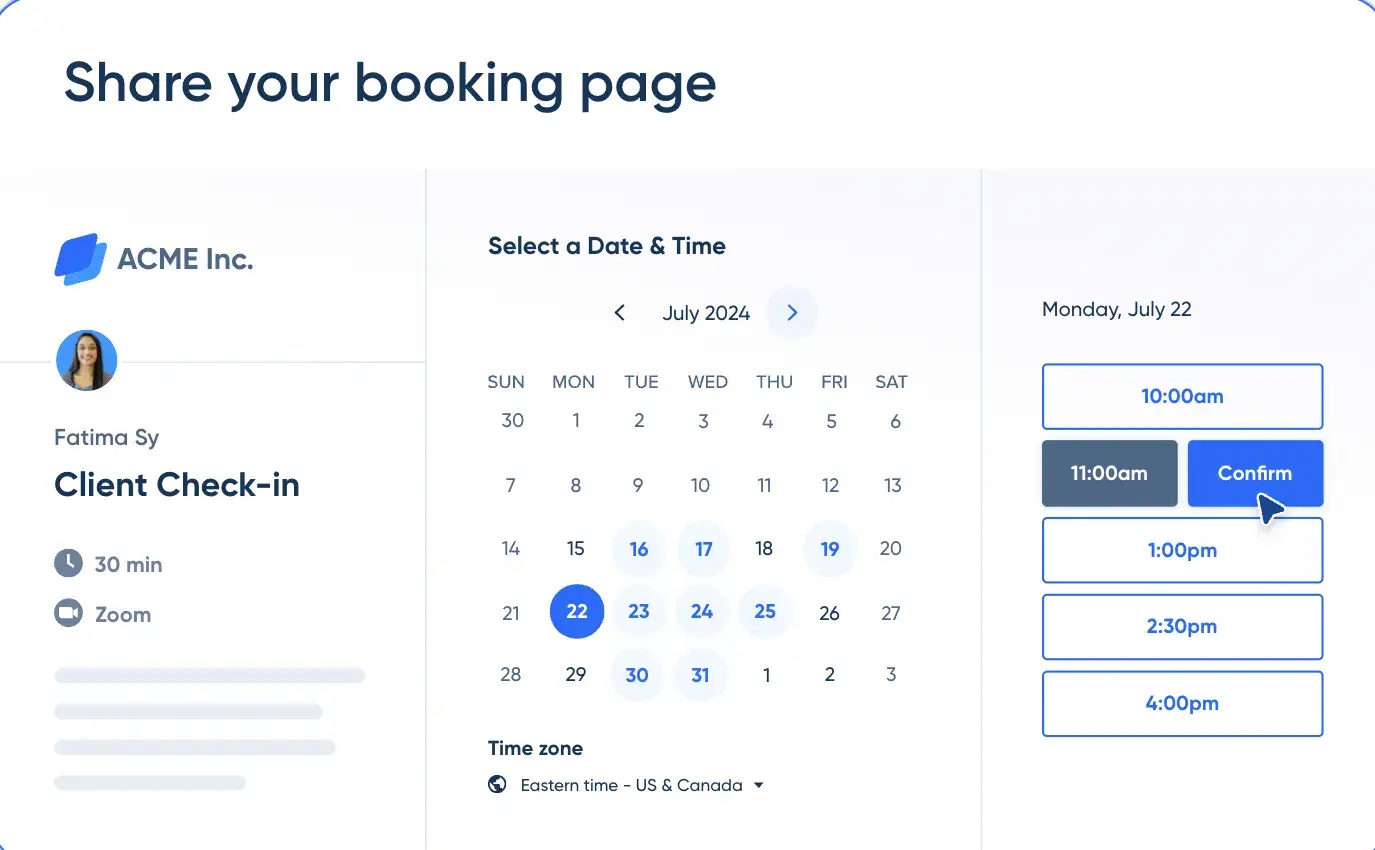
Choosing the optimal B2B meeting scheduler requires aligning its capabilities with the organization’s specific sales motions, team structure, and strategic objectives.
- Demo-led or Inbound-heavy Sales Motions: For teams reliant on inbound inquiries and demo requests, speed and routing accuracy are paramount. The ideal scheduler must qualify leads, route them to the appropriate representative based on predefined criteria, and book the meeting instantly, minimizing manual intervention. This ensures high-value leads are engaged while intent is fresh.
- Account-based or Outbound Sales Motions: These motions demand greater control over who can book time and how meetings are presented. Schedulers should support personalized, private links, restricted availability settings, and meeting flows that complement deliberate outreach strategies. Account executives need the ability to share specific links with target accounts, limit availability to strategic times, and tie meetings directly to existing account records.
- Team Handoffs and Multi-Role Workflows: B2B sales processes are inherently collaborative, often involving multiple roles—SDRs, AEs, Solutions Consultants. The scheduling tool must facilitate seamless handoffs, accurately logging each meeting, updating ownership, and ensuring the next step is routed to the correct individual without manual coordination or data discrepancies.
- Multi-Region and Global Sales Teams: For organizations operating across diverse geographies, automatic time zone detection, regional routing logic, and localized availability rules are critical. The tool must present accurate local times to prospects, preventing out-of-hours bookings and reducing friction in the early stages of the buyer’s journey.
- Team Size, Scale, and Operational Maturity: An early-stage team might prioritize ease of setup and basic functionality, while a rapidly scaling organization requires advanced routing, role-based permissions, robust analytics, and centralized governance. Selecting a tool that can evolve with the team’s growth prevents the disruptive need for re-platforming later, ensuring long-term operational continuity.
Addressing Common Queries: Expert Insights
Sales leaders frequently pose questions regarding the practical implementation and strategic benefits of B2B meeting schedulers.
- Consolidating Scheduling Needs: Modern B2B scheduling tools are designed to support both individual representative links and team-based round-robin scheduling within the same platform. This eliminates the need for fragmented solutions, ensuring consistent routing rules, unified data, and simplified reporting on meeting performance.
- Account-Based Routing: Many advanced schedulers can indeed route meetings based on account ownership stored in the CRM. When an existing customer or target account books a meeting, the tool cross-references the CRM to ensure the meeting is assigned to their dedicated account owner, maintaining continuity and strengthening relationships.
- Global Time Zones and Daylight Savings: The most effective B2B scheduling tools automatically detect time zones and dynamically adjust availability, including accounting for daylight saving changes without manual intervention. This crucial feature prevents miscommunications and missed meetings inherent in global sales operations.
- Migration Strategies: Migrating from basic tools like Calendly to more advanced schedulers typically involves mapping existing booking links to new meeting types, connecting calendars and CRMs, and gradually replacing old links across all communication channels. A phased approach, with both tools running concurrently for a brief period, is often recommended to ensure a smooth transition and validation of new workflows.
- Integration with CRM Workflows: Meeting scheduling tools are designed to support and enhance CRM workflows, not replace them. They handle the mechanics of booking and routing, while the CRM remains the central system of record for contact data, deal progression, and comprehensive reporting. The synergy between a tightly integrated scheduler and CRM is what drives maximum efficiency.
- Prioritizing Features for Growth Stages: Early-stage teams should prioritize ease of setup and core scheduling functionality. As teams mature and scale, features like intelligent routing logic, granular permissions, robust analytics, and comprehensive admin controls become increasingly critical for managing complexity and ensuring governance. Choosing a tool that offers an upgrade path is key to future-proofing the sales tech stack.
The Future of Sales Productivity: A Concluding Analysis
The limitations of generic meeting schedulers are becoming increasingly apparent as B2B sales teams grapple with complex routing, intricate handoffs, stringent governance requirements, and the need for comprehensive visibility into their pipeline. These shortcomings lead directly to missed meetings, delayed follow-ups, and ambiguity in lead ownership, all of which directly impact revenue.
This detailed guide has illuminated six prominent meeting scheduling tools, outlining their specific strengths and ideal use cases. Among these, HubSpot’s Meeting Scheduler stands out for its deep integration within the broader HubSpot ecosystem. Unlike standalone solutions that require separate integration efforts, HubSpot’s scheduler is a native component of its Smart CRM, providing a unified source of truth for all prospect and deal data across sales, marketing, and customer support teams. Its AI-driven capabilities ensure that meetings are automatically logged, reps receive intelligent assistance with preparation and follow-ups, and activity data seamlessly informs future sales strategies and marketing campaigns, all without manual overhead.
For B2B sales organizations committed to managing scheduling, selling, follow-ups, and cross-functional collaboration within a single, intelligent platform, HubSpot Sales Hub presents a compelling solution. The strategic adoption of purpose-built meeting scheduling tools is no longer a luxury but a fundamental requirement for achieving sustained sales efficiency, enhancing the buyer experience, and driving predictable revenue growth in the competitive B2B landscape.
Related posts: