The Digital Transformation of Sales: How Data and Automation are Redefining the Modern Revenue Engine

The sales profession is currently undergoing its most significant evolution in decades, driven by a fundamental shift in how business-to-business (B2B) buyers interact with vendors. As the ubiquity of high-speed internet and mobile technology has empowered consumers, the traditional sales playbook—heavily reliant on cold-calling and manual outreach—has lost its efficacy. Today’s B2B buyers are digital natives who conduct extensive independent research, cultivate their own networks, and form buying committees long before initiating contact with a sales representative. Consequently, the modern enterprise is forced to pivot from a legacy model of "guessing at scale" toward a sophisticated, data-driven approach characterized by buyer intelligence and automated guidance.
The Evolution of the Buyer Journey
The rise of the digital-first buyer has dismantled the classic sales funnel. According to research from the Harvard Business Review, B2B purchasing has become an increasingly complex, multi-channel process. Modern buyers often complete 60% to 70% of their buying journey before ever speaking to a vendor representative. This shift creates a "visibility gap" for sales organizations that rely on traditional CRM practices, as they remain unaware of potential prospects until the final stages of the decision-making process.
Historically, this transition caught many firms off-guard, leading to a decade-long period of trial and error. Between 2010 and 2020, as SaaS adoption exploded, companies flooded their tech stacks with disparate tools, resulting in data silos and "shadow CRM" environments where reps worked outside the official system of record. This era, often described as the "proliferation of tools," was marked by a decrease in data integrity. By 2021, industry analysts noted that the fragmentation of sales data had become a primary inhibitor to revenue growth, forcing a move toward integrated, "buyer-centric" platforms like XANT’s Playbooks, which prioritize seamless CRM connectivity.
The Cost of Inefficient Integration
The primary technical hurdle for sales organizations today is the maintenance of their CRM environment. Most sales engagement platforms operate by duplicating CRM data into secondary environments, a process that inevitably leads to technical debt. When a company modifies its Salesforce or Dynamics 365 configuration, platforms that require manual mapping often break, leading to disconnected records and inaccurate reporting.
Industry experts observe that when sales tools are not natively integrated, marketing and sales teams often enter an "eternal tug of war." Marketing departments attribute poor lead conversion to sales negligence, while sales teams blame marketing for "garbage leads." The data confirms that organizations with high-quality, bi-directional integrations see significantly higher productivity. By eliminating the need for manual data entry—which consumes approximately 17% of a representative’s day according to Salesforce research—companies can reallocate those hours to active selling.

The Role of Automation and "Robots" in Sales
Modern sales engagement is no longer about the quantity of activity, but the quality and speed of response. The concept of "speed-to-lead" has moved from a performance metric to a critical survival requirement. Research indicates that the probability of connecting with and qualifying an inbound lead drops by 80% if the first contact is not made within the first five minutes of the inquiry.
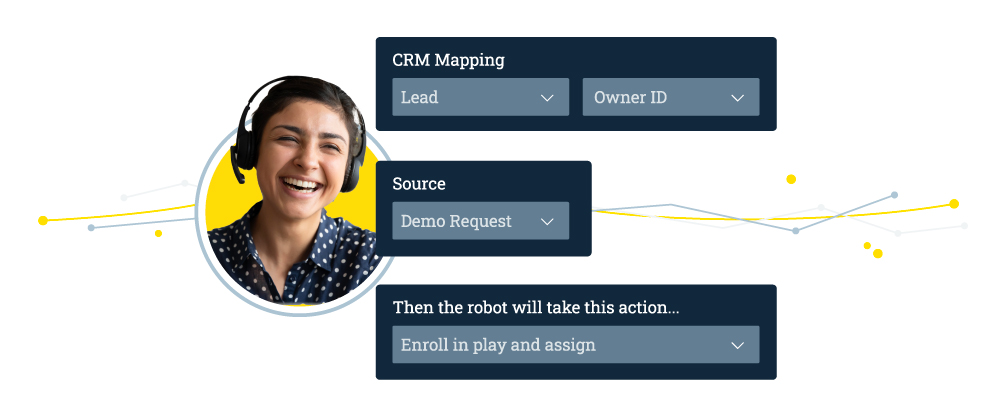
To solve this, advanced sales platforms are moving away from manual task assignment. Instead, they are implementing "automation robots"—algorithmic triggers that monitor CRM fields in real-time. These systems can automatically enroll leads into specific cadences, reassign records based on team availability, and round-robin prospects to ensure no inquiry goes unaddressed. By removing the administrative bottleneck of manual lead distribution, these systems ensure that speed-to-lead is no longer dependent on a manager’s manual intervention, but on the efficiency of the underlying architecture.
Regulatory Compliance as a Business Imperative
In an era of increasing global data privacy regulations, including the GDPR in Europe and the CCPA in California, compliance has shifted from a legal background function to a front-end sales priority. Modern sales platforms must now architect their systems to respect geographical and temporal nuances.
For instance, companies must be aware of state-specific holidays, local privacy laws, and "do-not-call" registries that vary by jurisdiction. A failure to manage these nuances can result in significant legal liabilities and reputational damage. Leading platforms now integrate compliance checks directly into the user interface, preventing representatives from inadvertently violating laws or company policies. This "architectural compliance" ensures that all outreach—whether via phone, email, or digital messaging—is vetted before the rep initiates contact.
Buyer Intelligence: The New Lighthouse
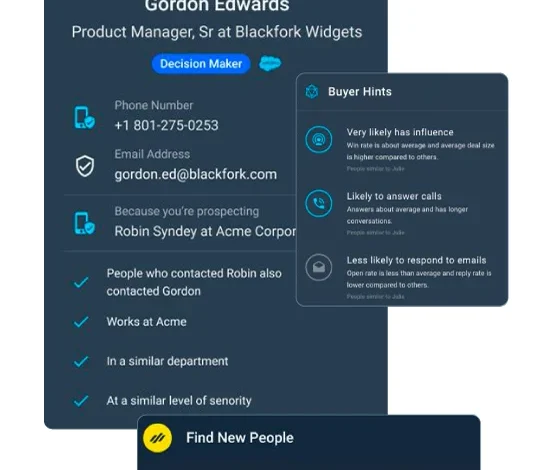
As the sales landscape becomes more saturated, the ability to predict buyer behavior has become a competitive differentiator. "Buyer Intelligence" refers to the aggregation of historical interaction data, predictive modeling, and third-party verification to score the likelihood of a sale.
By analyzing billions of interactions, these platforms can now identify not just who to call, but when to call and what channel they prefer. Features such as "SmartSend"—which analyzes email open patterns to determine the optimal time to reach a recipient—have been shown to increase contact rates by over 20%. This data-driven approach removes the guesswork from the sales process, allowing representatives to focus their efforts on accounts that show the highest propensity to close.

Implications for the Future of Sales
The implications of this shift are profound. The reliance on intuition is being replaced by systematic rigor. Organizations that fail to adopt these integrated, automated frameworks are likely to face increasing customer acquisition costs and decreasing win rates. The "winner-take-all" nature of digital selling means that companies that effectively leverage buyer signals and automation will continue to capture market share, while those trapped in legacy manual workflows will struggle to compete.
In the coming years, industry analysts predict a consolidation of the sales technology market. The future lies in platforms that do not just offer "features," but that act as a unified, compliant, and intelligent operating system for revenue teams. As companies continue to digitize their operations, the focus will remain on building a "guided experience"—a model where technology facilitates the best possible action at every step of the buyer journey, ultimately leading to more predictable revenue cycles and improved alignment between sales, marketing, and customer success.
A Chronology of Modern Sales Engagement
- 2004: Development of the first specialized dialing technologies, laying the groundwork for modern digital sales engagement.
- 2010–2015: Rapid proliferation of disparate sales tools, leading to massive data fragmentation and the rise of the "shadow CRM" phenomenon.
- 2016–2019: Emergence of sales engagement platforms (SEPs) as a formal category, focusing on cadences and sequences.
- 2020–2021: The pandemic-induced shift to remote work forces a reliance on digital-only selling, highlighting the need for reliable, high-quality telephony and remote-compatible CRM integrations.
- 2022–Present: The focus shifts toward AI-driven "Buyer Intelligence," where automated guidance, compliance, and real-time data sync become the standard for high-performing sales organizations.
By integrating these disparate elements—automation, deep CRM integration, compliance, and intelligence—into a single, cohesive workflow, enterprises can finally move past the era of trial and error. The modern sales representative is no longer a lone actor guessing at the next best step; they are part of a precision-engineered system designed to meet the modern buyer exactly where they are, when they are ready to engage.
Related posts: