The Path to Advanced Banking Roles: CFI’s CBCA and FPWMP Certifications Empower Professionals to Climb the Corporate Ladder


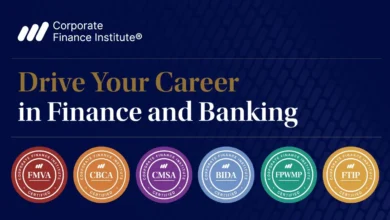
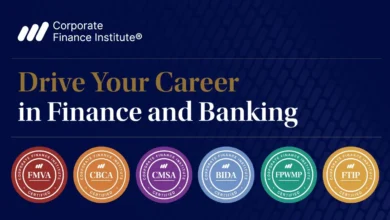
The journey for many banking professionals often begins at the front lines, serving as customer experience associates, tellers, assistants, or junior advisors. These foundational roles are crucial for understanding the day-to-day operations and client interactions that form the bedrock of the financial industry. However, a significant question lingers for ambitious individuals: what steps are necessary to transition from these entry-level positions to more complex client management, advanced analytical roles, and ultimately, higher-impact positions within a financial institution? The Corporate Finance Institute (CFI) is addressing this critical career development need through its specialized certification programs, the Commercial Banking & Credit Analyst (CBCA) and the Financial Planning & Wealth Management Professional (FPWMP).
Published on June 6, 2023, this article delves into CFI’s mission to provide practical, hands-on training that moves beyond theoretical concepts. The focus is on empowering up-and-coming banking professionals with the skills and knowledge required to excel in more specialized and impactful roles. CFI’s approach emphasizes real-world application, aiming to bridge the gap between academic learning and the demands of the contemporary financial landscape.
Understanding the Career Progression in Banking
The banking sector, like many industries, operates with a clear hierarchical structure. Entry-level positions are designed to onboard new talent, equip them with fundamental customer service skills, and provide exposure to basic financial products and processes. Tellers handle daily transactions, customer experience associates manage client inquiries and resolve issues, and junior advisors might assist senior staff in client meetings or portfolio management. While these roles are indispensable, they typically offer limited scope for complex financial analysis, strategic decision-making, or direct engagement with high-net-worth clients or sophisticated corporate accounts.
The aspiration for many in these roles is to move "upstairs" – to transition into areas such as commercial lending, corporate finance, investment banking, wealth management, or specialized advisory services. These advanced positions demand a deeper understanding of financial markets, intricate analytical tools, risk assessment, client relationship management at a higher tier, and the ability to structure complex financial solutions. The challenge lies in acquiring the specialized knowledge and demonstrable skills that signal readiness for such advancement, often in a competitive environment where formal training can be a significant differentiator.
CFI’s Strategic Approach to Skill Development
CFI’s core philosophy centers on delivering practical, hands-on training that is directly applicable to the demands of the financial industry. This approach contrasts with more abstract or theoretical educational models, aiming instead to equip professionals with tangible skills that can be immediately utilized in their roles. The institute recognizes that career progression in banking is not solely about accumulating years of experience but about developing a robust skill set that aligns with the evolving needs of financial institutions and their clients.
The CBCA and FPWMP certifications are specifically designed to cater to this need. The CBCA program is tailored for individuals aspiring to roles within commercial banking, focusing on credit analysis, financial statement analysis, loan structuring, and risk assessment. This is a critical area for banks, as sound credit decisions are fundamental to their profitability and stability. Professionals equipped with CBCA-level skills can effectively evaluate the creditworthiness of businesses, assess loan proposals, and manage loan portfolios, thereby contributing directly to the bank’s financial health and growth.
Conversely, the FPWMP program targets professionals aiming for careers in financial planning and wealth management. This involves advising individuals and families on investment strategies, retirement planning, estate planning, tax optimization, and risk management. In an era of increasing financial complexity and longer lifespans, the demand for skilled wealth managers is growing, requiring a nuanced understanding of market dynamics, financial products, and client psychology.
Popularity and Program Structure
The popularity of both the CBCA and FPWMP certifications among "up-and-coming banking pros" underscores a clear demand for specialized training that facilitates career advancement. These professionals are actively seeking to enhance their existing skill sets and acquire new competencies that will enable them to take on more specialized and impactful roles. CFI’s offering provides a structured pathway to achieve this.
The process outlined by CFI involves a simple form submission, after which individuals receive a curated selection of free resources. These resources include courses, articles, and templates specifically focused on the core skills and career pathways associated with the CBCA and FPWMP programs. This "hand-picked selection" aims to provide immediate value and a taste of the comprehensive learning experience CFI offers.
The emphasis on "focused, practical, and modeled after real-world use cases and institutions" is a key selling point. This ensures that learners are not just acquiring theoretical knowledge but are being trained on methodologies and tools that mirror those used in actual banking environments. This direct applicability is invaluable for professionals seeking to demonstrate their capabilities and make an immediate impact in their roles, accelerating their path to promotion and greater responsibility.
Supporting Data and Industry Trends
The banking industry has undergone significant transformation in recent decades. Increased regulatory scrutiny, the rise of FinTech, evolving customer expectations, and the persistent pursuit of efficiency and profitability have reshaped the landscape. This has led to a greater demand for specialized roles and a higher premium on professionals who can navigate this complexity.
For instance, the demand for skilled credit analysts remains robust. According to the U.S. Bureau of Labor Statistics, employment of loan officers is projected to grow 6 percent from 2021 to 2031, about as fast as the average for all occupations. While this includes various types of loan officers, the need for sophisticated credit analysis within commercial banking is particularly pronounced. Banks are increasingly relying on data analytics and advanced modeling to assess risk, and professionals with CBCA training are well-positioned to meet these needs.
Similarly, the wealth management sector is experiencing substantial growth. The Cerulli Associates report highlights that U.S. wealth management assets are projected to reach $71.2 trillion by 2025. This growth is driven by an aging population, increasing wealth accumulation, and a growing awareness among individuals about the importance of financial planning. The FPWMP certification equips professionals with the knowledge to cater to this expanding market, offering services that go beyond basic investment advice to encompass holistic financial planning.
The Role of Certifications in Career Advancement
In a competitive job market, certifications serve as powerful credentials. They not only validate an individual’s knowledge and skills but also demonstrate a commitment to professional development and a proactive approach to career growth. For banking professionals seeking to move beyond entry-level roles, certifications like the CBCA and FPWMP offer a tangible way to stand out.
These certifications signal to employers that an individual has undergone rigorous training in specific, in-demand areas of finance. This can translate into faster hiring processes, higher starting salaries, and accelerated promotion opportunities. Furthermore, the practical, real-world focus of CFI’s programs means that certified individuals are often better prepared to contribute from day one in their new roles, reducing the learning curve for both the employee and the employer.
Official Responses and Industry Recognition
While the provided content doesn’t include direct quotes from industry leaders or regulatory bodies, the demand for such specialized training is widely recognized by financial institutions. Many banks actively encourage or even require their employees to pursue professional development opportunities to enhance their skill sets. Partnerships between educational institutions and industry bodies are common, aiming to align training programs with current and future workforce needs.
CFI’s focus on practical application aligns with a broader industry trend towards competency-based training. Employers are increasingly valuing demonstrated skills and the ability to perform specific tasks over traditional academic credentials alone. Certifications that offer this practical validation are therefore highly attractive.
Broader Impact and Implications
The availability of accessible and practical training programs like those offered by CFI has significant implications for the banking industry as a whole.
- Talent Development: It provides a clear pathway for internal talent development, allowing banks to nurture their existing workforce and fill specialized roles from within. This can lead to higher employee retention and a more experienced, loyal workforce.
- Enhanced Client Services: Professionals who are better trained in areas like credit analysis and wealth management are equipped to provide higher quality services to clients, leading to increased client satisfaction and stronger banking relationships.
- Improved Risk Management: For commercial banking, stronger credit analysis skills directly contribute to better risk management, reducing loan defaults and improving the overall financial health of the institution.
- Industry Modernization: By equipping professionals with skills in areas like financial modeling and data analysis, these programs contribute to the modernization of the banking industry, enabling it to adapt to technological advancements and evolving market dynamics.
- Democratization of Advanced Skills: Offering free resources and accessible certifications can democratize access to advanced financial education, potentially leveling the playing field for individuals from diverse backgrounds who may not have had access to traditional, expensive graduate programs.
The statement "Connect what you just learned to a clear career path with CFI’s role-based courses and certification programs" encapsulates the overarching value proposition. CFI is not just offering courses; it is providing a bridge between learning and tangible career progression. This is particularly relevant for individuals who may feel their current roles are limiting their long-term potential. By offering targeted certifications, CFI empowers them to actively shape their careers, acquire specialized expertise, and ascend to more rewarding and impactful positions within the dynamic world of finance.
The commitment to providing practical, real-world focused education is crucial. As the financial services industry continues its rapid evolution, the demand for professionals who can adapt, analyze, and strategize effectively will only intensify. CFI’s CBCA and FPWMP programs represent a significant contribution to meeting this demand, offering a clear and achievable route for banking professionals to enhance their skills and achieve their career aspirations. The institute’s mission to move beyond abstract concepts and focus on actionable knowledge is a testament to its understanding of the contemporary professional development needs within the financial sector.
Related posts: