Bridging High Tech and High Touch: How Amex GBT Navigates the Future of Work in the Age of AI

As the modern global economy navigates a turbulent intersection of rapid artificial intelligence adoption and persistent economic uncertainty, enterprise leadership faces an unprecedented dual challenge. Chief Human Resources Officers and executive boards are constantly forced to weigh the demands of aggressive digital transformation against the human cost of restructuring. In corporate boardrooms worldwide, executives evaluate workforce reductions as a necessary mechanism for funding cutting-edge automation and capital allocation strategies. Simultaneously, front-line employees carry the psychological weight of these shifts, grappling with anxieties surrounding long-term job security, household financial stability, and the preservation of their professional identity.
This tension forms the backdrop of contemporary workforce management. Organizations can no longer treat technology and human capital as opposing forces. Instead, sustainable enterprise growth demands an integrated operational framework where technological leverage and human-centric leadership reinforce one another.
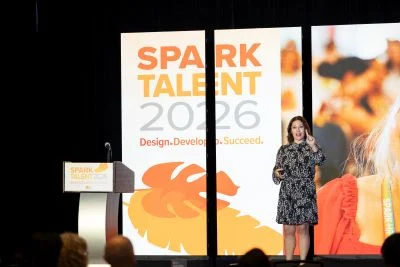
At the forefront of this operational evolution is American Express Global Business Travel (Amex GBT). Balancing a sprawling remote-first workforce of 28,000 employees, a century-old legacy of customer service excellence, and sweeping technological integration, the company has developed a comprehensive blueprint for modern human resources management. Insights shared by Christine Walsh, Head of Global Talent at Amex GBT, during a high-profile industry keynote address illuminate how large-scale enterprises can successfully harmonize digital efficiency with empathetic employee stewardship.
The Dual Mandate: Integrating Technology and Empathy
Navigating the current economic and technological landscape requires a profound shift in executive mindset. For decades, corporate strategy often framed automation as a zero-sum game: capital investments in software directly correlated with reductions in headcount. However, modern workforce dynamics demand a more nuanced approach.
According to Walsh, the organizations that will dominate their respective sectors in the coming decade are those capable of executing a dual strategy. During her keynote address, Walsh crystallized this philosophy for business leaders:
"My argument for today is two things can be true at once. We can be both high technology and high touch, and the people that get it right do them both. They do them in partnership, and they do them intentionally."
This principle is particularly vital for organizations operating across distributed geographies. When digital tools are deployed solely to strip costs out of an enterprise, employee trust deteriorates rapidly. Conversely, when technology is implemented to empower workers, streamline administrative burdens, and eliminate friction, engagement scores rise. Amex GBT operationalizes this philosophy through four strategic pillars: listening architecture, internal talent development, micro-learning integration, and deliberate community infrastructure.
Pillar One: Transforming Employee Listening into Actionable Loops
The market for employee engagement technology has expanded exponentially over the last five years. According to benchmark data compiled by Perceptyx, contemporary organizations survey their workforces more frequently than at any point in corporate history, with approximately 75% of enterprises conducting pulse or comprehensive surveys on a quarterly or more frequent basis.
Despite this massive influx of feedback channels, a persistent structural disconnect remains. Research published by Gallup indicates that only a quarter of global employees strongly believe their opinions truly count within their organizations. This discrepancy points to a fundamental flaw in execution: companies are remarkably adept at collecting data, but notoriously deficient at closing the feedback loop.
Amex GBT sought to dismantle this pattern by fundamentally redesigning how it processes and responds to employee sentiment. By asking staff a foundational design question—asking them to imagine building a meaningful workplace from a blank sheet of paper—the organization completely overhauled its onboarding process into a streamlined 100-day program. This direct alignment between feedback and structural change propelled onboarding completion rates beyond the 80% threshold.
Furthermore, Walsh highlighted the administrative paradox of data collection. In traditional human resources departments, processing tens of thousands of open-ended survey comments consumes hundreds of hours of analytical labor, often delaying actionable responses. Amex GBT leveraged artificial intelligence to solve this administrative bottleneck.
"I don’t know about you, but I am delighted that I don’t have to read thousands and thousands of comments to get sentiment," Walsh noted. "I can throw them into an AI tool, get trends, get sentiments, get recommendations of actions. That’s a great use for some of the technology that we’ve talked about."
Pillar Two: Shifting from the Buy Model to Internal Talent Pipelines
The rapid advancement of artificial intelligence and enterprise automation is rewriting job descriptions across every sector of the global economy. While mainstream media coverage frequently focuses on apocalyptic scenarios of total human job displacement, institutional research paints a more complex picture. Projections from the World Economic Forum suggest a net-positive shift in global employment by 2030, driven by massive job creation in emerging tech sectors coupled with the evolution of existing roles.
However, this transition creates severe localized labor shortages. When companies require specialized skills—such as veteran travel counselors capable of managing complex, high-stakes after-hours VIP services—external talent pools frequently run dry. Relying entirely on traditional recruitment models becomes mathematically unsustainable.
Recognizing that external hiring could not keep pace with enterprise demand, Amex GBT executed a strategic pivot from a talent acquisition model driven by external recruitment to one anchored in internal cultivation. As Walsh bluntly assessed the limitations of external hiring:
"We cannot rely on this buy model. We have to go build it."
To operationalize this philosophy, the organization established internal training ecosystems, such as its dedicated "travel academy." This initiative equips incoming talent with complex technological competencies and industry-specific tools from the ground up. By cultivating skills internally, Amex GBT has drastically reduced time-to-offer metrics while establishing a resilient, self-sustaining talent pipeline insulated from external labor market volatility.
Pillar Three: Embedding Continuous Learning into Daily Workflows
In an era defined by rapid technological iteration, traditional professional development models are proving obsolete. Most enterprise employees view their current corporate skill development programs as mediocre when measured against future business requirements. Workers understand that career longevity depends on continuous upskilling, and when an employer fails to invest in their professional trajectory, voluntary attrition rates spike.
To combat this structural vulnerability, Amex GBT transformed professional learning from a rare, formal corporate event into a continuous, everyday routine. Removing friction from the upskilling process required borrowing principles from behavioral economics. Walsh drew direct inspiration from Richard Thaler and Cass Sunstein’s seminal framework outlined in the book Nudge, challenging HR leaders to reconsider how employees interact with educational content.
"Anybody read the book Nudge? It’s a terrific book, right?" Walsh asked the audience. "It talks about how do you get people to do what you want them to do without even them feeling like it’s a conscious choice they’re making? How do we make it so easy for them?"
By embedding bite-sized, micro-learning modules directly into natural pauses within daily digital workflows—such as automated one-minute training segments accessible during operational downtime—Amex GBT eliminated the administrative friction that traditionally deters busy professionals from pursuing continuous education. Learning ceased to be a burdensome chore and became an effortless habit.
Pillar Four: Treating Remote Connection as Infrastructure
With over 90% of Amex GBT’s United States-based workforce operating within a remote-first framework, organizational leaders cannot leave cultural cohesion to chance. Modern remote work models offer unprecedented flexibility, but they also introduce severe interpersonal risks. Empirical data from Gallup indicates that the prevalence of chronic loneliness among fully remote workers has climbed to 25%. This statistic underscores a vital reality: remote-first companies cannot rely on organic, serendipitous watercooler moments to build organizational culture. They must build deliberate infrastructure.
Maintaining authentic professional relationships across distributed geographies requires systematic design. Walsh illustrated this reality by recounting her own experiences meeting long-standing virtual colleagues at live corporate events:
"I’m so sorry, but have we met before? I can’t remember if we’ve met in person or not… And it’s not because I don’t value meeting them in person. It means we’ve been able to build a meaningful relationship through remote work."
To foster deep organizational belonging across distance, Amex GBT established 90 structured remote communities, backed by dedicated leadership personnel and formal operating budgets. Furthermore, the company anchored its social purpose through global impact partnerships, collaborating with organizations like Airlink to deploy resources and rescue individuals in crisis. By continuously evaluating their operational impact through the guiding question—"Are we doing the right things in the right way for the right people?"—leadership ensures that distributed teams remain resilient and deeply engaged.
Broader Implications for Global Business Leadership
The strategic approaches implemented by Amex GBT offer a compelling case study for enterprise leaders navigating the friction of the mid-2020s labor market. As artificial intelligence redefines productivity benchmarks, organizations face a stark strategic choice: they can either deploy automation to squeeze short-term margins at the expense of human capital, or they can leverage technology to elevate employee capabilities, streamline workflows, and foster deep institutional trust.
The broader implications of this transition extend far beyond the travel and hospitality sector. As economic pressures mount and technological disruption accelerates, human resources departments are transitioning from administrative cost centers into vital architects of organizational resilience. Companies that successfully balance high-tech operational efficiency with high-touch employee engagement will capture outsized market share, attracting top-tier talent while securing long-term operational stability.
As Christine Walsh concluded in her keynote address, tying her human capital philosophy back to the enterprise’s core identity as a global travel leader, true innovation requires active dissemination:
"At American Express Global Business Travel, we’re a group of people that believe that great ideas travel… I hope you’re walking away with one or two great ideas, and those ideas travel home with you and make their way into your own organizations."