Top Peec AI Alternatives for 2026 and How to Build an AI Visibility Strategy That Drives Revenue

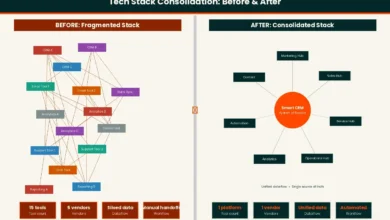
The rapid transition from traditional keyword-based search to AI-driven answer engines has fundamentally altered the digital marketing landscape. As users increasingly rely on platforms like ChatGPT, Perplexity, and Gemini to curate information, marketing teams are finding that legacy search engine optimization (SEO) tools are no longer sufficient to track brand presence. In this new era, visibility is defined by citation rates and brand sentiment within synthesized AI responses rather than traditional blue-link rankings. Peec AI has emerged as a prominent player in this niche, but as organizations look to scale their Answer Engine Optimization (AEO) efforts, many are seeking alternatives that offer deeper integration with customer relationship management (CRM) systems, automated content remediation, and enterprise-grade analytics.
The Evolution of AI Visibility Monitoring
The decline of traditional organic traffic signals has necessitated a shift toward AI brand monitoring. Between 2021 and 2026, the search industry moved from a "ranking" paradigm—where success was measured by a position on a Google Search Engine Results Page (SERP)—to an "answer" paradigm. In this current climate, an AI model acts as a gatekeeper, synthesizing information from various sources to provide a direct answer.
If a brand is not cited in these synthesized responses, it effectively becomes invisible to the modern researcher. Peec AI and its contemporaries function by running structured prompts across various large language models (LLMs) to determine the frequency and favorability of brand mentions. However, as marketing operations teams become more data-driven, they have identified a critical gap: data that lives in a siloed dashboard without connection to the sales pipeline is rarely actionable.
The Criteria for Selecting an AEO Platform
For marketing leaders evaluating AEO platforms in 2026, the selection process requires a move beyond vanity metrics. The primary challenge is not merely identifying where a brand appears, but determining how that appearance contributes to the bottom line.
-1.png)
An effective procurement framework for these tools should prioritize four key pillars:
- CRM Integration: The ability to automatically attribute website visits and lead generation to specific AI citations without manual data exports.
- Remediation Capability: Features that do not just report a "citation gap" but provide the content briefs or AI-assisted drafting tools necessary to address the issue.
- Historical Benchmarking: The capacity to analyze data trends over time, which is essential for proving the ROI of an AEO program to stakeholders.
- Multi-Engine Coverage: The breadth of AI models supported, ensuring that the platform tracks visibility across both mainstream and emerging answer surfaces.
Strategic Comparison of Leading Alternatives
While Peec AI provides strong visibility metrics, various alternatives have carved out specific advantages based on organizational needs.
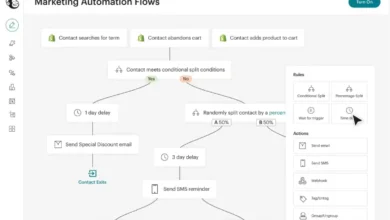
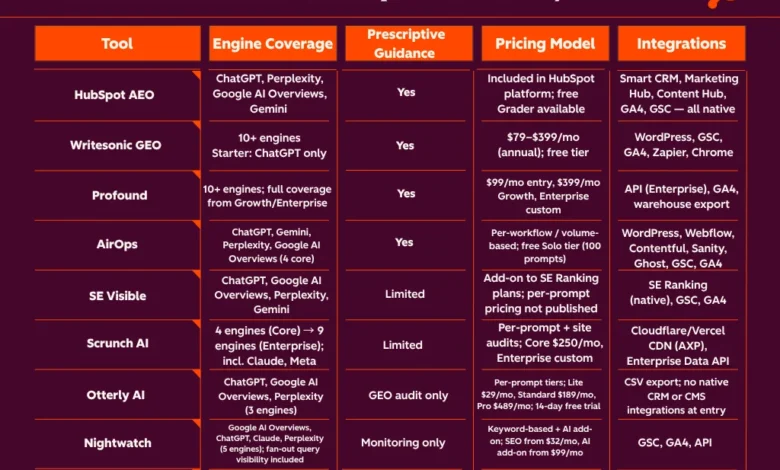
HubSpot AEO stands out as a unique contender for teams deeply embedded in the HubSpot ecosystem. By embedding AI visibility monitoring directly into the CRM, it eliminates the "parallel dashboard" problem, allowing sales and marketing teams to see which AI prompts drove specific prospect interactions. For organizations that rely on revenue attribution, this native integration is a significant operational advantage.
For content-heavy teams, Writesonic GEO offers a different value proposition. It bridges the gap between monitoring and execution by providing integrated content generation tools. This allows a content marketer to identify a citation gap and immediately utilize the platform’s writing features to create the necessary supporting documentation or comparison pages.
Profound targets the enterprise sector, focusing on security, compliance, and scale. With a massive dataset of over 1.5 billion real user prompts, it provides a level of analytical depth that is difficult for smaller tools to replicate. Its emphasis on "human-in-the-loop" review processes makes it suitable for highly regulated industries where accuracy and data provenance are paramount.

AirOps approaches the challenge from an agency and workflow management perspective. By allowing users to template "Playbooks" that handle research, drafting, and multi-platform publishing, it provides the operational leverage required by firms managing large libraries of content across multiple client domains.
Data-Driven Attribution: Connecting Visibility to Pipeline
The most significant hurdle for marketing teams in 2026 is the "dark traffic" problem. Many AI answer engines do not pass clear referrer strings, often causing AI-driven traffic to appear as "direct" in tools like Google Analytics 4. To solve this, organizations must adopt a more rigorous tracking taxonomy.
The recommended approach involves:
- Implementing dedicated UTM parameters for every AI-sourced campaign.
- Configuring channel groupings to explicitly identify referrers like ChatGPT, Gemini, and Perplexity.
- Creating custom CRM properties that tag a lead as "AI-influenced" at the moment of creation.
By standardizing these practices, teams can move from anecdotal evidence to concrete reporting. A dashboard that displays "Pipeline Influenced by AI Search" serves as a powerful instrument in budget justification discussions with executive leadership.
The Role of Content Strategy in AEO
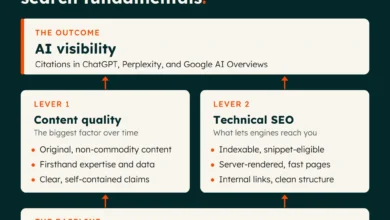
A common misconception is that AI visibility can be "hacked" through technical adjustments alone. In reality, the most sustainable way to improve AI citations is through content quality that aligns with how AI models prioritize information.
.png?width=650&height=488&name=White%20Simple%20Comparison%20Graph%20(2).png)
AI models prioritize "answer-first" content. This means removing long, SEO-padded introductions and ensuring that the most valuable information is presented in the first 100 words of a page. Additionally, maintaining entity and schema hygiene is critical. If a company’s name, product descriptions, and core value propositions are inconsistent across its digital footprint, AI models may struggle to build a coherent entity graph, leading to lower citation rates.
Chronology of a Successful 90-Day Activation
For organizations looking to deploy a new AEO platform, a structured 90-day plan is essential to avoid "pilot paralysis":
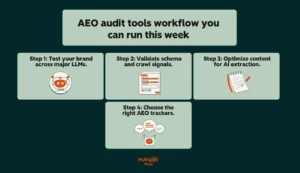
- Days 1-30: Establish the baseline. Use tools like the free AI Search Grader to determine current visibility across the brand’s primary search intent clusters.
- Days 31-60: Gap analysis and prioritization. Identify the top 20 queries where competitors are being cited but the brand is not. Focus on high-intent comparison queries.
- Days 61-90: Execution and measurement. Deploy the new content, monitor for changes in citation frequency, and correlate those changes with CRM traffic data.
Looking Forward: The Future of AI Search
The market for AEO tools is expected to continue its rapid maturation. As AI models become more multimodal—integrating video, image, and real-time data—the monitoring tools of the future will need to account for non-textual sources of information. Furthermore, as users grow accustomed to "conversational" research, the distinction between SEO and AEO will likely vanish entirely, becoming a unified discipline centered on digital authority.
Ultimately, the choice of a Peec AI alternative should be dictated by the specific maturity level of the marketing team. For startups, low-cost options like Otterly AI or free tiers from AthenaHQ provide the necessary entry point to gather data. For established enterprises, the investment should be directed toward platforms that offer not just monitoring, but the operational workflows required to convert those insights into tangible revenue. The objective for every marketing department in 2026 must be to move beyond simply observing the AI revolution and toward actively managing their brand’s role within it.