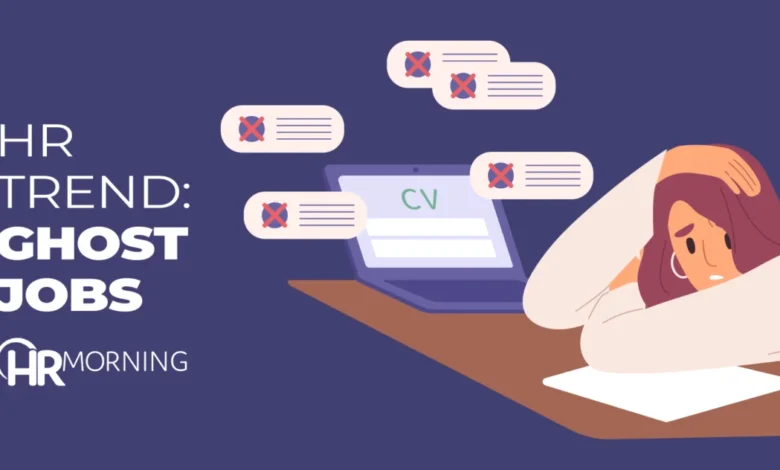
The modern labor market is currently contending with a phenomenon that has left millions of job seekers frustrated and confused: the "Ghost Job." These are employment opportunities posted on digital platforms that do not actually exist, have already been filled, or are not intended to be filled by the employer in the immediate future. As the practice becomes more prevalent across major job boards, it has caught the attention of state lawmakers and federal regulators, sparking a significant debate over the ethics of digital recruitment and the necessity of legislative intervention to protect job seekers.
Recent research highlights the scale of this issue. According to data from Clarify Capital, approximately 25% of employers who maintain open job listings have no intention of filling those roles within the next three months. Furthermore, the automation of recruitment processes has exacerbated the problem, with nearly 20% of companies now utilizing artificial intelligence to maintain and refresh job postings for inactive roles. Greenhouse, a leading applicant tracking system, suggests that at any given time, as much as 20% of all active job listings in the United States may fall under the category of ghost jobs.
The Legislative Response and Regulatory Scrutiny
The proliferation of these phantom listings has prompted lawmakers to take notice. In 2025, several states have introduced legislation aimed at mandating transparency in the hiring process. In Pennsylvania, House Bill 2321 has been proposed to compel employers to include specific hiring timelines in their job advertisements and requires the removal of such posts once the role is filled or the recruitment process has concluded. Similarly, the New York State Senate has introduced Bill S8877, which seeks to establish legal standards for the lifecycle of a job posting to ensure that candidates are not applying to positions that are essentially placeholders.
The scrutiny is not limited to statehouses. In Texas, Attorney General Ken Paxton initiated an investigation into the practices of major professional networking sites, specifically questioning whether platforms like LinkedIn are complicit in the ghost job economy by profiting from advertisements for positions that are intentionally misleading. LinkedIn has formally denied these allegations, maintaining that they provide the infrastructure for employers to connect with talent and that the responsibility for the accuracy of individual job postings remains with the hiring organizations themselves.
Why Employers Maintain Ghost Job Listings
While the practice is widely criticized, some employers argue that there are operational reasons for keeping positions posted. According to industry surveys, companies often maintain these listings to build a reserve of talent for future openings, a strategy sometimes referred to as "evergreen recruiting." Others cite the need to gauge market interest for specialized roles or to fulfill internal human resources metrics that require certain vacancies to be advertised publicly, even if an internal candidate has already been identified for the role.
However, HR experts note that the potential for long-term reputational damage far outweighs these perceived benefits. Josh Millet, founder and CEO of Criteria, points out that the practice is fundamentally misleading. "Posting ghost job ads is both misleading and disrespectful to candidates," Millet states. "Unless the opportunity is genuine, it can have serious negative consequences to the employer brand. You only need to look at sites like Glassdoor or Reddit to see just how damaging this is to a company’s reputation."
The impact on the candidate experience is profound. Beyond the time lost filling out applications, many job seekers report a sense of demoralization, with over 90% of applicants surveyed by various employment platforms stating that they believe the prevalence of ghost jobs inflates the perceived health of the job market, creating a "false positive" environment that complicates job searching.
The Economic and Ethical Implications
The economic implications of ghost jobs are complex. By creating an artificial sense of demand, these listings can mislead labor market analysts and job seekers alike, potentially causing candidates to pass up real opportunities in favor of positions that have no chance of resulting in an interview. James Neave, Head of Data Science at Adzuna, emphasizes the long-term cost to companies: "While this may seem like a harmless practice, ghost jobs can cause job seekers to get their hopes up and waste their time and effort on applications. Additionally, ghost jobs can cause employers to miss out on great candidates in the long run because those candidates will eventually stop engaging with the employer’s brand entirely."
From a legal standpoint, the movement toward regulation suggests that the era of the "unregulated job board" may be coming to an end. If passed, the bills in New York and Pennsylvania would represent a significant shift in labor law, moving recruitment from a "buyer beware" environment to one governed by strict disclosure requirements.
Strategies for Authentic Recruitment
For organizations looking to avoid the "ghost job" label and maintain a positive reputation in the talent market, experts recommend a shift toward radical transparency and operational efficiency. The following strategies are increasingly viewed as the standard for ethical recruitment:
-
Detailed and Dynamic Job Descriptions: Generic, templated postings are often perceived as suspicious. Companies are encouraged to provide granular detail, including specific responsibilities, clear salary ranges, and realistic schedules. Adding a timestamp ensures that candidates understand the recency of the post, signaling that the company is actively engaged in the hiring process.
-
Synchronized Recruitment Timelines: Organizations must ensure that their job boards are synchronized with their internal hiring needs. If a role is not filled within two weeks, it should be removed or refreshed with updated criteria. Maintaining stale posts on third-party platforms while the role is stagnant on the company’s internal site is a primary contributor to the "ghost job" perception.
-
Leveraging Employee Advocacy: Encouraging employees to share job postings on their personal social networks serves a dual purpose. It expands the reach of the posting to trusted, high-quality candidates, and the personal nature of the referral acts as a "seal of authenticity" that institutional job ads often lack.
-
Radical Transparency in Communication: Candidates value clear timelines. Providing a roadmap of the interview process—including the number of stages, expected response times, and the decision-making criteria—builds trust. Even if a candidate is not selected, a clear, automated communication process that signals the end of their candidacy is far better for the employer brand than a lack of follow-up.
-
Human-Centric Screening: Many ghost jobs are sustained by automated systems that filter out candidates based on rigid, often arbitrary keywords or degree requirements. By shifting the focus to skills-based hiring and moving away from over-reliance on automated filters, companies can reduce the need to keep "evergreen" postings active just to capture a specific set of keywords.
Conclusion
The debate surrounding ghost jobs is a symptom of a larger disconnect between digital recruitment tools and the human reality of the job search. As candidates grow more sophisticated in their ability to spot non-genuine listings, companies that prioritize transparency and respect for the applicant’s time will likely gain a competitive advantage. While legislation may eventually codify these standards, the most effective path forward for employers is to treat every job posting as a commitment to the candidate, ensuring that if a job is listed, the intent to hire is both real and immediate. By scrubbing hiring processes of unnecessary automation and focusing on clear, honest communication, companies can protect their brand and ensure they are attracting the talent necessary to thrive in an increasingly transparent labor market.