The Silent Heist: How State-Sponsored AI Distillation is Reshaping the Global Technology Cold War

The rapid ascent of Chinese artificial intelligence capabilities in recent years has frequently been framed by industry analysts as a triumph of efficient engineering and massive state-led investment. However, a recent joint cybersecurity advisory issued by the Cybersecurity and Infrastructure Security Agency (CISA), the Federal Bureau of Investigation (FBI), and the National Security Agency (NSA) paints a much darker picture: the systematic, industrial-scale theft of American intellectual property. According to federal authorities, Chinese AI entities are bypassing the traditional, capital-intensive research and development cycle by siphoning proprietary knowledge from the world’s leading U.S. technology firms, including OpenAI, Google, Anthropic, and xAI.
This phenomenon, known as model distillation, involves using sophisticated prompt-injection techniques to force large language models (LLMs) to divulge their internal reasoning, architecture, and training logic. By systematically querying these models, adversaries can effectively "clone" the performance and capabilities of high-end, multi-billion-dollar models for a fraction of the cost.
The Anatomy of an AI Heist
At the core of these campaigns is a technique that exploits a fundamental vulnerability in generative AI. While distillation can be used for legitimate purposes—such as creating smaller, more efficient versions of a model for localized deployment—the malicious application identified by U.S. agencies constitutes a direct breach of terms of service and an act of economic espionage.
The process functions through what researchers call "prompt injections." Attackers utilize automated, large-scale systems to bombard a target AI with millions of carefully crafted queries. These prompts are designed to bypass internal safety guardrails and "trick" the model into revealing its step-by-step reasoning processes or the specific weights and parameters it utilizes to arrive at certain conclusions. By aggregating the responses, the attackers reconstruct a functional copy of the target model’s logic.
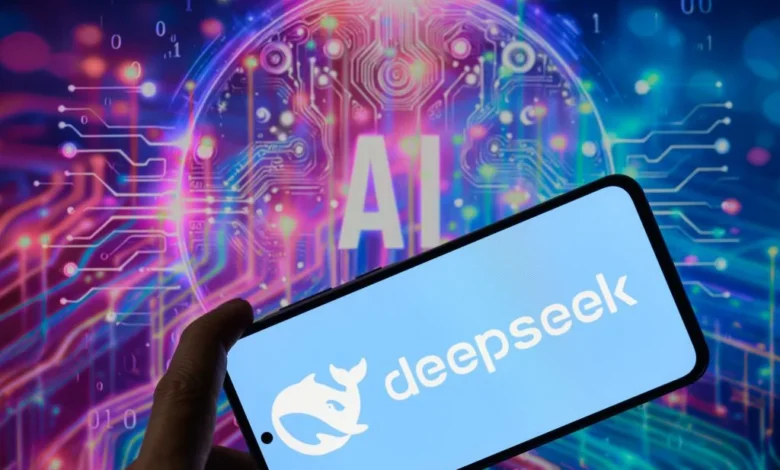
Federal agencies have identified several China-based firms as active participants in these campaigns, including DeepSeek, MoonshotAI, Alibaba, MiniMax, StepFun, and Z.AI. These organizations frequently employ proxies, sophisticated bot networks, and fraudulent user accounts to evade detection by the victimized U.S. companies. The cumulative effect of these operations is the extraction of billions of dollars in research and development value, effectively allowing Chinese firms to leapfrog years of innovation.
A Chronology of Deception
The suspicion surrounding Chinese AI development reached a tipping point last year when DeepSeek, a Chinese startup, claimed to have developed an advanced AI system at a fraction of the cost of its American counterparts. While the claim initially sent ripples of concern through global financial markets, the recent CISA report suggests the "efficiency" touted by DeepSeek was largely a result of intellectual property theft.
- Mid-2023: Early reports of unusual, high-volume query patterns begin to surface among U.S. AI developers, though the exact nature of the traffic is initially dismissed as standard API stress-testing.
- Early 2024: Security researchers at major AI labs notice patterns of "recursive prompting," where entities attempt to map out the underlying logic of models.
- Late 2024: DeepSeek garners international headlines for its "low-cost" training claims, which the CISA advisory later labels as misleading, noting the exclusion of the "true cost of data acquired through extensive malicious distillation."
- February 2025: Anthropic publishes a detailed threat intelligence report outlining the mechanics of distillation attacks and the potential for widespread proliferation of dangerous AI capabilities.
- Mid-2025: CISA, the FBI, and the NSA formalize the findings in a joint advisory, acknowledging that the theft is likely occurring with the tacit, if not direct, knowledge of the Chinese government.
The Economic and Security Implications
The implications of this silent theft extend far beyond the balance sheets of Silicon Valley. For investors, the normalization of "distilled" AI models creates a distorted marketplace. When a competitor can launch a model that mimics the performance of a $100 million system for a few million dollars in infrastructure costs, it creates an unsustainable environment for legitimate innovators. This creates a disincentive for domestic investment in long-term, high-risk AI research, as the fruits of that labor are effectively socialized across the global AI landscape by malicious actors.
Furthermore, there is a profound national security dimension to this issue. Anthropic and other security researchers have warned that when these high-end models are distilled, the safety guardrails that U.S. companies have spent years building—such as filters preventing the creation of chemical or biological weapons—are often stripped away.
"Dangerous capabilities may proliferate with many protections stripped out," the report warns. "Authoritarian governments could deploy these tools for offensive cyber warfare, mass-scale disinformation campaigns, and pervasive, real-time surveillance of their populations."
The prospect of unrestrained, high-capability AI falling into the hands of regimes with track records of human rights abuses poses a significant threat to global stability. If an adversary can replicate the most advanced American defensive technologies and repurpose them for offensive military or surveillance applications, the strategic balance of power could shift in favor of those who bypass the global norms of AI ethics and safety.
The Federal Response and Industry Defense
The U.S. government, led by CISA, is now calling for a "coordinated, ecosystem-wide response." However, there is no silver bullet. Detection remains difficult because the attacks are designed to look like legitimate user behavior. As U.S. firms harden their defenses, attackers shift to even more obfuscated methods, such as utilizing decentralized networks of domestic proxies to mimic the traffic of ordinary users.
The industry’s current defense strategy is multi-faceted:
- Enhanced Anomaly Detection: Implementing machine learning models that can identify the specific "signature" of a distillation attack—usually characterized by high-entropy queries and unusual patterns of questioning.
- Customer Verification: Moving toward more stringent identity requirements for API access, which creates a friction point for mass-scale automated attacks.
- Intelligence Sharing: Establishing a real-time framework for AI companies to share threat data regarding new injection techniques, ensuring that a patch or defense developed by one company can be deployed across the sector.
Despite these efforts, industry experts remain cautious. "There is no foolproof way to mitigate these attacks," according to the CISA advisory. "As long as the models remain accessible to the public, the temptation to reverse-engineer them will persist."
The Future of the Global AI Race
The competitive tension between the U.S. and China is increasingly defining the 21st-century technological landscape. Washington has made the dominance of AI a primary national security objective, arguing that the nation that leads in artificial intelligence will define the geopolitical standards of the future.
However, the prevalence of distillation attacks suggests that this is not merely a contest of research budgets or chip fabrication capacity. It is a contest of integrity and systemic security. The ability of U.S. firms to maintain a lead in AI now depends as much on their ability to protect their intellectual property as it does on their ability to build the next generation of models.
For the investor, the landscape is increasingly volatile. The emergence of cheaper, "efficient" Chinese models is likely to put continued downward pressure on pricing, forcing U.S. companies to focus on premium, highly secure, and enterprise-grade models that are harder to replicate. The next few years will likely see a hardening of the AI ecosystem, with more restrictive access, higher costs for usage, and a greater emphasis on sovereign AI initiatives.
Ultimately, the issue of distillation is a microcosm of the broader challenges facing the digital era: how to foster an open, innovative global AI market while preventing the most powerful technologies ever created from being weaponized by those who operate outside the rule of law. As CISA and other agencies continue to monitor the threat, the industry must prepare for a long-term, cat-and-mouse game where the cost of security will be the price of maintaining a technological edge.