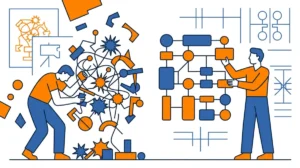
The persistent struggle to integrate new habits into a daily routine is frequently misdiagnosed as a failure of willpower or personal discipline. However, recent behavioral analysis suggests that the primary obstacle is not a lack of effort, but a structural mismatch between the intended habit and the individual’s current life context. Behavioral scientists emphasize that habits do not exist in a vacuum; they are tethered to the "seasons" of life, where professional demands, family obligations, and environmental constraints dictate the feasibility of any new behavioral protocol.
The Anatomy of Habit Failure
When individuals attempt to adopt a new routine—such as a morning gym session paired with extensive reading—they often fail because they treat the strategy as a modular plug-and-play system. If a parent with young children attempts a morning routine designed for a single professional, the resulting "crash" is often labeled as a character flaw. In reality, this is a design flaw.
Behavioral experts note that the brain naturally resists change, particularly when the cognitive load of a new task is high. By attempting to force an "optimized" or "impressive" version of a habit into a chaotic schedule, individuals create friction that eventually leads to abandonment. The phenomenon of "hustle culture" exacerbates this, as people are encouraged to aim for the most efficient, high-performance version of a task immediately, rather than building a foundation of consistency.
The Physics of Habit Stacking: Leveraging Inertia
The most effective method for long-term behavioral change involves "habit stacking," a concept popularized by behavioral researchers to bypass the brain’s inherent resistance to change. The technique operates on the principle of inertia: it is significantly easier to add a new behavior to a sequence of events already in motion than it is to initiate a new sequence from a state of rest.
The formula is defined as: After [X], I will [Y].
In this construct, [X] represents a non-negotiable, pre-existing automatic behavior, such as brushing one’s teeth, starting a vehicle, or walking through a doorway. By anchoring the new behavior [Y] to an established "trigger," the individual eliminates the need for decision-making—a process that consumes significant cognitive energy. If [X] is not already an automatic response, the stack will fail, as the brain is forced to manage two competing new tasks.
Identifying the "Waiting Window"
Data from time-use studies consistently indicate that the average individual possesses significant "dead time" throughout the day—moments spent waiting for external processes to conclude. These windows include waiting for a microwave to finish, water to boil, a computer to boot, or a commute to begin.
Rather than viewing these as gaps in productivity, experts suggest utilizing them as prime real estate for "micro-habits." By attaching a minimal action to these triggers, individuals can cultivate consistency without adding a single minute to their overall schedule. For example, a two-minute meditation session or a series of physical movements performed while waiting for a microwave to heat food transforms passive downtime into a deliberate, productive habit.
The Necessity of Specificity and "Next Action" Logic
Ambiguity is the primary antagonist of consistent behavior. Research into productivity methodologies—most notably David Allen’s Getting Things Done (GTD) framework—highlights the necessity of the "Next Action." A goal stated as "I will do yoga" is too vague to be actionable, leaving the individual to debate the how, when, and where of the task.
Conversely, a specific instruction, such as "After coming downstairs, I will perform the 20-minute Lululemon yoga class on YouTube," removes the decision-making barrier. This level of granularity provides a clear, unmistakable trigger and an equally clear response, leaving no room for the "excuse engine" of the brain to negotiate. When a task is ambiguous, the brain perceives it as a potential threat to energy reserves, often leading to procrastination.
The Pitfalls of Over-Engineering
A common failure mode for high-achievers is the tendency to over-engineer their systems. In the pursuit of optimization, individuals often treat the process of "tweaking" their habits as equivalent to actually performing the work. However, experts caution that optimization should only occur after a habit is firmly established.
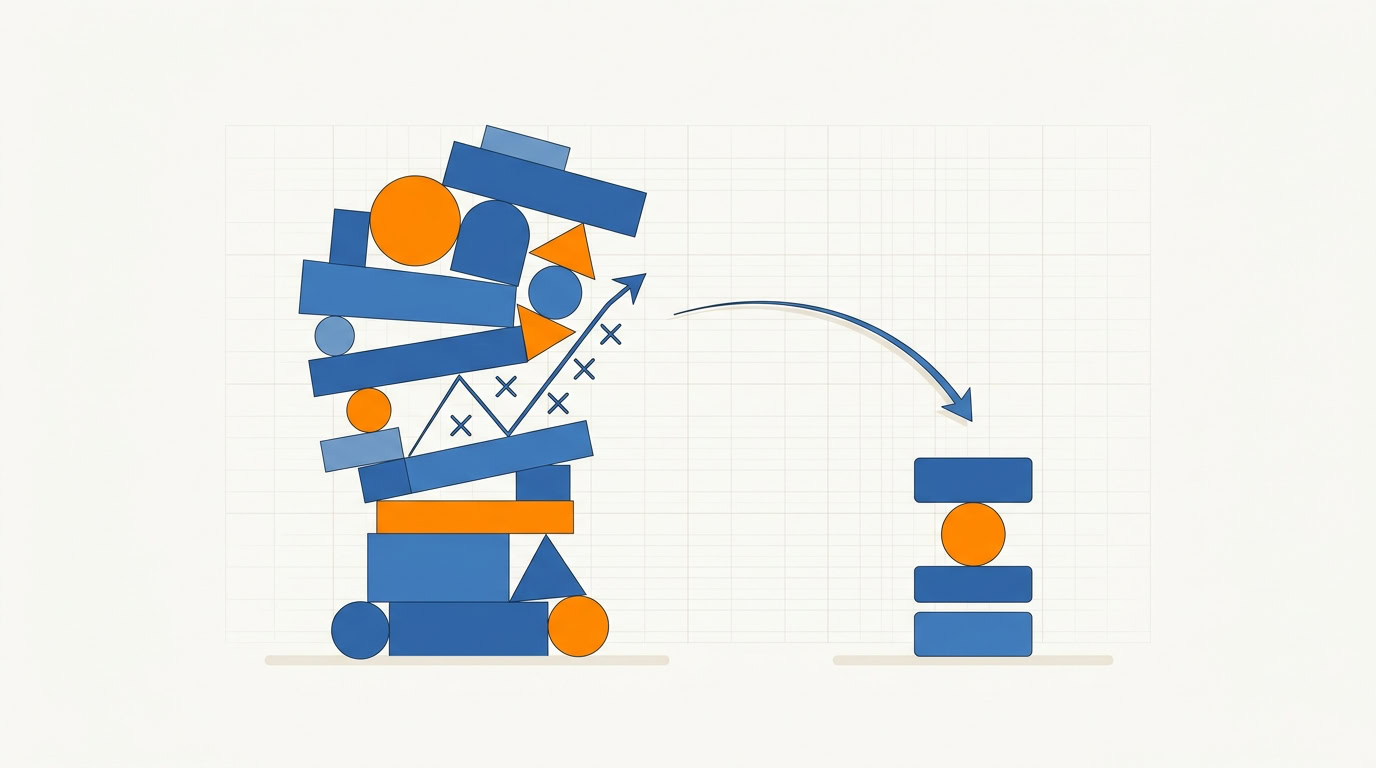
The "minimum viable habit" is the most critical metric for success. This is defined as the smallest, most manageable version of a task that can be completed even on the most chaotic days. If a habit cannot survive a busy, messy schedule, it is likely too complex. By starting small—such as two minutes of meditation instead of thirty, or five pushups instead of a full workout—the individual builds the neural pathways required for consistency. Once that consistency is cemented, the habit can be scaled or optimized.
Implications for Productivity Design
The failure of a habit stack should be viewed as a signal to return to the design phase. A structural audit involves three questions:
- Is the stack too large for my current life season?
- Is the trigger (X) or the action (Y) too fuzzy?
- Am I attempting the "optimized" version instead of the "minimum viable" version?
If a routine fails, the solution is rarely more willpower. Instead, it is the deliberate shrinking of the habit. By stripping the action down to its simplest form, the individual creates a "clean default" that can be maintained despite life’s inevitable fluctuations.
Case Study: The Micro-Habit Implementation
Recent industry applications of these principles show significant success rates when users move away from rigid, high-impact routines toward micro-habit stacks. For instance, in corporate training environments, employees encouraged to stack short, task-specific habits onto existing workflows reported a 40% higher adherence rate over a six-month period compared to those tasked with implementing broader, "idealized" productivity systems.
The takeaway for professionals and individuals alike is clear: the objective is not to build the most impressive routine, but the most resilient one. By identifying the waiting moments in one’s day and anchoring simple, specific actions to them, individuals can bypass the resistance of the brain and build momentum.
As of September 2026, the consensus among productivity experts remains that the "hustle trap"—the desire for immediate, perfect optimization—is the primary barrier to long-term success. True progress is made through the repetition of the simplest possible version of a habit, allowing the individual to thrive within their actual, rather than desired, life context. By refusing to over-engineer, and by respecting the limitations of one’s current season, individuals can ensure that their habits remain a permanent, functional part of their lives, rather than a fleeting experiment in willpower.