CC Sabathia and Amber Sabathia Reflect on Life After Baseball, the PitCCh In Foundation, and the New Frontier of Post-Athletic Careers

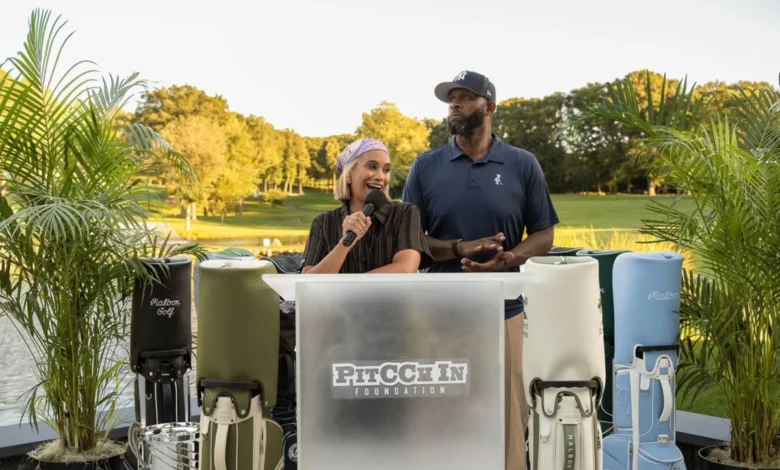
Long before the final pitch was thrown and the cleats were permanently stored away, legendary Major League Baseball pitcher CC Sabathia understood that his impact on the game—and on society—would extend far beyond the white lines of the diamond. Across a glittering 19-season career that redefined durability and dominance for the modern left-handed starting pitcher, Sabathia established himself as an anchor for the Cleveland Indians, Milwaukee Brewers, and most notably, the New York Yankees, where he captured a World Series title in 2009. Yet, as the baseball world honors his storied career with the retirement of his iconic No. 52 jersey at Yankee Stadium, Sabathia and his wife, Amber Sabathia, are finding themselves at the intersection of athletic legacy and sustained philanthropic enterprise.
The couple’s journey into post-playing life is not merely a tale of a superstar transitioning into retirement; it is a masterclass in institutionalizing community impact and redefining the business of sports from the inside out. Through the sustained growth of the PitCCh In Foundation and Amber Sabathia’s high-profile pivot into player representation with CAA Sports, the Sabathia family has successfully translated the high-stakes discipline of professional sports into enduring commercial and philanthropic success.
From the Pitching Mound to Community Stewardship
To understand the endurance of the PitCCh In Foundation, one must examine its origins, which trace back to 2008. At the time, CC Sabathia was navigating one of the most volatile and scrutinized periods of a professional athlete’s career: major free agency. Amidst the swirling speculation regarding multi-million-dollar contract offers and geographic relocation, the Sabathias made a conscious decision to anchor their family’s values in structured philanthropy.
Having grown up utilizing the resources of a local Boys & Girls Club in Vallejo, California, CC Sabathia harbored a deep-seated appreciation for youth development programs that utilized athletics and education as dual pillars for upward mobility. While the pitcher had previously engaged in ad-hoc financial donations to his hometown, both he and Amber recognized the limitations of simply writing checks. They sought sustainable, measurable change.
"CC had already donated monetarily to our hometown of Vallejo, but we wanted to make sure the money we were donating was going to the right places and making true change," Amber Sabathia recalls. "Starting the foundation seemed the only way to do that."
Launched officially in 2008, PitCCh In was designed not as a vanity project, but as an operational engine for youth enrichment. Over the subsequent decade and a half, the foundation structured its core mission around three signature initiatives: the All-Star Baseball Clinic, the Youth Backpack Program, and comprehensive Field Renovations. These programs provide tangible resources—ranging from school supplies to state-of-the-art athletic facilities—to underserved youth in communities where the Sabathias have lived, played, and worked.
Even as CC navigated the grueling 162-game MLB schedule, which demands intense physical conditioning, international travel, and relentless media scrutiny, he maintained an active, hands-on role in the foundation’s operations. Affectionately referring to PitCCh In as his "fifth child," the World Series champion ensured that his off-field priorities matched his on-field commitments. With his retirement in 2019 following a shoulder injury that brought a definitive close to his playing days, that dedication transitioned from a demanding balancing act to a full-time family mission.
Leveraging Networks for Sustainable Philanthropy
A critical component of modern athletic philanthropy is the ability to leverage high-level professional networks to secure funding and drive public awareness. For PitCCh In, this has manifested in high-profile fundraising events, most notably the annual Sabathia Shootout and the organization’s signature Golf Classic, which recently marked its sixth anniversary.
These events serve as a nexus where sports, entertainment, and corporate philanthropy intersect. The annual golf classic routinely draws an elite roster of athletes, entertainers, and media personalities, ranging from Pro Football Hall of Famer Michael Strahan and media icon Angie Martinez to former NBA stars J.R. Smith and Matt Barnes, alongside baseball luminaries like Gary Sheffield and Dellin Betances.
While the glitz of celebrity tournaments provides the necessary capital to sustain the foundation’s multi-city programming, CC Sabathia maintains that the true metric of success is found on the ground, away from the cameras and golf courses.
"The time that we’re able to spend with the kids, seeing the kids every single year from different Boys & Girls Clubs, from our Christmas caravans to our field renovations," CC Sabathia notes. "We have a lot of different volunteers with the Bronx Knights and different things, and just seeing the kids grow over the years has been the coolest thing."
By embedding the foundation deeply into the fabric of communities like the Bronx and Vallejo, the Sabathias have avoided the common pitfall of transient athlete-led charities that dissipate shortly after a player’s retirement. Instead, PitCCh In has evolved into an enduring institution, proving that athletic careers may have a finite expiration date, but community stewardship can endure indefinitely.
The Business of Baseball: Amber Sabathia’s Pivot to CAA Sports
While CC Sabathia’s post-playing trajectory involves philanthropic expansion and ceremonial accolades, Amber Sabathia carved out an entirely distinct and pioneering path within the commercial sports industry. In 2021, two years after her husband hung up his cleats, Amber stepped into the highly competitive arena of sports management, joining CAA Sports as a baseball agent.
This career move was neither accidental nor superficial. For nearly two decades, Amber had occupied a front-row seat to the tumultuous economic and psychological realities of Major League Baseball. She experienced firsthand the anxiety of trade deadlines, the existential dread of free agency negotiations, and the critical importance of absolute trust between a player and his advisory team.
"Living through CC’s career taught me the human side of the business: what a trade feels like for a family, what free agency does to a household, how much trust matters between a player and the people advising him," Amber explains. "I lived every high and low alongside him, so I understand what players and their families are going through in a way you cannot learn from a book."
Transitioning from an athlete’s spouse to an institutional certified agent, however, required mastering the rigorous technical mechanics of the industry. Beyond empathy and emotional intelligence, Amber was forced to immerse herself in the complex nuances of Major League Baseball’s Collective Bargaining Agreement (CBA), advanced contract structures, luxury tax implications, and strategic negotiation tactics.
Industry analysts note that the traditional sports agency landscape has historically struggled with demographic diversity, particularly in leadership and advisory roles. By entering the field with a background rooted in the lived experiences of players’ families, Amber brought a differentiated value proposition to CAA Sports. Her approach prioritizes holistic career management over transactional contract brokering, recognizing that a player’s professional longevity is inextricably linked to their mental well-being, financial literacy, and family stability.
"As a player’s wife, I thought I understood the job, but being the advisor is different," she reflects. "You’re helping someone make decisions that affect their family, their future, and their legacy. The trust players place in you is humbling, and I don’t take it lightly."
This philosophy of mutual trust has yielded tangible dividends in her client roster, fostering an environment of loyalty that distinguishes her practice in a cutthroat industry. "My clients are loyal to me, and for that respect, I go hard for them each day," she states. "I’m excited for the future of my clients and the careers they have ahead. Being a part of that is an honor."
The Anatomy of a Modern Athletic Transition
The simultaneous celebration of CC Sabathia’s jersey retirement by the New York Yankees and the ongoing expansion of the Sabathia family’s professional and philanthropic portfolios highlights a broader economic and cultural evolution among elite athletes. Historically, the retirement of a star athlete was frequently followed by a period of professional disorientation, financial mismanagement, or public obscurity. Modern sports science, financial literacy programs, and entrepreneurial ecosystems, however, have paved the way for sophisticated career pivots.
For Sabathia, whose career earnings exceeded $260 million according to baseball financial databases, retirement was not a financial necessity but a psychological and operational recalibration. Unlike athletes who struggle to find purpose outside of competition, Sabathia seamlessly funneled his competitive drive into his family, his foundation, and media ventures, including podcasting and baseball analysis.
Yet, even as media spotlights and retrospective honors multiply—culminating in the Yankee Stadium ceremony—Sabathia remains steadfast in separating external accolades from internal purpose.
"We don’t plan stuff around, you know, getting accolades," CC Sabathia notes regarding the timing of public recognitions and foundation initiatives. "It’s just whatever’s best for the kids, whatever can work for their schedule and our schedule, and whatever works best for PitCCh In. A lot of stuff that’s been coinciding, which has been great. But it’s not anything we consciously do."
This pragmatic philosophy defines the Sabathia household’s approach to the future. Whether navigating the complexities of high-level contract negotiations on behalf of emerging baseball stars or expanding the reach of the PitCCh In Foundation into new metropolitan markets, the couple has constructed a post-athletic framework defined by intentionality, institutional durability, and mutual support.
As the pinstriped No. 52 permanently takes its place in Monument Park alongside baseball’s immortalized greats, it serves as a dual symbol. It honors a fierce competitor who mastered the physical demands of pitching 19 grueling major league seasons, while simultaneously signaling the enduring legacy of a family that understands that the true measure of a career is not found in the statistics left on the field, but in the lives uplifted long after the final out is recorded.
Related posts: