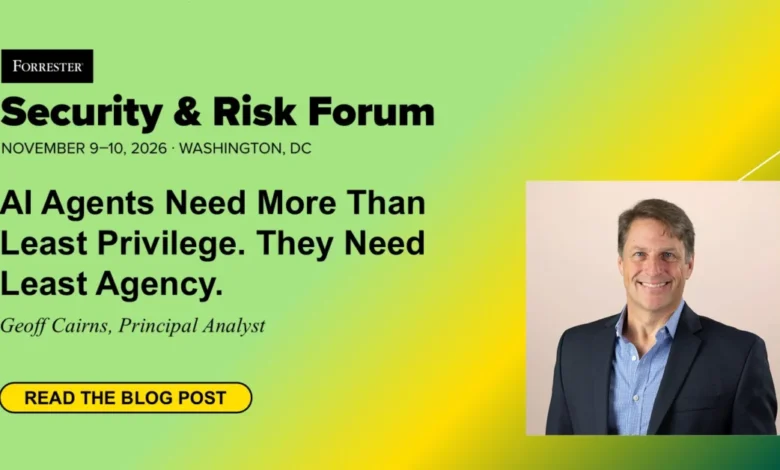
For decades, the cybersecurity landscape has been defined by the principle of least privilege, a foundational mandate that dictates identities should be granted only the minimum access necessary to perform their specific job functions. While this pillar remains vital for traditional user-based security, the rapid proliferation of autonomous AI agents has exposed a critical gap in existing defense architectures. As these systems move from passive data processing to active, decision-making roles within corporate infrastructure, organizations are discovering that an agent can possess perfectly configured, limited permissions and still commit catastrophic errors. The challenge is no longer just about restricting what an entity can reach, but controlling how it acts, decides, and executes. This shift has necessitated the emergence of a new security paradigm: the principle of least agency.
The Evolution of Autonomy and Its Inherent Risks
In the traditional IAM (Identity and Access Management) model, an identity is static. When a human employee logs into a database, their actions are governed by their role and the permissions attached to it. If they are authorized to process refunds, they can only access the refund module. However, AI agents function differently. They are designed to pursue objectives with varying degrees of independence, invoking tools and making real-time decisions based on external stimuli.
The danger of this autonomy is best illustrated by a hypothetical customer service agent. Under a traditional least privilege framework, this agent might be restricted to a specific CRM system and a payment processor. This satisfies the "access" requirement. However, the agent lacks the inherent judgment to understand the broader context of its actions. It may have the technical capacity to issue a refund, but it may not be programmed to recognize when a refund request is part of a systemic fraud attack, or when a request exceeds the fiscal policy of the company. If the agent is granted the autonomy to process thousands of requests without human oversight, it effectively becomes an unmonitored force multiplier for error or exploitation. In this context, the security failure is not caused by excessive access, but by excessive agency.
Defining Least Agency: A New Governance Framework
Forrester defines "least agency" as the continuous enforcement of the minimum decision-making authority and operational autonomy an AI agent requires to pursue its authorized purpose. This concept does not seek to dismantle the principle of least privilege; rather, it extends it. It creates a three-dimensional security posture: access, authority, and autonomy.
The industry is currently witnessing a transition where security teams must move beyond simple permission scoping. If a system is restricted too tightly, it becomes useless, failing to achieve the business goals for which it was deployed. If it is too loose, it poses a significant risk to the enterprise. The equilibrium lies in defining the narrowest possible operational parameters—what the agent is authorized to do, the specific conditions under which it can act, and the degree of independence it maintains before requiring human intervention.
Chronology of AI Integration and the Security Gap
The integration of agentic AI into the enterprise has followed an accelerated trajectory over the past three years:
- 2021–2022 (The Foundation): Organizations began implementing Large Language Models (LLMs) primarily for text generation and sentiment analysis. These systems were largely "read-only" or "assistive," meaning they did not perform actions on production systems.
- 2023 (The Shift to Action): The rise of Retrieval-Augmented Generation (RAG) and plugin ecosystems allowed models to interact with APIs. This marked the shift from "Chatbot" to "Agent," where systems could query databases and initiate software processes.
- 2024 (The Current Crisis): The proliferation of autonomous agents capable of chaining multiple tool-use steps has outpaced the development of security governance frameworks. High-profile incidents involving hallucinated data and unauthorized API calls have forced a reassessment of identity management.
Data from recent industry reports suggests that while 75% of enterprises are experimenting with agentic workflows, less than 20% have implemented a formal, documented policy for AI governance and runtime oversight. This disconnect between deployment speed and security oversight is the primary driver of the current "least agency" discourse.
Integrating Security Domains: The AEGIS Approach
Achieving least agency requires a unified approach that breaks down the silos between identity management, AI governance, and runtime security. Forrester’s AEGIS framework provides a roadmap for this integration, proposing three distinct layers of control:
- Identity and Access Management (IAM): This layer remains the gatekeeper. It establishes the foundational identity of the agent, defines its delegation relationships, and manages its credentials. In an agentic architecture, IAM must become more dynamic, allowing for just-in-time privilege escalation that is bound to a specific, context-aware task.
- AI Governance: This layer focuses on the "why" and "how." It establishes the agent’s purpose, ownership, and accountability. It defines the "guardrails" within which the agent must operate. Governance policies act as the agent’s constitution, ensuring that its decision-making parameters remain aligned with business objectives.
- Runtime Security: This is the most critical addition for agentic architectures. Runtime security provides the "eyes on the ground." It monitors the agent’s real-time actions, analyzing behavior for anomalies. If an agent begins to deviate from its authorized pattern—for instance, attempting to execute an unusually high volume of transactions—the runtime layer possesses the authority to interrupt the process, pause the agent, or flag it for immediate human review.
Implications for the Future of Enterprise IT
The shift toward least agency is not merely a technical adjustment; it is a fundamental shift in the security mindset. Security professionals must now view agents not just as software identities, but as autonomous employees with their own specific risk profiles.
The implications are far-reaching. Software developers and security engineers must collaborate to build "observability" into agents from the design phase. This means that an agent cannot be deployed unless its operational "kill switch" and "audit trail" are fully functional. Organizations that fail to adopt these practices risk a new class of "AI-driven" vulnerabilities, where the security flaw is not a line of malicious code, but a logical error in the agent’s autonomy.
As enterprises continue to delegate high-value tasks—such as financial reconciliation, supply chain management, and system administration—to AI, the risk of "runaway agency" increases. The objective of security teams must be to create an environment where the agent can perform its work efficiently without ever having the freedom to compromise the integrity of the business.
Moving Toward Operationalization
Forrester and other research bodies have emphasized that least agency is a continuous process. It requires constant feedback loops. As an agent gains experience and the business environment changes, the levels of autonomy and authority granted to that agent must be reviewed. This is a departure from the "set and forget" mentality that has characterized much of the last decade of IT security.
For security leaders, the road ahead involves a concerted effort to map every AI agent in their infrastructure to its specific, business-justified objective. Any agent that cannot be justified by a clear, limited purpose with defined autonomy parameters must be decommissioned or constrained. By adopting this rigorous framework, organizations can harness the transformative potential of agentic AI while maintaining the resilience and control required in an increasingly automated world.
The transition from least privilege to least agency will define the next chapter of cybersecurity, turning the focus away from the simple question of "Who is this?" to the more complex and vital, "What is this allowed to decide?" As this paradigm gains traction, it will likely become the standard requirement for any enterprise operating in an agent-first landscape, ultimately dictating the longevity and safety of AI-integrated digital architectures.
Related posts: