Adobe’s latest ad makes the case for human creativity at a time when AI is challenging the economics of the creative software business.

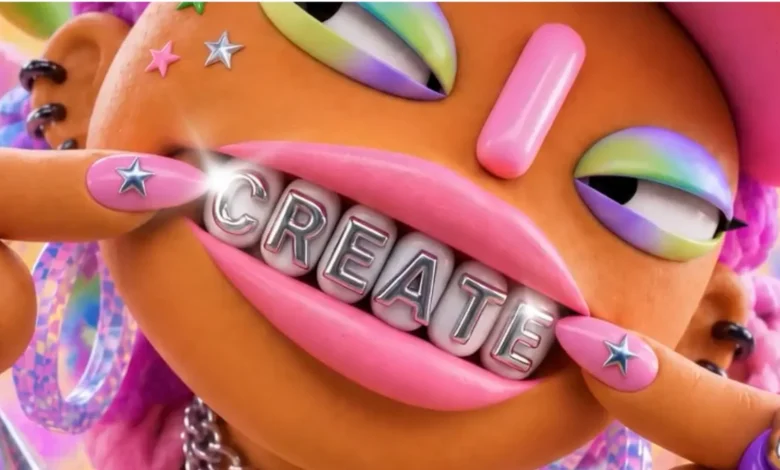
The tech giant unveiled its "Made to Create" campaign at Adobe Max, the company’s flagship annual creativity conference held this year in Miami. The initiative serves as a strategic pivot, aiming to reassert the indispensable role of the human artist in an era increasingly dominated by generative artificial intelligence. By gathering more than 30 artists from 18 countries, Adobe is attempting to bridge the gap between its sophisticated algorithmic tools and the human ingenuity required to wield them effectively.
A Strategic Pivot in Marketing
This campaign represents a significant shift in Adobe’s marketing philosophy. According to Lara Balazs, Adobe’s chief marketing officer, this is the first time in five years that the company has consolidated the breadth of its product ecosystem—spanning Creative Cloud, Experience Cloud, and Document Cloud—into a single, cohesive narrative.
For the past several years, Adobe has been aggressively integrating its Firefly generative AI models into its core suite of products, including Photoshop, Illustrator, and Premiere Pro. While these tools have significantly increased productivity, they have also sparked anxiety among creative professionals regarding job displacement and the devaluation of manual artistic labor. "Made to Create" is, in effect, a branding counter-offensive intended to position AI not as a replacement for the artist, but as a collaborative partner that amplifies human intent.
The Evolution of Adobe Max
Adobe Max has long served as the industry’s bellwether for the future of digital design. Since its inception, the conference has evolved from a technical training workshop into a massive cultural event that sets the tone for the entire creative economy.
Historically, Adobe Max focused on feature updates and software demonstrations. However, in the last three years, the conference agenda has been fundamentally restructured to address the existential questions posed by the rise of large language models and diffusion-based image generators. The Miami venue, characterized by its vibrant creative community and international reach, provided a symbolic backdrop for Adobe to emphasize the "global" nature of its user base. By highlighting 30 international artists, the company is attempting to demonstrate that its software remains a universal language, regardless of regional shifts in labor markets or AI regulation.
Market Context and Economic Pressures
The creative software sector is currently undergoing its most significant transformation since the transition from analog to digital design in the 1990s. The emergence of competitors like Midjourney, DALL-E, and various open-source generative tools has forced Adobe to justify its premium subscription model.
Industry data suggests that the market for generative AI in creative workflows is expected to grow at a compound annual growth rate (CAGR) of over 30% through 2030. For Adobe, maintaining its market share requires proving that its "Firefly" model is not just technologically advanced, but also ethically sourced. A central pillar of the "Made to Create" campaign is the emphasis on "commercially safe" AI. Unlike many competitors that scrape public data indiscriminately, Adobe has leaned heavily into its Adobe Stock library to train its models, a point the company highlights as a key differentiator for corporate clients who are wary of copyright infringement risks.
Chronology of the AI Integration
The path to "Made to Create" can be traced back to early 2023, a pivotal year for Adobe’s strategic roadmap:
- March 2023: Adobe announces the beta of Firefly, its generative AI model, signaling a departure from traditional editing tools.
- September 2023: Adobe officially integrates Firefly into Photoshop and Illustrator, bringing "Generative Fill" to the masses.
- October 2023: Adobe Max 2023 focuses heavily on "AI-assisted creativity," with a focus on ease of use for non-professionals.
- May 2024: The company releases major updates to Premiere Pro, integrating AI-driven audio and video editing features.
- October 2024: Adobe Max 2024 launches the "Made to Create" campaign, signaling a move away from just "AI features" toward a broader narrative about human-led creative agency.
Stakeholder Perspectives and Industry Reaction
The reception among creative professionals remains bifurcated. On one hand, institutional users—design firms, marketing agencies, and media conglomerates—have largely embraced the efficiency gains provided by Adobe’s AI tools. The ability to automate repetitive tasks like image masking, background removal, and audio cleanup has allowed these entities to scale production significantly.
Conversely, the independent creator community remains vocal about their concerns. Critics argue that even with "commercially safe" models, the commoditization of artistic output could lead to a "race to the bottom" in pricing for creative services. Independent illustrators and photographers have raised questions about how much of their work is being effectively "learned" by the software, even if their specific images are not being directly replicated.
In response, Adobe executives have emphasized their "Human-First" policy. "Our goal is to give creators superpowers, not to take the brush out of their hands," said one Adobe spokesperson during a press briefing at the Miami event. This sentiment echoes the core message of the new campaign, which focuses on the "creative spark"—the intangible human element that decides the composition, color palette, and narrative intent of a final piece.
Analyzing the Broader Implications
The shift to "Made to Create" carries profound implications for the creative labor market. By framing AI as a tool rather than a competitor, Adobe is attempting to mitigate the threat of "creative burnout." The internal logic is that if AI handles the "drudge work," artists can spend more time on high-level conceptualization and creative direction.
However, the economic reality is more complex. While software can handle technical execution, the premium placed on human conceptual work is fluctuating. As entry-level tasks become automated, the barrier to entry for creative fields is lowering. This has the potential to saturate the market, making it more difficult for junior-level creatives to find traditional "apprenticeship" roles that were once essential for developing long-term skill sets.
Furthermore, the integration of AI into Adobe’s suite changes the nature of the software’s value proposition. It is no longer just a "tool for craft"; it is becoming a "co-pilot for ideation." This transition is essential for Adobe to remain relevant in a future where software might soon be able to generate entire layouts from a single prompt. By investing in the "Made to Create" narrative, Adobe is betting that professional clients will continue to pay a premium for tools that offer control, precision, and legal peace of mind.
Future Outlook: The Role of the Human in the Loop
As we move toward 2025, the industry will watch closely to see if Adobe’s messaging resonates with its core user base. The "Made to Create" campaign is not merely a marketing exercise; it is an attempt to define the "new normal" of the creative industry.
The success of this strategy will likely depend on three factors:
- Technological Superiority: Can Adobe continue to innovate faster than open-source competitors?
- Ethical Branding: Can they maintain the trust of the creative community by providing clear opt-out mechanisms and fair compensation for contributors?
- Educational Integration: Can Adobe effectively teach a new generation of creators how to use AI as a collaborator rather than a replacement?
In conclusion, Adobe is navigating a precarious transition. By launching "Made to Create" at a time of high anxiety, the company is attempting to claim the moral and intellectual high ground. Whether this messaging successfully bridges the divide between the disruptive potential of AI and the enduring value of human artistry remains to be seen. However, by centering the human artist in its most significant campaign in half a decade, Adobe has signaled that it understands the core of its business is not software—it is the people who use it.