The Evolution of B2B Sales: Why Data-Driven Precision Has Replaced the Volume-First Era


The fundamental landscape of the consumer experience has undergone a tectonic shift over the past two decades, permanently altering the mechanics of B2B purchasing. When the proliferation of smartphones began to saturate the global market in the late 2000s, businesses initially viewed this mobile revolution as a new conduit for traditional outreach. However, the result was a radical transformation in power dynamics: information became ubiquitous, and the modern buyer emerged as an autonomous, highly informed entity. Today, the B2B buyer is entirely digital, exercising complete control over their journey, often completing a significant portion of their research and evaluation long before engaging with a sales representative.

The Chronology of a Sales Paradigm Shift
To understand the current state of sales inefficiency, one must examine the timeline of the "Volume Era." From the early 2000s through roughly 2015, the prevailing wisdom in sales organizations was centered on throughput. With the rise of CRM software and early automation tools, managers incentivized "random acts of selling"—a spray-and-pray methodology where the primary metric for success was the number of outbound calls, emails, and touchpoints generated by a rep.
By 2018, however, academic and industry research—such as that published by the Harvard Business Review—began to highlight a stark reality: the "digital native" buyer was no longer responsive to high-volume, low-context outreach. These buyers had developed sophisticated filters for marketing noise and were increasingly relying on peer reviews, online forums, and self-service white papers to construct their own buying criteria.

By 2021, the limitations of the "busy work" model reached a breaking point. Organizations that prioritized quantity over quality found themselves scaling waste rather than revenue, as sales teams spent their time chasing leads that were either unqualified or already well beyond the consideration phase of their internal decision-making processes.
Data as the New Currency of Sales
The integration of data into the sales process was intended to bridge the gap between buyer and seller. Yet, in many organizations, this data has remained siloed or misunderstood. While data can illuminate behaviors and provide relevant content, its efficacy is entirely dependent on the quality of the insights derived.

Industry analysis indicates that many sales organizations suffer from "analysis paralysis," where reps are flooded with data points but lack the actionable intelligence required to interpret them. When a sales organization fails to translate raw data into a structured process, the result is erratic targeting. Reps often find themselves mid-cycle in a deal, only to discover that they have failed to engage key stakeholders within the client organization. This oversight, common in high-pressure, volume-driven environments, is a direct consequence of a lack of guided selling—the transition from purely intuitive or "guess-based" selling to a process informed by predictive intelligence.
The Fallacy of Productivity: Busy vs. Effective
A persistent issue in modern sales management is the confusion between "productivity" and "activity." In many boardrooms, leadership mistakenly equates a high volume of daily outreach with high performance. Fact-based analysis of modern sales operations suggests that this is a dangerous fallacy. When a manager mandates an increase in activity without providing a corresponding increase in the quality of targeting, they are merely accelerating the rate of inefficiency.

Waste, in the context of sales, is not static; it scales proportionally with the size of the team. If a sales team of ten is targeting the wrong persona, the inefficiency is manageable. If that team grows to one hundred, the opportunity cost—measured in wasted hours and lost market share—becomes an existential threat to the organization. This "busy-work trap" often results in high churn rates among sales representatives, who become discouraged by low conversion rates despite high levels of effort.
Supporting Data and Market Realities
The shift in B2B buying behavior is substantiated by data from various research institutions. Recent studies have consistently shown that roughly 70% to 80% of B2B decision-makers prefer remote human interaction or digital self-service. This preference is driven by the desire for speed and convenience, as well as the need to minimize the "sales friction" often associated with traditional, vendor-led interactions.

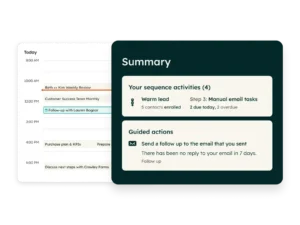
Furthermore, the complexity of B2B buying groups has increased. A typical B2B buying decision now involves an average of six to ten decision-makers, each with their own set of requirements, pain points, and evaluation criteria. When a sales process is not structured to account for this complexity, the likelihood of a deal stalling—or falling through entirely—increases exponentially. Sales organizations that have successfully navigated this transition are those that utilize "guided selling" platforms, which provide real-time recommendations on which stakeholders to contact, what content to provide, and when to advance to the next stage of the funnel.
The Path Forward: From Guessing to Guided Selling
The transition from "guessing" to "guided" selling represents the most significant evolution in B2B sales in the last decade. Guided selling replaces the intuition-based, manual efforts of the past with a systematic, AI-informed approach. It allows sales representatives to spend their time on high-value interactions rather than manual data entry or lead prioritization.

Official responses from industry leaders in the SalesTech space suggest that the future of the profession lies in the automation of the mundane, leaving the human elements—empathy, complex negotiation, and relationship management—to the professionals. By removing the guesswork, organizations can ensure that their reps are targeting the right accounts at the right time with the right message.
Broader Implications and Strategic Outlook
The broader implications for the global economy are clear: companies that fail to adopt a data-driven, precision-based sales model will face significant competitive disadvantages. As buyers become increasingly empowered, the cost of being "irrelevant" in the inbox or on the phone is higher than ever.
In conclusion, the era of "random acts of selling" is coming to a definitive end. The market is demanding a higher standard of professionalism and precision. Organizations must shift their focus from maximizing the volume of activity to maximizing the efficacy of every interaction. By leveraging institutional knowledge, predictive analytics, and a structured, repeatable process, sales leaders can transform their teams from reactive order-takers into proactive consultants who deliver genuine value to the modern, digital-first buyer.
Moving forward, the primary goal for any sales organization should be to "scale what works." This requires a continuous loop of testing, learning, and refining. When the process is sound, the results follow. For sales professionals, the mandate is straightforward: stop guessing, start selling, and ensure that every action taken is backed by the intent to serve the buyer’s actual needs. As the landscape continues to evolve, those who embrace these data-driven methodologies will be the ones who define the future of the industry.