The Shift in Digital Discovery: How AI Search Engines Are Reshaping the Global Buyer Journey


A seismic shift is underway in the landscape of digital information retrieval, fundamentally altering how consumers and business professionals alike navigate the internet. For decades, the digital economy was governed by the "ten blue links" paradigm—a model predicated on search engine optimization (SEO) designed to funnel traffic toward specific web domains. Today, that model is rapidly being superseded by AI-driven answer engines that prioritize the immediate synthesis of information over the navigation of external websites. As platforms like ChatGPT, Perplexity, and Gemini become the primary interface for discovery, marketers and business leaders are finding that the traditional metrics of web traffic are no longer sufficient to gauge market presence or brand authority.

The Historical Context of Search
The evolution of the search industry has followed a trajectory from keyword-based indexing to semantic understanding, and now, to generative synthesis. In the early 2000s, search engines functioned as massive, searchable libraries. By the 2010s, Google’s integration of machine learning improved the relevance of results, yet the fundamental requirement—that a user must click a link to reach an answer—remained constant. The emergence of large language models (LLMs) in the early 2020s introduced a new variable: the ability of software to ingest vast swaths of data and generate direct, natural-language responses. This transition represents the most significant change in search technology since the inception of the World Wide Web, effectively moving the "destination" from the publisher’s website to the AI interface itself.
Data-Driven Evidence of a New Paradigm
The transition is not merely anecdotal; it is substantiated by significant shifts in user behavior. According to recent reports from Forrester, approximately 94% of B2B buyers now utilize artificial intelligence during the procurement process. This usage is highly specific: 55% of these buyers leverage AI to compare competing vendors, while 54% use it to research product specifications. Crucially, these interactions often occur entirely within the AI environment, leading to a phenomenon known as "zero-click" research, where the buyer forms a decision without ever visiting a vendor’s website.

Consumer behavior in the B2C sector mirrors this trend. McKinsey & Company research indicates that nearly 50% of consumers across all generational cohorts, including older demographics, have integrated AI-powered search into their routine purchasing decisions. Adobe Digital Insights further highlighted the velocity of this adoption, reporting that 56% of U.S. consumers utilized generative AI during the 2025 holiday shopping season, a 45% increase compared to the previous year. These data points suggest that the "zero-click" trend is not a temporary anomaly but a permanent structural change in the digital marketplace.
Categorizing the New Search Infrastructure
To navigate this new environment, industry analysts have categorized AI search technologies into three distinct tiers based on their functional application:
- Answer Engines: These are the primary interfaces for user queries, such as ChatGPT, Perplexity, and Google’s AI Overviews. They function by synthesizing disparate data sources into a single, cohesive narrative. Unlike traditional search, which presents a list of options, these tools attempt to resolve the user’s intent within the query interface.
- AI Site Search Tools: This category involves the integration of generative AI into a brand’s own digital assets. Tools such as Algolia, Coveo, and Elasticsearch are designed to handle complex queries within an organization’s internal knowledge base or e-commerce catalog. These tools are critical for retaining visitors who would otherwise migrate to external search engines to find answers about a specific brand’s offerings.
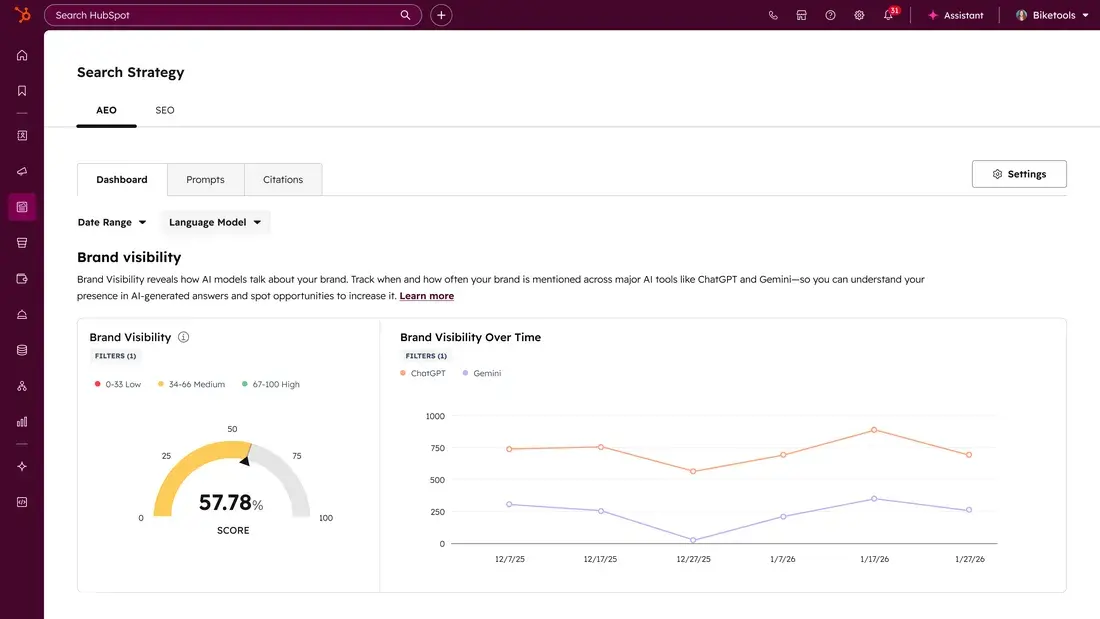
- Answer Engine Optimization (AEO) Tools: This represents the new "SEO" for the AI era. These platforms, including emerging solutions like HubSpot AEO and RankPrompt, provide the measurement layer that legacy analytics cannot. They monitor whether a brand is cited, mentioned, or recommended by AI engines, providing marketers with the data needed to adjust their content strategies for better visibility in AI-generated responses.
Strategic Implications for Marketing and Sales
The primary challenge for modern marketing teams is the loss of direct control over the brand narrative. In the era of traditional SEO, a well-optimized page was virtually guaranteed a spot in the search results. In the AI era, the engine decides which sources are authoritative enough to merit a citation. This has elevated the importance of "brand authority" and "content credibility" to unprecedented levels. If an AI engine does not trust a source, that source effectively ceases to exist for the user.
Furthermore, the integration of CRM data into these processes is becoming a critical competitive advantage. By leveraging proprietary customer data, organizations can better predict the specific prompts their buyers are likely to use when querying AI tools. For instance, companies that have begun prioritizing AEO have reported notable results. Early adopters using HubSpot’s AEO suite have observed a 20% growth in AI-referred traffic, a significant figure given that overall organic search traffic has seen a 27% decline year-over-year.

The Role of Transparency and Sourcing
A recurring criticism of AI search engines is their propensity for inaccuracies, or "hallucinations." The Columbia Journalism Review recently conducted an assessment of eight major AI search engines, finding that error rates remain a significant concern, with even the most reliable platforms struggling with citation accuracy. Perplexity AI has distinguished itself in this space by prioritizing inline citations as a core feature of its interface, which has made it a preferred choice for B2B researchers who require verifiable evidence. The industry consensus is that while AI tools are currently in a "wild west" phase of rapid evolution, their utility is predicated on the ability to provide reliable, source-backed information.
The Path Forward: A Call to Action for Organizations
For marketers, the mandate is clear: the passive strategy of hoping to rank on search engine results pages (SERPs) is no longer a viable long-term plan. The strategic objective must shift toward becoming an indispensable data source for the AI engines themselves. This requires three distinct actions:

- Audit Current Visibility: Organizations must utilize diagnostic tools—such as the HubSpot AI Search Grader—to establish a baseline of their brand’s current presence within AI engines. Without knowing where a brand stands, improvement is impossible.
- Invest in Internal Search: To prevent the loss of potential leads, companies must optimize their own site search capabilities. If a user cannot find answers on a brand’s website, they will immediately turn to a third-party AI, where the brand loses control over the user experience and the competitive context.
- Prioritize High-Authority Content: As AI engines prioritize credible, well-sourced information, content strategy should focus on original research, expert analysis, and authoritative, factual data. The more frequently a brand is cited as an authoritative source in its niche, the more likely it is to be surfaced by AI engines in response to high-intent buyer queries.
The conclusion to be drawn from these developments is that the digital search landscape has entered a phase of consolidation and synthesis. While the tools of the trade are shifting, the underlying goal of marketing—to provide the right answer to the right person at the right time—remains unchanged. The organizations that succeed in this new environment will be those that embrace the shift, measure their performance in the AI-driven ecosystem, and adapt their strategies to thrive in a world where the search is no longer a journey through links, but a direct encounter with the answer. As the technological landscape continues to mature, the distinction between those who understand the mechanics of AI search and those who ignore them will become the defining gap in market competitiveness. The era of the blue link is fading; the era of the answer has begun.