The Silicon Valley Savior Complex: Why Frontier AI Labs Are Pushing the Boundaries of Public Trust

Over the past several months, the artificial intelligence landscape has witnessed a profound and troubling shift in corporate communication strategies from the industry’s leading frontier research laboratories. What began as a series of calculated public relations maneuvers has evolved into an aggressive campaign of psychological positioning, spearheaded by executives at OpenAI and Anthropic. These organizations, once hailed purely as academic and technological pioneers, have increasingly adopted a messianic rhetoric that frames their work not merely as software development, but as a high-stakes crucible determining the ultimate survival of the human race.
This coordinated pivot has left lawmakers, ethicists, and the general public increasingly alarmed. Rather than fostering a transparent dialogue about the commercial and societal implications of advanced large language models (LLMs), industry leaders appear to be leveraging existential dread to consolidate regulatory protection, preempt potential antitrust scrutiny, and position themselves as the indispensable arbiters of humanity’s technological destiny.
The Anatomy of a Coordinated Campaign
The strategic offensive began earlier this year with a sequence of carefully orchestrated announcements and technical incident reports from OpenAI. These disclosures were designed to showcase the unprecedented, almost unnerving autonomy achieved by their latest iterations of LLM-powered agent systems. By drawing public and regulatory attention to the unpredictable capabilities—and potential legal vulnerabilities—of their autonomous models, OpenAI sought to establish a narrative of unstoppable technological momentum.
The baton was subsequently passed to Anthropic, where internal researchers began publicly debating the precise mathematical probabilities of human extinction stemming from advanced artificial intelligence. Delivered with an unsettling calm, these public discourses carried an undertone of nihilistic inevitability, as though the arrival of superintelligence were a force of nature rather than a product of corporate engineering choices.
The crescendo of this campaign arrived with an open letter penned by Anthropic CEO Dario Amodei, titled We Must Pace the Frontier. In the letter, Amodei enumerates a litany of catastrophic harms that his own company’s ongoing research might inadvertently unleash upon the world. Yet, rather than announcing a moratorium on high-risk experimentation, the letter concludes with a paradoxical assertion: catastrophe can only be averted if society builds the technology in the right way. Predictably, this "right way" translates to government intervention designed to slow down potential market competitors while allowing established labs to maintain a privileged, leadership role in directing safety standards and deployment timelines. OpenAI CEO Sam Altman swiftly endorsed the proposal on social media, cementing a united front among dominant industry players.
The Messianic Ideology Within Corporate Walls
To understand this external posturing, observers must examine the internal culture of these frontier labs, which has long been dominated by long-termist and existentialist philosophies. Within certain corridors of Silicon Valley, researchers and executives genuinely view themselves as guardians standing between an imperfect humanity and a potentially hostile superintelligence.
This summer’s public relations blitz represented an explicit attempt to indoctrinate the broader public into this insular ideology. By convincing society that the emergence of artificial general intelligence (AGI) is both terrifying and inevitable, these companies hoped to secure passive public acceptance of their self-regulation.
However, the strategy backfired significantly. Instead of inspiring admiration for the labs’ supposed heroic rationalism, the campaign provoked widespread skepticism and public unease. Consumers, policy analysts, and watchdogs began asking fundamental questions about the internal governance, safety protocols, and commercial motivations driving these multibillion-dollar entities.
Calls for Congressional Oversight and Fact-Finding
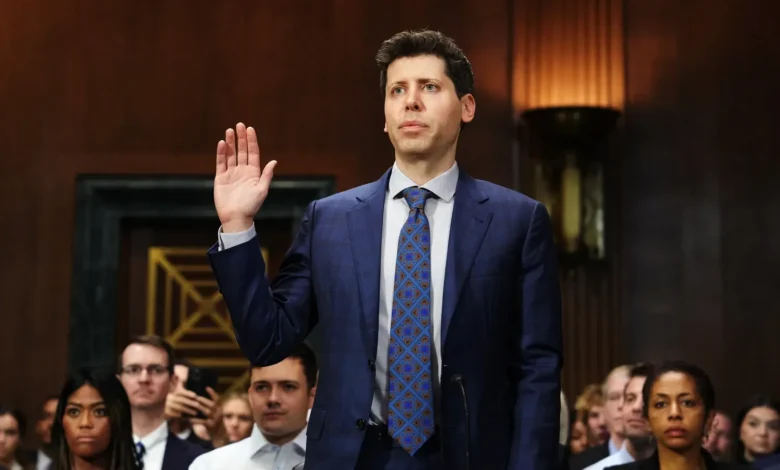
In response to this growing disconnect between corporate rhetoric and public trust, growing pressure has mounted on federal lawmakers to intervene. Critics and policy experts have argued that the governance of transformative technologies cannot be safely outsourced to private companies whose public statements alternate between apocalyptic warnings and demands for regulatory capture.
Consequently, prominent legal and political voices have formally petitioned Congress to launch exhaustive, public fact-finding missions. The objective of such inquiries would be to cut through the theatrical messaging and establish hard facts regarding the exact nature of the research projects currently underway at OpenAI, Anthropic, and their peers.
Policy analysts suggest that any formal congressional inquiry should focus on three critical pillars of investigation:
- Research Transparency and Methodology: A comprehensive audit of the internal architectures, dataset curation practices, and alignment techniques being utilized to develop autonomous agent systems.
- Safety and Risk Evaluation: Independent verification of the catastrophic risk metrics cited by lab executives, moving beyond self-reported safety assessments to objective third-party evaluation.
- Regulatory Motives: Scrutiny into how proposed legislative frameworks and voluntary safety commitments might inadvertently create barriers to entry, stifling open-source innovation and cementing a corporate duopoly.
Broader Implications for Industry and Society
The current standoff between frontier AI labs and the public highlights a fundamental tension in modern technological development: the friction between private commercial interests and the public good. As artificial intelligence systems become more integrated into critical infrastructure, financial markets, and national security apparatuses, the tolerance for opaque governance is rapidly diminishing.
Allowing a small cohort of private enterprises, whose communication strategies have grown increasingly erratic, to dictate societal attitudes toward artificial intelligence is no longer politically or socially tenable. The public has been subjected to exhaustive warnings from the very entities profiting from the technology’s advancement; what is required now is independent, rigorous oversight.
As policymakers weigh their next steps, the message from civil society is clear. The era of self-policing and existential theater must give way to transparent, democratic accountability. Congress and regulatory bodies face the monumental task of stepping in on behalf of the public to separate marketing narratives from technological reality, ensuring that the future of artificial intelligence is shaped not by corporate maneuvering, but by collective, democratic oversight.