From Manual Drudgery to Automated Execution: The Evolution of AI-Integrated Browser Workflows


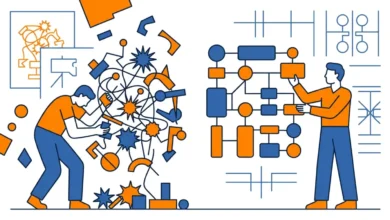
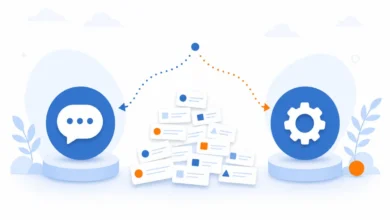
The landscape of personal and professional productivity is undergoing a fundamental shift as artificial intelligence transitions from a conversational tool to an integrated background utility. For years, the prevailing paradigm of AI interaction involved a "chat-first" approach—a process characterized by context switching, where users manually copied text, navigated to a separate interface, prompted an engine for insights, and returned to their primary task. Emerging data suggests that this method, while revolutionary at its inception, has become a bottleneck for efficiency. Recent developments in browser-native AI architectures, such as the integration of Gemini into Chrome and Copilot into Edge, are signaling the end of the "toy" era of generative AI and the birth of the "agentic" workflow.
The Anatomy of the Browser-Native Protocol
The transition from manual interaction to browser-integrated workflows is best illustrated through the management of complex, multi-page informational environments, such as wedding websites, travel planning portals, or dense project documentation. These sites are designed to be intuitive for visitors but often present a cognitive burden for those tasked with extracting actionable data.
In a traditional workflow, an individual attempting to organize a wedding itinerary would spend an estimated 15 to 20 minutes manually scanning pages, identifying registry requirements, and cross-referencing travel details. This "mental calculation" period is prone to human error and decision fatigue. By contrast, the implementation of a browser-native AI protocol allows for instantaneous data scraping and structural synthesis. By utilizing an integrated extension, a user can command the AI to parse the Document Object Model (DOM) of the webpage to generate a specific, formatted output: a requirement summary, a comprehensive procurement list, and a prioritized to-do list. This eliminates the need for tab-hopping and ensures that the cognitive load is shifted from information retrieval to decision-making.
Chronology of the Productivity Shift
The evolution of AI usage can be categorized into three distinct phases over the last 18 months.
Phase one, spanning from mid-2024 to early 2025, was defined by the "Chatbot Curiosity" phase. During this period, users primarily utilized AI for brainstorming, email drafting, and basic research. The interaction was reactive, requiring the user to initiate every query.
Phase two, emerging in mid-2025, saw the rise of the "Contextual Assistant." This period marked the integration of AI directly into the browser and productivity suites. The focus shifted from generic chat windows to contextual awareness, where the AI could "see" the active tab or document, allowing for summarization and simplified data extraction.
Phase three, which is currently taking hold as of late 2026, is the "Agentic Execution" phase. In this model, the AI is no longer a passive consultant; it is a background worker. It does not merely suggest how to follow up on a meeting; it drafts the follow-up, updates the CRM, and schedules the corresponding project tasks. This shift marks the departure from "chatting with an engine" to "orchestrating an agent."
Supporting Data and Efficiency Metrics
Industry analysis indicates that the potential for time reclamation via these integrated workflows is significant. Reports from productivity consultants suggest that professionals who transition from manual AI interaction to automated agentic workflows can reclaim between 10 and 60 hours per week, depending on the complexity of their administrative load.
The impact is most visible in meeting management. A standard hour-long business meeting often results in 30 to 45 minutes of post-meeting administrative work, including transcribing notes, drafting minutes, and assigning follow-up tasks. By deploying an "AI agent" as a participant—a bot that records, transcribes, and autonomously executes follow-up actions—that 45-minute administrative window is effectively neutralized. The output becomes an automatic, serialized workflow: the transcript acts as the input, and the CRM update, project ticket, and email draft become the immediate, automated outputs.
Security and Ethical Considerations
The transition toward high-level automation brings to the forefront critical questions regarding data privacy and security. The "Agentic" model requires that AI systems be granted access to sensitive data, including email inboxes, calendar systems, and customer databases.
Industry experts emphasize that this level of integration is a binary trade-off between productivity and data exposure. "Security is the price of execution," notes an industry analyst familiar with AI deployment. Organizations and individuals are advised to conduct rigorous audits of the security standards provided by AI vendors. For high-security environments, the industry is seeing a rise in local-server AI deployments, which keep data on-premise, bypassing the need for cloud-based authorization. However, for the average consumer, the shift involves weighing the efficiency of automated background workers against the risk profile of the platform providers.
Broader Implications for the Workforce
The move toward "forgetting that the AI is running" is the ultimate goal of mature AI integration. When an AI is successfully integrated into a routine, it functions in the background, surfacing insights or completing tasks without requiring the user to initiate a new session. This is the hallmark of the "Background Worker" mode.
If a user still feels the need to manually "visit" an AI to perform a task, they are arguably still operating in "Toy Mode." The transition to "Professional Mode" requires a systematic audit of repetitive tasks. If a task involves structured data—such as summarizing a web page or turning a meeting transcript into a ticket—it is a candidate for full automation.
Implementation Strategies for Immediate Gains
To move toward this automated future, observers recommend a phased implementation strategy:
- The Single-Site Audit: Select one complex, frequently accessed website. Deploy a browser-based AI extension to scrape and summarize the site into a to-do list. This establishes the baseline for how browser-native AI can reduce cognitive load.
- The Single-Bot Deployment: For meeting management, implement a single bot that focuses on one, and only one, output. For instance, rather than asking the AI to "summarize the meeting," instruct it to "draft a follow-up email to all participants based on the agreed-upon action items." By limiting the scope, the probability of successful, error-free execution increases.
- The Routine Integration: Identify one recurring, repetitive task that is currently handled through a chat interface. Evaluate how that task could be triggered automatically or through a single, pre-configured browser action.
Conclusion: The Future of Cognitive Labor
The trajectory of AI development is clear: the era of the conversational chatbot is evolving into an era of autonomous, silent, and integrated agents. The value of human labor is increasingly shifting away from the assembly of information and toward the oversight of the workflows that manage that information. As browser environments continue to evolve into more sophisticated operating systems for the web, the individuals who effectively delegate routine administrative and analytical tasks to background agents will find themselves with a distinct competitive advantage. The goal is no longer to work harder with the help of AI, but to allow the AI to handle the work entirely, leaving the professional free to focus on the high-value, high-leverage decisions that no machine can yet replicate.