From Journalism Aspirations to Chief People Officer: How Davida Lindsay-Bell Shapes Modern HR

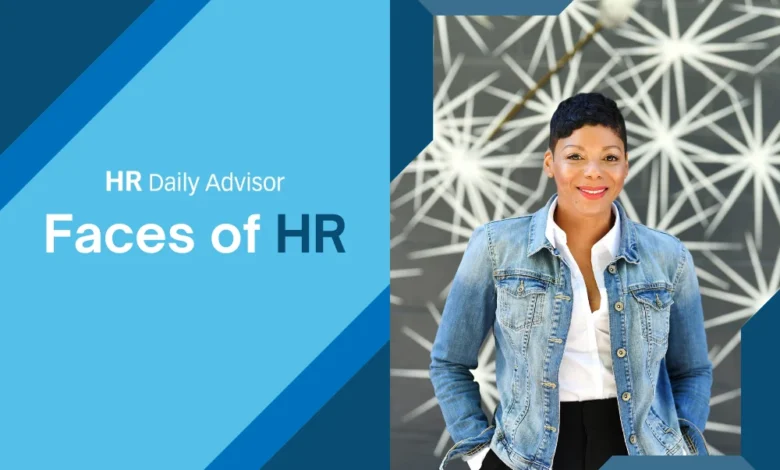
The evolution of modern human resources requires a strategic pivot from administrative compliance to the direct architecture of organizational success. In the competitive landscape of mission-driven consumer brands and cultural institutions, few leaders embody this transition as clearly as Davida Lindsay-Bell. Currently serving as the Chief People Officer at Hanna Andersson, Lindsay-Bell has spent more than two decades shaping people-strategy leadership across diverse industries. Her trajectory—from early aspirations in journalism to hands-on business operations and enterprise-scale cultural transformations—offers a compelling blueprint for the future of work.
Main Facts and Professional Background
Lindsay-Bell’s journey into the corporate landscape did not begin within the traditional confines of human resources curricula. Inspired initially by the storytelling prowess of media icon Oprah Winfrey, she initially set out to major in journalism, firmly convinced that narrative was the most potent tool for human connection. However, her academic exploration led her to organizational behavior, which she found to be the closest corporate equivalent: a discipline still fundamentally about people, but directly applied to the mechanics of the workplace.
Her foundational exposure to commerce occurred at Draeger’s, a family-owned grocery chain characterized by a distinct lack of formal human resources infrastructure. Operating in an environment devoid of traditional silos, Lindsay-Bell was required to engage simultaneously with accounting, operations, marketing, communications, and people management. This immersion forged her identity as a systems thinker—an executive trained to spot structural patterns, identify organizational connective tissue, and engineer solutions proactively before operational gaps escalated into systemic crises.
Over a career spanning more than twenty years, Lindsay-Bell has applied this systems-oriented philosophy across multiple sectors. Notably, her tenure included navigating the San Francisco Museum of Modern Art through the unprecedented disruptions of the COVID-19 pandemic and complex labor negotiations. Today, at Hanna Andersson, she oversees a dispersed workforce spanning twenty-six states, seamlessly blending strategic clarity with human-centric leadership to enhance corporate culture and maximize human potential.
Chronology of Leadership and Career Milestones
The career trajectory of Davida Lindsay-Bell highlights a deliberate progression from operational generalist to executive strategist, marked by key leadership phases and institutional milestones:
Phase One: Ground-Level Operations and Systems Thinking
At Draeger’s, Lindsay-Bell developed a comprehensive understanding of business mechanics. By touching diverse departments—from financial accounting to customer-facing marketing—she acquired a holistic view of enterprise operations that is rarely fostered in traditional, siloed human resources career paths.
Phase Two: Strategic Integration and Cross-Sector Influence
During her time as Head of HR at Dr. Pepper Snapple Group, Lindsay-Bell worked under the mentorship of Larry Solomon, Executive Vice President of Human Resources. Solomon, a leader with a background in sales, multi-continent operations, and a Lean Six Sigma Black Belt, deeply influenced her management philosophy. Solomon’s pragmatic framework emphasized that leaders must not merely communicate strategic plans, but actively translate them so they resonate at every operational level within an enterprise.
Phase Three: Navigating Crisis and Complex Transformations
Moving into executive roles within major cultural and consumer organizations, Lindsay-Bell tested her methodologies in high-stakes environments. Her leadership at the San Francisco Museum of Modern Art required balancing stringent public health constraints during a global pandemic with delicate union negotiations.
Phase Four: Scaling Enterprise Culture and Future-Proofing
In her current role as Chief People Officer at Hanna Andersson, Lindsay-Bell has institutionalized a comprehensive four-pillar framework: Purpose, Belonging, Connection, and Performance. This architecture underpins recent organizational achievements, including a remarkable 8-point increase in employee engagement scores within twelve months, accompanied by a 95% survey participation rate that significantly outperforms industry benchmarks. Furthermore, anticipating macroeconomic and technological shifts, she initiated the deployment of AI-adaptable people systems three years prior to mainstream adoption.
Supporting Data and Industry Metrics
Modern workplace analytics consistently validate the link between intentional human resources strategies and sustainable business performance. Industry research highlights several critical benchmarks that align with Lindsay-Bell’s strategic initiatives at Hanna Andersson:
- Engagement and Business Impact: High survey participation rates and measurable increases in employee engagement, such as the 8-point year-over-year growth recorded under Lindsay-Bell’s leadership, directly correlate with reduced turnover and heightened customer satisfaction indices.
- Psychological Safety and High Performance: Empirical organizational research indicates that only a small fraction of employees—historically estimated at approximately 2%—sustain high performance over extended periods without structured psychological safety nets. Up to 76% of variance between low- and high-performing teams is directly attributable to internal team behaviors and psychological safety norms. To operationalize this, Lindsay-Bell integrated Dr. Timothy Clark’s four-stage safety model (inclusion, learner, contributor, and challenger safety) within her first thirty days at Hanna Andersson.
- Holistic Wellbeing: Expanding employee wellbeing beyond traditional boundaries aligns with broad data from institutions like Gallup, which measures wellbeing across five distinct domains: career, social, financial, physical, and community health. Organizations that focus exclusively on narrow engagement metrics frequently overlook foundational vulnerabilities in these broader categories.
Official Responses and Industry Perspectives
Reflecting on the evolving relationship between corporate purpose and profitability, Lindsay-Bell emphasizes that operational durability requires structural integration rather than superficial messaging.
"The most durable organizations treat purpose as infrastructure, not positioning," Lindsay-Bell stated in an interview with HR Daily Advisor. "When values are embedded in how decisions get made, culture becomes a genuine competitive advantage. Transformation is dynamic and nonlinear, and the leaders who understand that are still standing when the next disruption arrives."
Addressing the historical underevaluation of the human resources function within executive suites, she advocates for structural elevation.
"People is still too often a compliance mechanism rather than a strategic driver, brought in after decisions are made rather than as co-architects of them," Lindsay-Bell noted. To counteract this, she advocates that corporate leaders stop treating people decisions as downstream consequences of financial choices. At Hanna Andersson, culture transformation was established as a co-owned initiative directly linked to the CEO, with "Cultivate Excellence" codified as a core corporate pillar featuring key performance indicators (KPIs) reported directly to executive leadership and investors.
Broader Impact, Future Implications, and Strategic Analysis
The strategic blueprint articulated by Lindsay-Bell carries significant implications for the broader future of work. As artificial intelligence and advanced automation reshape operational landscapes across industries, the mandate for human resources executives is shifting rapidly.
The primary challenge facing modern enterprises is not merely technical readiness, but cultural readiness. Organizations that rush to implement artificial intelligence without establishing rigorous trust, internal governance, and shared organizational literacy risk eroding employee trust and destabilizing core cultural values. Consequently, the People function is evolving from an administrative auxiliary into an essential architect of enterprise agility.
Looking toward the next five years, industry analysts project that the most successful organizations will be those that successfully integrate technological innovation while fiercely preserving the human infrastructure that imbues work with meaning. The professional competencies required of future workforce leaders are increasingly human-centric rather than strictly technical: intellectual curiosity, advanced systems thinking, inclusive emotional intelligence, and high comfort levels with organizational ambiguity.
For individuals entering the human resources profession, Lindsay-Bell’s career offers a clear strategic directive. Aspiring leaders are encouraged to remain industry-agnostic during the formative stages of their careers, focusing instead on mastering patterns of organizational evolution and business mechanics. By developing deep systems thinking and learning to speak the language of diverse corporate stakeholders, modern people leaders can successfully transition from reactive compliance managers to indispensable co-architects of enterprise strategy.