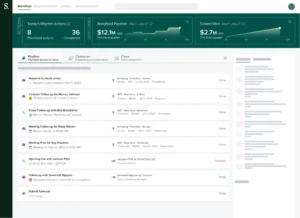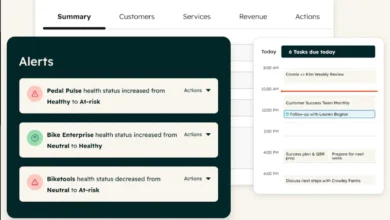
This development follows a calculated sequence of product releases designed to unify the Salesforce CRM ecosystem with Slack’s collaboration tools. The journey began with the integration of native CRM capabilities into Slack, followed by the deployment of AI-powered agents capable of reading, writing, and executing complex actions across Salesforce through Model Context Protocol (MCP). Today’s launch of Slackforce Surfaces serves as the bridge between these automated actions and human decision-making, allowing users to visualize, manipulate, and act upon live data without ever leaving their communication threads.
The Architecture of the New Workspace
The core problem Slackforce Surfaces aims to solve is the "context gap." In most modern enterprises, information is fractured. Data resides in CRM systems, decisions are negotiated in Slack, and executive reporting is finalized in external presentation software. By the time an executive deck is created, the underlying data is often already stale. Slackforce Surfaces addresses this by turning the conversation itself into a dynamic, live-updating interface.

By leveraging AI, a user can prompt Slackbot to generate a custom dashboard, an executive summary, or a specific business report. Unlike a static snapshot or a screenshot—which can lead to misinformed decisions—a Surface remains connected to the underlying data source. As pipeline figures change in Salesforce, as support cases are closed, or as marketing metrics shift, the Surface reflects these updates in real-time. This ensures that every member of a team is referencing the same "single source of truth" within a shared, collaborative space.
Chronology of the Slack-Salesforce Integration
The path to this launch was paved by several key strategic milestones that defined Salesforce’s commitment to an "AI-first" interface:
- Early 2026 (The Vision): Parker Harris articulates the goal of decoupling the Salesforce UI from the platform, positioning Slack as the primary interface for business operations.
- Q2 2026 (Foundation): The release of native CRM features within Slack allowed for basic record retrieval and updates, effectively turning Slack into a lightweight CRM portal.
- Q3 2026 (Agentic Integration): Salesforce introduced MCP capabilities, granting Slackbot the ability to execute cross-system workflows and take action on behalf of users.
- Late Q3 2026 (The Surface Launch): The rollout of Slackforce Surfaces marks the maturation of this strategy, transforming data into interactive visual experiences.
Impact on Business Productivity
The functional implications of this launch are significant for various departments, specifically regarding the reduction of manual administrative overhead. For sales organizations, the ability to visualize a "Pipeline Galaxy"—a space-themed, interactive dashboard of active deals—allows for the instant identification of stalled or at-risk opportunities. By visualizing urgency through distance and motion, reps can prioritize their time based on real-time deal health rather than manual spreadsheet analysis.

In the realm of finance, the shift is equally profound. Finance leaders can now generate "weather-themed" forecasts that contrast tailwinds and headwinds. By presenting budget and variance data in a format that updates automatically, the need for manual preparation of monthly financial reports is significantly reduced. This not only saves time but also improves the agility of the organization, as leaders can react to financial fluctuations as they happen rather than waiting for the next board meeting or weekly report.
Operational Efficiency and Security
From an IT and governance perspective, Slackforce Surfaces are built within the framework of existing Salesforce and Slack permissions. This is a critical factor for enterprise adoption. Because the Surfaces inherit the security posture of the underlying data, organizations do not need to create new silos or manage complex access controls for the new interface. The data shown to a user on a Surface is restricted by the same rules that govern their access to the original Salesforce record.
Moreover, the "build-it-yourself" nature of the tool democratizes data access. Previously, a marketing team requiring a custom campaign tracker would need to request a dashboard from a BI (Business Intelligence) or IT team. With Slackforce Surfaces, a marketer can simply describe the desired output to Slackbot, which then generates a functional, interactive interface. This removes the "middleman" from the data visualization process, allowing teams to move at the speed of their conversations.

Early Adopters and Industry Feedback
Early feedback from users across diverse sectors suggests that the platform is fundamentally changing the culture of internal reporting. Elia Wallen, Founder and CEO of Engine, notes that the ability to quickly get a working interface from existing data has become essential for their high-volume customer inquiry operations.
Similarly, Matt Roy of 21b reported that the introduction of Surfaces eliminated the need for static slide decks and exports entirely. By pinning these live views directly into Slack channels, the team at 21b has transitioned to a model of continuous, transparent metric sharing. Daniel Sanchez, VP of Delivery & Technology at govSlackers, emphasizes that the combination of Slack Lists at scale and the visualization capabilities of Surfaces has enabled their organization to phase out redundant BI tools, streamlining their tech stack and reducing costs.
Analytical Outlook: The Future of Enterprise Work
The broader implication of Slackforce Surfaces is the potential for the eventual obsolescence of traditional, monolithic enterprise software interfaces. If the industry trend continues toward conversational and surface-based interaction, the "login-and-navigate" model of the early 21st century may soon be viewed as a legacy practice.

However, this shift requires a high level of trust in AI-driven data interpretation. As these tools become more autonomous, the reliance on the underlying data quality in Salesforce becomes even more critical. If the data within the CRM is inaccurate or incomplete, the "Surface" will accurately present that flawed data, potentially leading to faster but incorrect decision-making. Consequently, organizations will need to balance the convenience of these interfaces with rigorous data hygiene practices.
Pricing and Availability
Salesforce has confirmed that Slackforce Surfaces is available immediately for customers on Enterprise+, Business+, Pro, Legacy, and Free Teams, provided that Slackbot is enabled for the workspace. The rollout of the live data integration feature is scheduled to begin in October 2026. This staggered release suggests a focus on ensuring stability as enterprises begin to map their most critical workflows into the new interface.
As companies continue to integrate Agentforce Marketing, Service, and Sales data, the "Surface" will likely evolve into a ubiquitous layer of the digital office. For Salesforce, the success of this product will be measured not just by the number of users, but by the degree to which enterprise customers can successfully dismantle their traditional, manual reporting workflows in favor of this integrated, conversational experience. By embedding the "work" directly into the "chat," Salesforce is attempting to solve the fragmentation that has plagued enterprise software for decades, aiming to create a workspace that is as fluid and responsive as the conversations that drive modern business.
Related posts: