The Evolution of Call Intelligence: How AI and CRM Integration are Reshaping Customer Operations in 2026

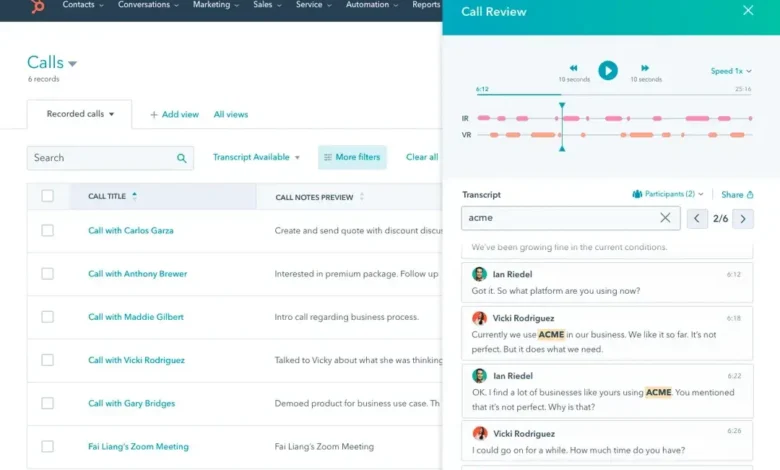
Modern business operations increasingly rely on artificial intelligence to extract actionable intelligence from customer communications, though traditional practices often leave crucial details buried within fragmented notes. According to HubSpot’s 2026 Sales Trends Report, 79% of sales professionals now state that AI tools actively assist them in pulling valuable, actionable insights from everyday interactions. Despite these technological advancements, many enterprise and mid-market organizations continue to misplace vital call context due to over-reliance on scattered manual notes and subjective secondhand summaries.
The integration of advanced speech-to-text algorithms, automated summarization, and deep customer relationship management (CRM) connections has given rise to a mature enterprise category: call intelligence software. Unlike basic recording tools, modern platforms record, transcribe, and analyze business conversations, synthesizing them into searchable transcripts, automated action items, and large-scale trend reports. These capabilities allow sales managers, customer support leads, and executive teams to coach representatives more effectively, identify emerging deal risks, optimize follow-up cadences, and pinpoint recurring product or service pain points before they impact customer retention.
Understanding the Mechanics of Call Intelligence Systems
The architecture of modern call intelligence software—frequently interchanged with conversation intelligence or conversation analytics—revolves around a structured seven-step data pipeline. This workflow transforms raw audio waveforms into structured enterprise data that populates standard reporting dashboards and database records.
The process initiates with audio capture. Platforms interface directly with call recording systems, sales dialers, Voice over Internet Protocol (VoIP) architectures, and primary video conferencing solutions such as Zoom and Google Meet. Native integrations automate this phase, initiating capture whenever corporate compliance and participant consent frameworks allow.
Next, advanced speech-to-text transcription engines convert the audio stream into text during or immediately after the call. High-performing engines excel at speaker diarization—identifying distinct speakers—and successfully parse specialized corporate jargon, regional accents, and natural conversational overlap. Without high transcript accuracy downstream analyses suffer, making initial transcription testing a critical onboarding step for procurement teams.
Once transcribed, the underlying AI models scan the text for targeted keywords, nuanced questions, recurring customer objections, and competitor mentions. Sentiment analysis algorithms simultaneously evaluate shifts in language and tone, allowing supervisors to isolate specific interactions where customer sentiment turned negative or competitive alternatives were raised. Following analysis, the platform compiles a concise summary of customer needs, key commitments, and overall outcomes. This allows managers to review high-level takeaways without auditing hour-long recordings.

The fifth stage involves automated action item extraction. If a sales representative commits to delivering technical documentation by a specific deadline, the software flags the statement and generates a corresponding task with an assigned owner and due date. These structured data points then sync directly to the relevant contact, company, deal, or ticket within the organization’s CRM. Finally, aggregated data flows into macro-level reporting dashboards, providing leadership with visibility into team-wide talk-to-listen ratios, dominant objection trends, and operational correlations between specific conversation topics and won or lost revenue.
Strategic Use Cases Across Sales and Service Organizations
While sales and service departments draw from the same underlying audio and text repositories, their operational objectives diverge significantly. Sales leadership leverages conversation intelligence primarily to analyze competitive positioning, refine objection-handling playbooks, and conduct data-driven deal reviews. By examining recorded interactions, sales executives can contrast the behaviors of top-performing account executives against underperforming peers, drastically shortening onboarding cycles for new hires.
Conversely, customer support and success teams apply call intelligence toward automated quality assurance (QA), continuous sentiment monitoring, and root-cause analysis. Traditional QA processes historically restricted supervisory evaluations to a random sample of roughly 1% to 2% of total support interactions. Modern auto-QA capabilities allow operations teams to evaluate 100% of customer interactions against compliance and brand-safety scorecards. This systemic oversight enables organizations to identify systemic product failures or service bottlenecks early, directly mitigating customer churn.

Rigorous Evaluation Criteria for Enterprise Procurement
Deploying conversation intelligence at scale requires a methodical evaluation framework that extends far beyond vendor feature checklists. Organizations must assess potential solutions across five core pillars: technology stack compatibility, transcription accuracy, coaching workflow depth, regulatory compliance, and scalable pricing models.
First, technical integration must be seamless. Insights generated during calls should populate existing systems of record—such as CRMs, help desks, and dialers—without requiring manual data entry or creating duplicate database records. Systems that isolate transcripts and action items in standalone workspaces consistently suffer from low user adoption because employees resist switching between disparate applications during fast-paced workflows.
Second, accuracy testing must be conducted using an organization’s own historical call recordings rather than vendor-supplied demonstration files. Polished product demonstrations often conceal vulnerabilities when processing noisy audio tracks, multi-speaker crosstalk, or heavily accented speech.

Third, compliance and data privacy parameters demand rigorous legal and IT security review. Recording and transcribing phone calls and video meetings activates a complex matrix of regulatory obligations, including varying state wiretapping laws, federal statutes, and international privacy regulations like the European Union’s General Data Protection Regulation (GDPR) and the California Consumer Privacy Act (CCPA). Furthermore, organizations managing protected health information must ensure prospective vendors are willing to execute Business Associate Agreements (BAAs) under the Health Insurance Portability and Accountability Act (HIPAA). Security stakeholders must also scrutinize data encryption standards, role-based access controls, automated data redaction protocols, and whether vendor-supplied AI models utilize proprietary customer data for ongoing model training.
Market Overview: Leading Call Intelligence Platforms
The software landscape features diverse solutions tailored to specific organizational structures, ranging from fully integrated CRM suites to enterprise-grade revenue intelligence platforms and specialized contact center solutions.
-
Sales Hub (HubSpot)
HubSpot’s conversation intelligence tool integrates directly with the HubSpot Smart CRM, capturing and analyzing calls made through native calling features and certified integrations. Recordings, searchable transcripts, AI-generated summaries, and speaker data reside directly alongside standard customer records. This structural consolidation ensures sales and service professionals maintain complete contextual awareness without navigating away from their primary workspace.
Best for: Sales and service teams seeking unified call analysis embedded directly within their core CRM architecture and workflow engines.
Pricing: Advanced transcription and conversation intelligence features require assigned professional or enterprise seats for Sales Hub or Service Hub. Sales Hub Professional pricing begins at $90 per seat per month (billed annually), alongside a mandatory one-time onboarding fee.
-
Gong
Gong utilizes a proprietary "Revenue Graph" to capture and interconnect calls, video meetings, emails, and CRM activities across complex enterprise environments. The platform surfaces hidden buying signals, forecasts pipeline velocity, and delivers comprehensive deal analytics alongside conversation intelligence.
Best for: Large enterprise revenue organizations requiring a unified ecosystem for deal inspection, revenue forecasting, and advanced sales coaching.
Pricing: Available via custom enterprise quotes, incorporating per-user license fees alongside broader platform charges. -
Chorus by ZoomInfo
Chorus records and analyzes customer engagements while synthesizing insights for forecasting, coaching, and deal execution. A primary differentiator for Chorus is its native connection to the broader ZoomInfo B2B intelligence database, enabling representatives to review conversation histories alongside verified firmographic and contact data.
Best for: Organizations already embedded within the ZoomInfo ecosystem that want conversation analytics bridged with external B2B data assets.
Pricing: Custom quotation model based on organizational scale and deployment scope. -
Observe.AI
Observe.AI focuses heavily on contact center environments, offering post-interaction quality evaluation alongside real-time agent assistance. Its automated QA infrastructure provides live prompts, regulatory checklists, and next-best-action recommendations during active customer engagements.
Best for: High-volume contact centers requiring automated compliance monitoring, real-time agent guidance, and post-call disposition automation.
Pricing: Custom pricing structure determined through direct enterprise consultation and demo requests. -
Fireflies.ai
Fireflies.ai delivers meeting transcription, search capabilities, and automated summaries across major video conferencing platforms, mobile audio recordings, and dialer integrations. Supporting over 100 languages, the platform prioritizes accessible meeting capture and team search over heavy enterprise forecasting suites.
Best for: Small to mid-sized teams needing affordable, straightforward meeting transcription, archiving, and analysis.
Pricing: Includes a limited free tier, with paid business tiers scaling affordably per user per month.
Implications and Future Outlook
The rapid mainstream adoption of call intelligence software signals a permanent shift away from manual administrative record-keeping toward automated customer intelligence. As natural language processing models grow increasingly sophisticated, the division between unstructured conversational data and structured CRM analytics will continue to dissolve. Organizations that successfully implement these technologies while maintaining rigorous compliance frameworks will achieve a distinct operational advantage, converting thousands of hours of customer dialogue into predictable, data-driven revenue growth and elevated service standards.